

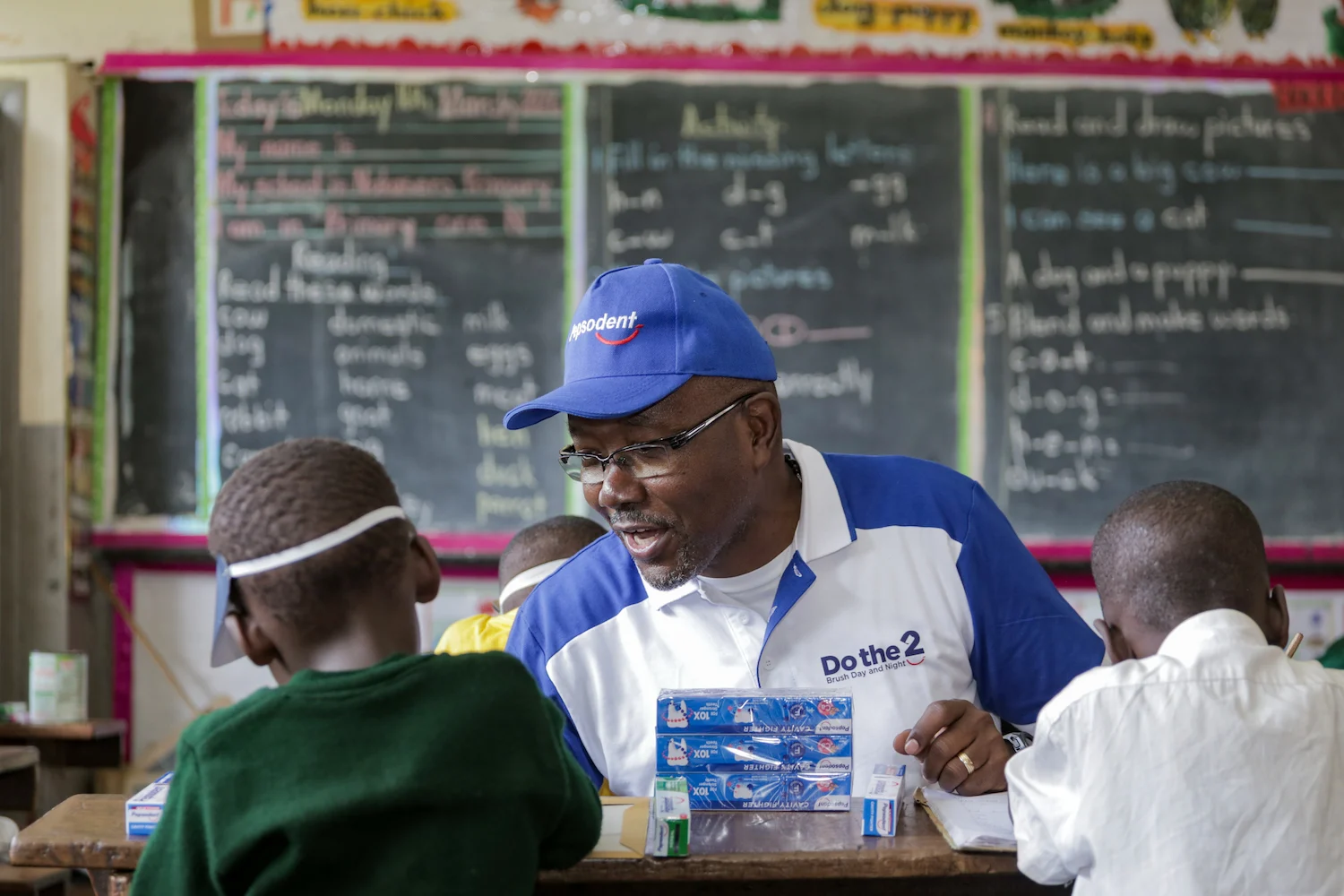
Pepsodent, Unilever personal care brand, has launched a nationwide school oral health campaign targeting 500,000 pupils across 500 primary schools by the end of the year to address Kenya’s high burden of preventable dental diseases.
The programme, unveiled at Arap Moi Primary School in Kiserian, will be rolled out across urban, peri-urban and rural areas, focusing on behaviour change among school-going children through structured oral hygiene education. Other schools visited include: we spent time with pupils at Olympic Primary School (Kawangware), Mwiki School (Kasarani), Ruiru Comprehensive School, Mukuru Community School, and Arap Moi Primary School (Kiserian).
The initiative centres on the “Twice 2 – brush day and night” message, encouraging pupils to brush twice daily for at least two minutes using fluoride toothpaste. It will include supervised learning sessions on proper brushing techniques and basic oral care practices.
The rollout comes against the backdrop of persistent oral health challenges. Data from the Kenya National Oral Health Survey shows that nearly half of children aged five suffer from tooth decay, while gum disease affects more than 90 per cent of the population.
Unilever EA, Commercial John Kibira said the school-based model is designed to drive long-term behavioural change at an early age.
“Reaching children in school allows us to simplify oral care and embed daily habits such as brushing twice a day using fluoride toothpaste. These are small actions with significant long-term health outcomes,” he said.
Unilever East Africa Managing Director Luck Ochieng linked oral health to education outcomes, noting that untreated dental conditions can affect concentration, attendance and overall wellbeing among learners. “Good oral health underpins a child’s confidence and ability to learn. Preventive interventions at school level are critical in reducing the long-term burden of dental disease,” he said.
While access to oral care products has improved, usage patterns remain uneven. National data shows that more than 77 per cent of adults own a toothbrush and brush at least once daily, while about 70 per cent use fluoridated toothpaste. However, gaps persist in brushing frequency, technique and awareness, with 17 per cent of users unsure whether their toothpaste contains fluoride.
Health experts also point to low compliance with recommended practices such as replacing toothbrushes every three months, a factor that continues to undermine oral hygiene outcomes.
The programme aligns with the Kenya National Oral Health Policy (2022–2030) and the National Oral Health Strategic Plan (2022–2026), both of which prioritise preventive, school-based interventions as a cost-effective approach to improving public health.
By scaling outreach through schools, Pepsodent aims to support national efforts to reduce childhood tooth decay and gum disease while lowering the long-term cost burden associated with oral health treatment.






















































![Pula Co-Founders and Co-CEOs, Rose Goslinga & Thomas Njeru. Pula provides agricultural insurance and digital products to help smallholder farmers manage climate risks, improve farming practices and increase their incomes. [ Photo / Courtesy ]](https://businesstoday.co.ke/wp-content/uploads/2021/01/Pula-Co-Founders-and-Co-CEOs-Thomas-Njeru-Rose-Goslinga.jpg)



















































Leave a comment