

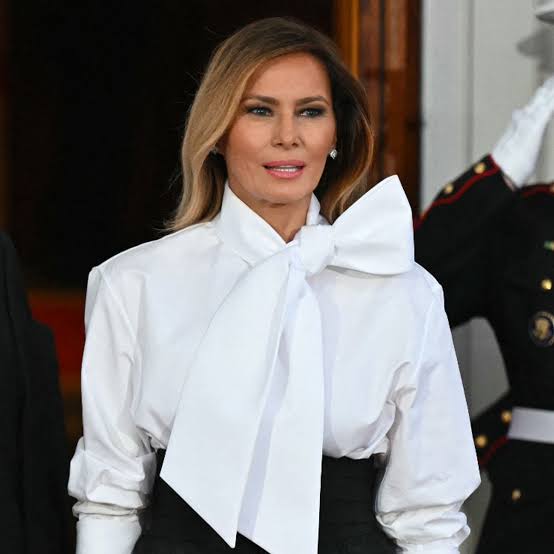
US First Lady Melania Trump had a state dinner to host, a Chinese president to welcome and, apparently, the internet to annoy.
For the White House dinner honoring Chinese President Xi Jinping on Thursday, the US first lady skipped the predictable evening gown and arrived in trousers—because when Melania Trump enters a room, even the dress code apparently needs to make room for her.
She wore an oversized white Saint Laurent cotton-poplin blouse tied into an enormous bow at the neck, paired with black Dolce & Gabbana cigarette trousers featuring a subtle peony brocade. A wide black silk cummerbund cinched the look, while pointed Christian Louboutin pumps completed the outfit.
It was unmistakably Melania: sharply tailored, controlled, expensive and almost aggressively polished. But the outfit quickly became a talking point online, with some social media users questioning whether the look was appropriate for such a formal diplomatic occasion. Irish Star reported a wave of criticism, with some describing the ensemble as “ridiculous.”
Yet dismissing the outfit as simply a fashion misstep misses the more interesting story. Because at a state dinner, clothes rarely mean just clothes.
Melania was hosting Xi and his wife, Chinese first lady Peng Liyuan, at the White House as the US and China navigate a relationship shaped by trade, technology, artificial intelligence and geopolitical tensions. Xi’s three-day Washington visit was his first to the US capital in more than a decade.
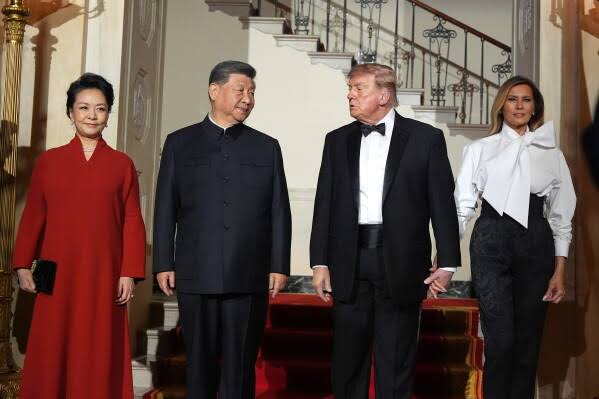
And standing beside Melania was Peng, whose wardrobe offered an almost textbook counterpoint. Peng arrived at the state dinner in a patriotic red gown with a rounded neckline, long flared sleeves and a softer A-line silhouette, accessorised with a black velvet clutch and pearls. Her public wardrobe has long incorporated Chinese design traditions, including Mandarin collars and qipao-inspired silhouettes, while working with Chinese designers and domestic craftsmanship.
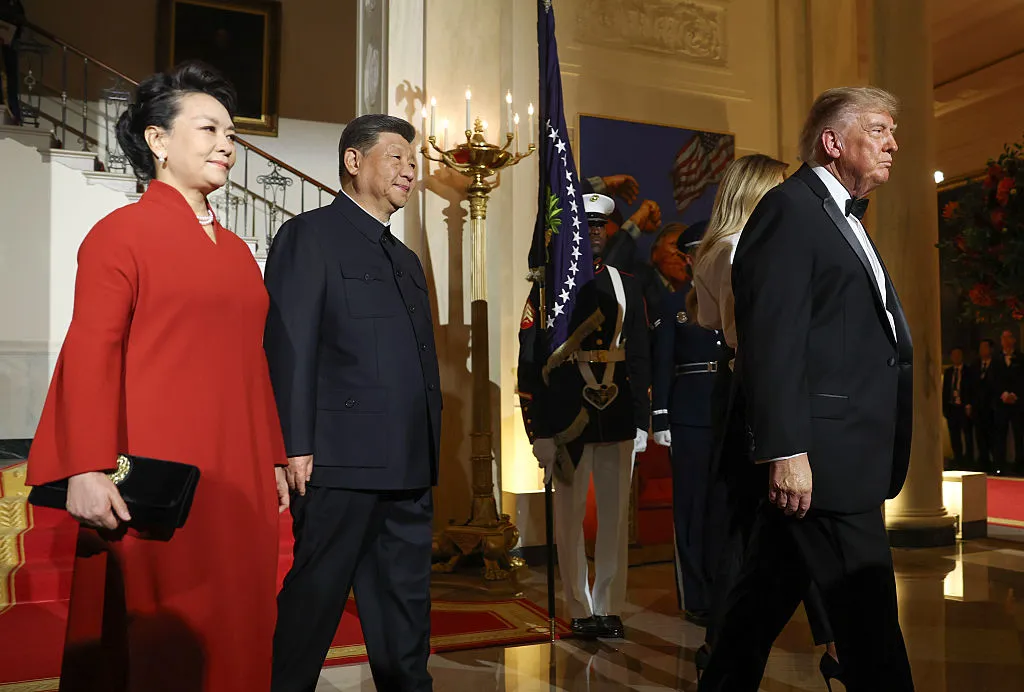
The contrast was deliciously obvious. Peng dressed diplomacy through national identity. Melania dressed it through personal identity. That distinction has become increasingly difficult to ignore whenever the two women share a diplomatic stage.
Earlier in the visit, Melania wore a severe black Alexander McQueen ensemble—a sculpted tweed jacket and matching knee-length skirt—with black Louboutin pumps for the formal White House welcome. Peng, meanwhile, leaned into her established Chinese sartorial vocabulary, wearing a slate-grey, waist-cinching dress with a Chinese collar and a pale pink scarf.
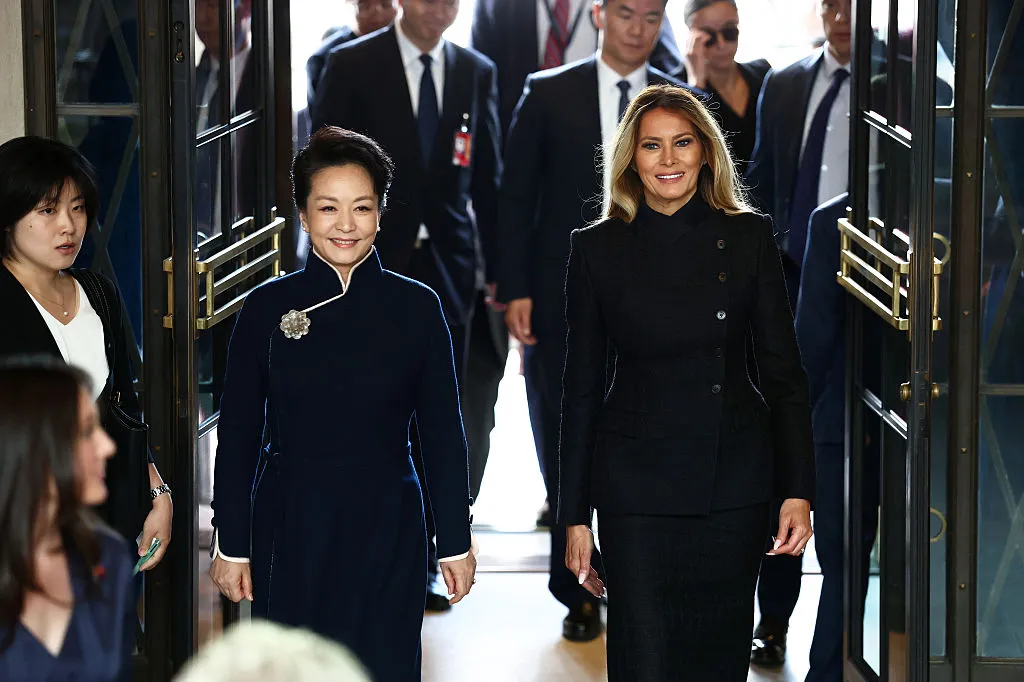
For Melania, the message appears less about adopting the visual language of the country being hosted and more about remaining unmistakably herself. That is hardly new.
The former model has built one of the most recognizable wardrobes in modern presidential history around sharp silhouettes, major European fashion houses and an almost forensic attention to presentation. Her choices have often been dissected for political symbolism, whether she intended them that way or not.
At Thursday’s dinner, however, there was another layer. The enormous bow on her Saint Laurent blouse was not exactly subtle. Neither were the trousers.
For a woman standing at one of the world’s most choreographed diplomatic occasions, choosing trousers over a traditional state-dinner gown could easily be read as a declaration: I will participate in the ceremony, but I will not disappear into it.
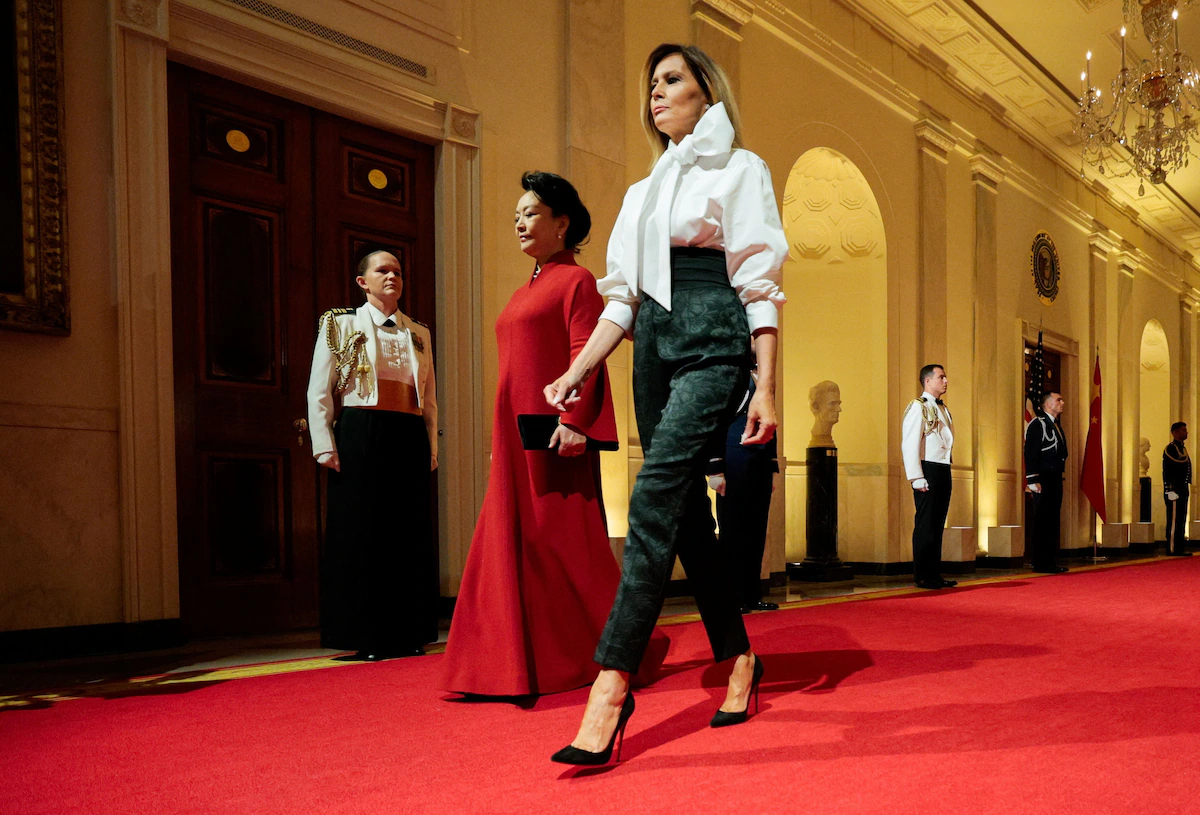
Vogue magazine described the contrast between the two first ladies as a study in two distinct approaches to the role. Peng’s clothes consistently locate her within China, while Melania’s wardrobe draws from an international luxury-fashion vocabulary that predates her time in the White House.
And perhaps that is why the trousers caused such a fuss. A gown would have been expected. A gown would have been conventional. A gown would have quietly joined the visual grammar of the evening. Trousers, a giant bow and Louboutins? That is a different conversation.
The dinner itself was designed with symbolism in mind. The East Room featured red linens, dahlias and ranunculus, with the White House explicitly linking the colour to its significance in Chinese culture. The evening also opened with Schramsberg Blanc de Noirs, recalling the American sparkling wine served during Richard Nixon’s historic 1972 visit to China.
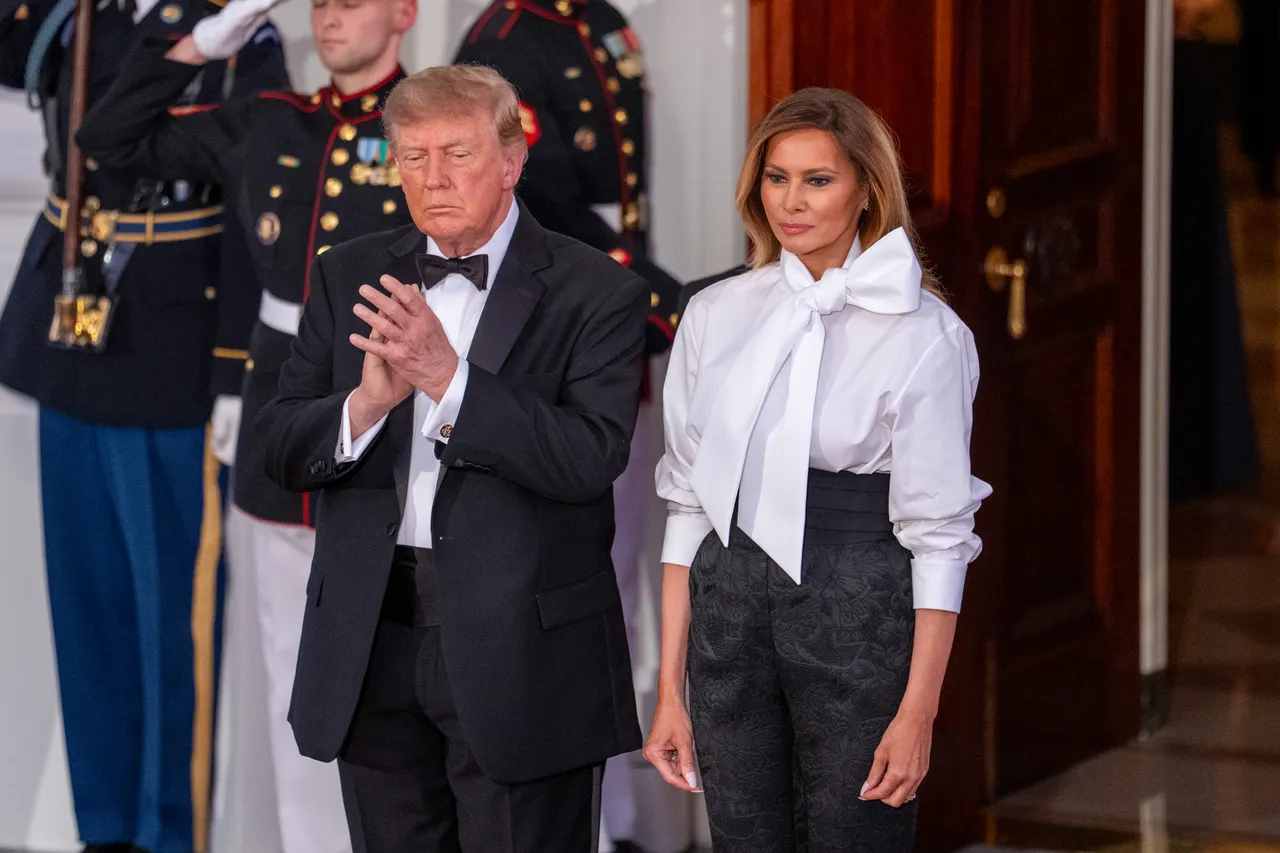
Against all that choreography, Melania’s outfit stood out precisely because it did not attempt to blend in. And perhaps that is the point. Fashion diplomacy is rarely about whether a woman looks pretty. It is about what she chooses to communicate when the room is already saying so much. Peng’s red gown said China. Melania’s bow-and-trouser combination said Melania.
Whether audiences loved it, hated it or simply wondered why she wasn’t wearing a gown, the first lady once again demonstrated something she has understood particularly well: at the White House, fashion is never merely decoration. Sometimes, it is the statement.































![Pula Co-Founders and Co-CEOs, Rose Goslinga & Thomas Njeru. Pula provides agricultural insurance and digital products to help smallholder farmers manage climate risks, improve farming practices and increase their incomes. [ Photo / Courtesy ]](https://businesstoday.co.ke/wp-content/uploads/2021/01/Pula-Co-Founders-and-Co-CEOs-Thomas-Njeru-Rose-Goslinga.jpg)






























Leave a comment