

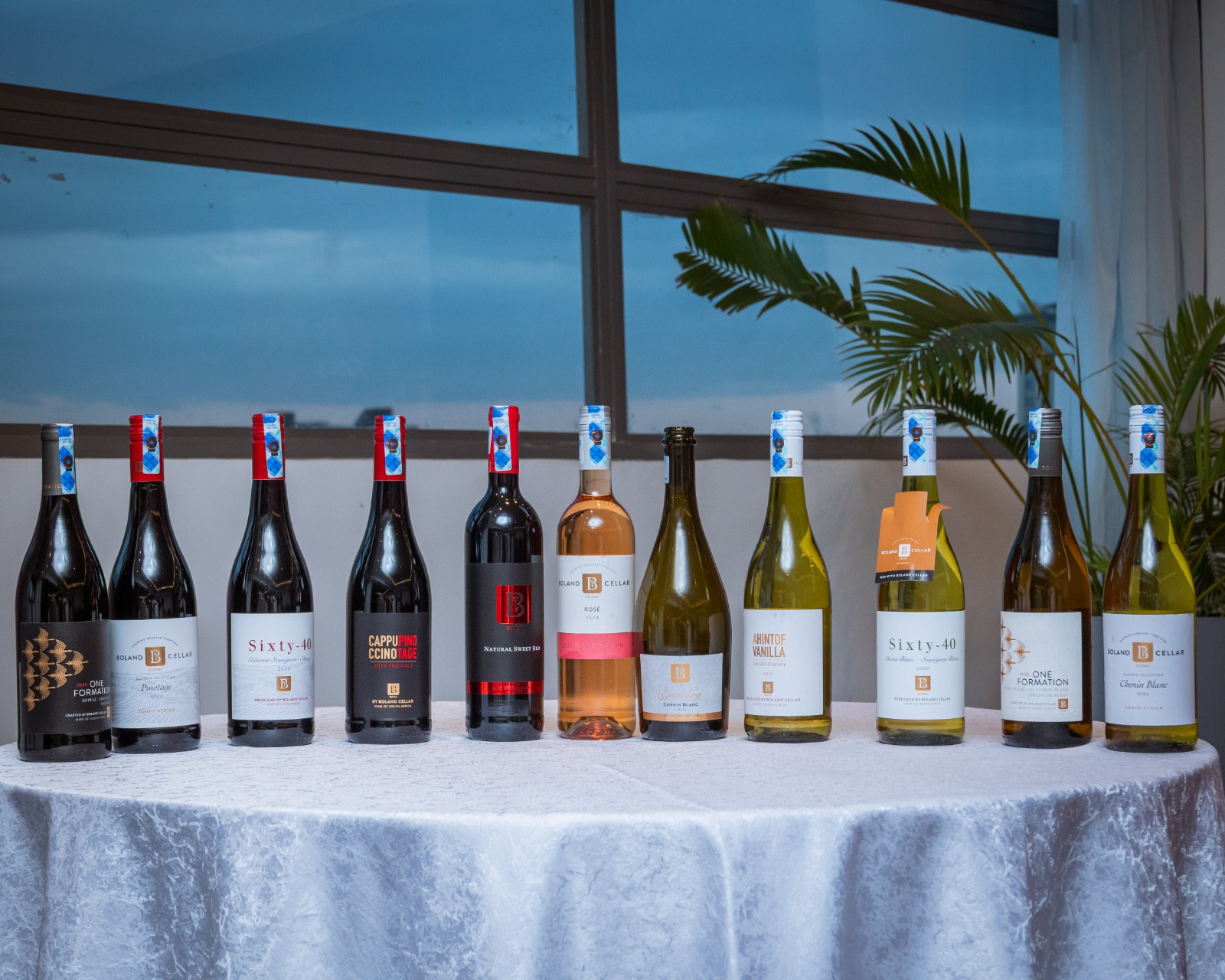
South African wine producer Boland Cellar is targeting sales growth of at least 15% in Kenya over the next year, banking on new product launches, expanded distribution and a more aggressive marketing strategy as competition for consumers intensifies.
The company, which distributes its wines in Kenya through exclusive importer Domaine Kenya Limited, is expanding its portfolio with new ranges and refreshed labels, seeking to build on the popularity of its Sixty-40 red blend, its best-selling wine in the local market.
Kenya’s wine market grew by 3% in volume in 2025 to 29.3 million litres, according to Euromonitor International, providing a growth opportunity for producers seeking to capture demand across retail outlets, restaurants, hotels and other hospitality establishments.
Boland Cellar’s latest offerings were unveiled at Novotel Nairobi Westlands, with the showcase featuring the One Formation range, a Chenin Blanc sparkling wine and a naturally sweet red wine. The launch also included Cappuccino Pinotage, which combines the grape variety’s character with roasted coffee and chocolate notes, and Expresso Pinotage in a canned format.
The new products reflect the producer’s efforts to broaden its appeal across different consumer segments while strengthening its position in a market where wine drinkers have access to an expanding selection of international brands.
“Our focus is to offer wines across different tiers of the market while maintaining quality and value for money,” said Christopher Burger, Boland Cellar’s national and international sales manager.
“We want to build on the foundation already established in Kenya and achieve sustainable growth over the coming years.” Burger said the company was working with Domaine Kenya on a more intensive sales and marketing strategy to support its growth ambitions.
Boland Cellar’s Sixty-40 red blend remains its strongest performer in Kenya. The wine combines 60% Cabernet Sauvignon and 40% Shiraz, positioning it within the red wine category that has helped establish the producer’s presence in the market.
The partnership with Domaine Kenya is central to Boland Cellar’s expansion plans. The distributor manages the producer’s local market access, connecting its portfolio with retailers and hospitality businesses.
Jebet Chemng’orem, managing director of Domaine Kenya, said the partnership’s strength lay in combining consistent winemaking standards with wines suited to local consumer preferences.
“Boland produces wines that respect the Kenyan palate while maintaining high winemaking standards. The quality and value for money are important to us, but so is the relationship we have built with the producer,” she said.
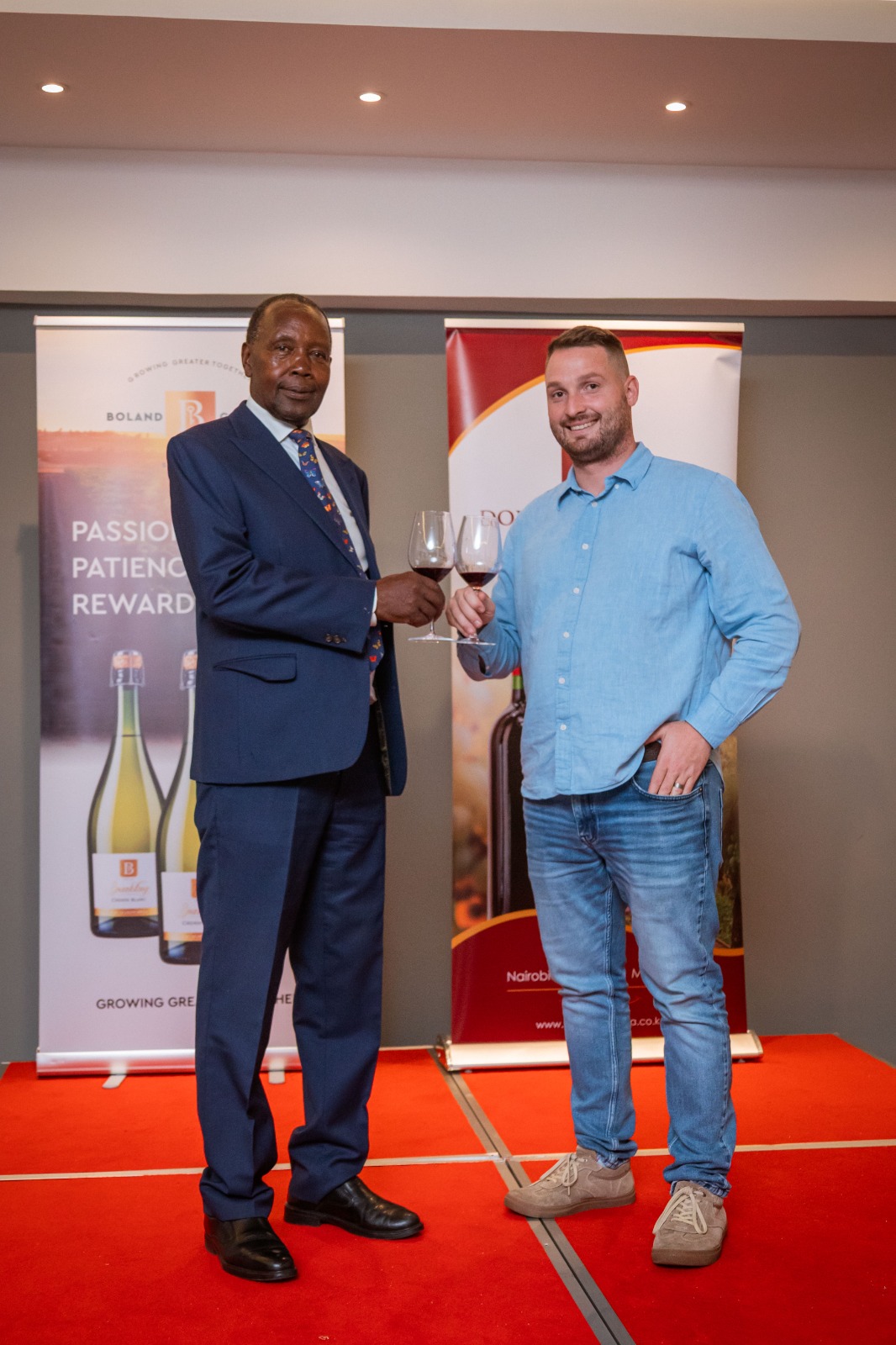
Chemng’orem also pointed to consumer education as an important part of growing the market, encouraging drinkers to explore different styles and identify their preferences rather than treating wine appreciation as a fixed or exclusive experience.
She recommended Boland Cellar’s Chardonnay for its freshness and versatility, while comparing the smoky, toasted character of its Pinotage to mursik, the traditional fermented milk associated with the Kalenjin community.
The company’s expansion in Kenya builds on a relationship spanning approximately two decades, according to Paul Chemng’orem, chairman and founder of Domaine Kenya.
He said Boland Cellar was among the earliest customers he worked with during his career in wine importing, before he established Domaine Kenya. The relationship has since grown into a significant part of the distributor’s portfolio.
“When we started, we began with one 40-foot container. Since then, our orders have grown to more than 359 containers,” Paul Chemng’orem said.
He said Kenya’s wine trade had evolved considerably, with consumers gaining access to a wider selection of international wines compared with a period when foreign-exchange constraints and limited product availability presented challenges for importers.
The latest launches also reflect Boland Cellar’s push to differentiate its offerings. One Formation features blended wines, while the Chenin Blanc sparkling wine introduces another style to its Kenyan portfolio. The naturally sweet red wine, meanwhile, is positioned as a premium offering rather than a conventional entry-level sweet wine.
Sylvia Wambui Karanja, founder and lead curator of S & S Atelier Co. and East Africa country lead for Wines of South Africa, said successful expansion required more than introducing products to a new market.
“It means supporting the brand reach the right trade partners and consumers, in the right settings, with a clear understanding of who is most likely to choose it,” she said.
Karanja said trade marketing, brand visibility and market development were important in connecting producers with importers, buyers, the media and consumers, helping build the relationships needed to establish lasting market presence.
For Boland Cellar and Domaine Kenya, the next phase will focus on strengthening distribution, increasing brand awareness and expanding availability through retail and hospitality channels.
The targeted 15% sales growth will depend on how effectively the companies translate new product offerings and marketing activity into sustained consumer demand in Kenya’s evolving wine market.









































































































Leave a comment