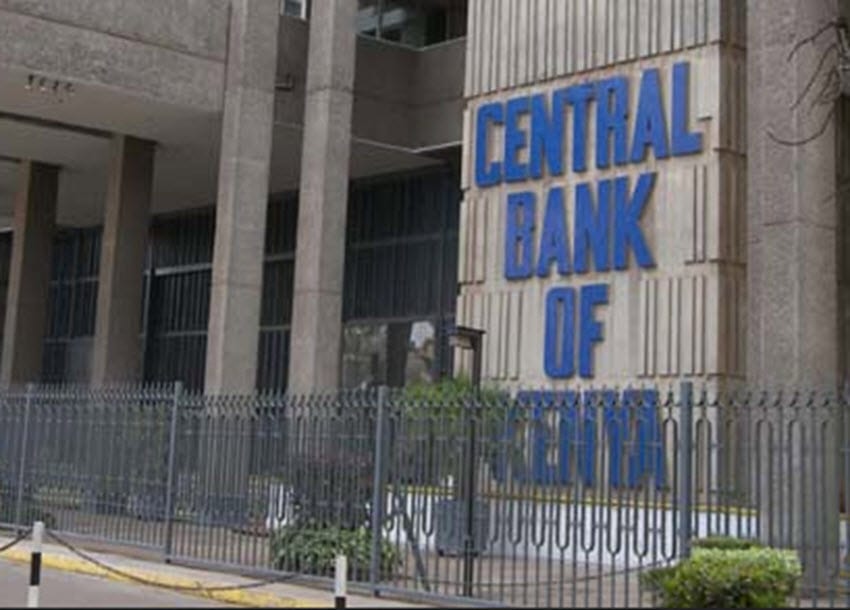
Central Bank of Kenya(CBK) has not lifted its foot from the easing pedal, piling more pressure on commercial banks yet again to release their purse strings and lend to private business. At its October 7th meeting, the CBK’s top policy organ the Monetary Policy Committee(MPC) lowered the Central Bank Rate(CBR) by 25 basis points to 9.25%, the 8th consecutive hair cut since February last year.
CBK has cut the CBR further this month from 9.50% in August, the monetary signal expected to be picked up by commercial banks when pricing new loans to customers. CBK data shows that lending to the private sector is improving and grew by 5% in September 2025. The MPC notes that average commercial bank lending rates have fallen from 17.2% in late 2024 to 15.1% in September 2025. Thus, this latest CBR slice is intended to accelerate this trend.
Apart from banks, this latest CBK’s monetary policy action is expected to fundamentally alter the landscape for fixed income investors. When interest rates fall, newly issued bonds will offer lower coupon rates. This makes existing bonds, which have higher fixed coupon rates, more valuable. “Investors are willing to pay a premium to buy these older, higher yielding bonds, which drives up their market price,” said CFA Dedan Maina.
Institutional Investors that include Banks, Pension Funds and Insurance Firms hold huge portfolios of existing government and corporate bonds, are some of the biggest beneficiaries of CBK’s rate cut actions. This is because a CBR cut instantly increases the market value of existing Government Paper and Corporate Bonds, piling capital gains of their balance sheets. Most of them would prefer locking in or sell to benefit from the price appreciation.
CBK Has Been On Aggressive Easing Mode Since February 2024
Banks, is probably sell some of their bond holdings to boost their liquidity, free up more cash to lend to customers seeking new loans. This is what CBK action is designed to do. Banks will be liquidating some of their bond holdings to raise the cash needed to lend-this is their core business.
With a fall in T- bills and bond coupon rates, individuals and small investment groups will rush into the secondary market to purchase the current, higher yielding bonds before their prices rise too much. This increased demand from retail investors is a key factor that helps push the market value of existing bonds upward.
But while the CBK is fixed in its determination to lower cost of credit, analysis from the CEO Survey warns that affordable credit, cannot by itself solve the problem of subdued consumer demand and high cost of doing business. These structural business issues require a different remedy.
The CEOs Survey and Market Perceptions Survey conducted in September 2025 revealed sustained optimism about business activity and economic growth prospects for the next 12 months. The optimism was attributed to improved agricultural production supported by favourable weather conditions, the stable macroeconomic environment with low inflation and stable exchange rate, declining interest rates, and resilient performance of tourism and the digital economy.
Concerns remain, however, about subdued consumer demand, high cost of doing business, and increased global uncertainties attributed to higher tariffs and geopolitical tensions.
Kenya’s overall inflation stood at 4.6 percent in September 2025 compared to 4.5 percent in August, and remained below the mid-point of the target range of 5±2.5 percent. Core inflation declined to 2.9 percent in September from 3.0 percent in August, mainly on account of lower prices of processed food items, particularly maize flour.
Non-core inflation increased to 9.6 percent in September from 9.2 percent in August, mainly driven by higher prices of vegetables, particularly tomatoes, carrots, onions, and cabbages. Overall inflation is expected to remain below the midpoint of the target range in the near term, supported by stable energy prices, and continued exchange rate stability.
According to CBK figures, released GDP data for the second quarter of 2025 showed continued resilience of the Kenyan economy, with real GDP growing by 5.0 percent compared to 4.6 percent in the second quarter of 2024.
This reflected a rebound in activity in the industrial sector, stable growth of the agriculture sector, and resilience of key service sectors particularly transport and storage, finance and insurance, information and communication, and wholesale and retail trade.
Leading indicators of economic activity point to improved performance in the third quarter of 2025. Kenya’s economy is expected to grow to 5.2 percent in 2025 and 5.5 percent in 2026, supported by robust agricultural sector and continued recovery of its sluggish industrial segment.













































![Pula Co-Founders and Co-CEOs, Rose Goslinga & Thomas Njeru. Pula provides agricultural insurance and digital products to help smallholder farmers manage climate risks, improve farming practices and increase their incomes. [ Photo / Courtesy ]](https://businesstoday.co.ke/wp-content/uploads/2021/01/Pula-Co-Founders-and-Co-CEOs-Thomas-Njeru-Rose-Goslinga.jpg)