

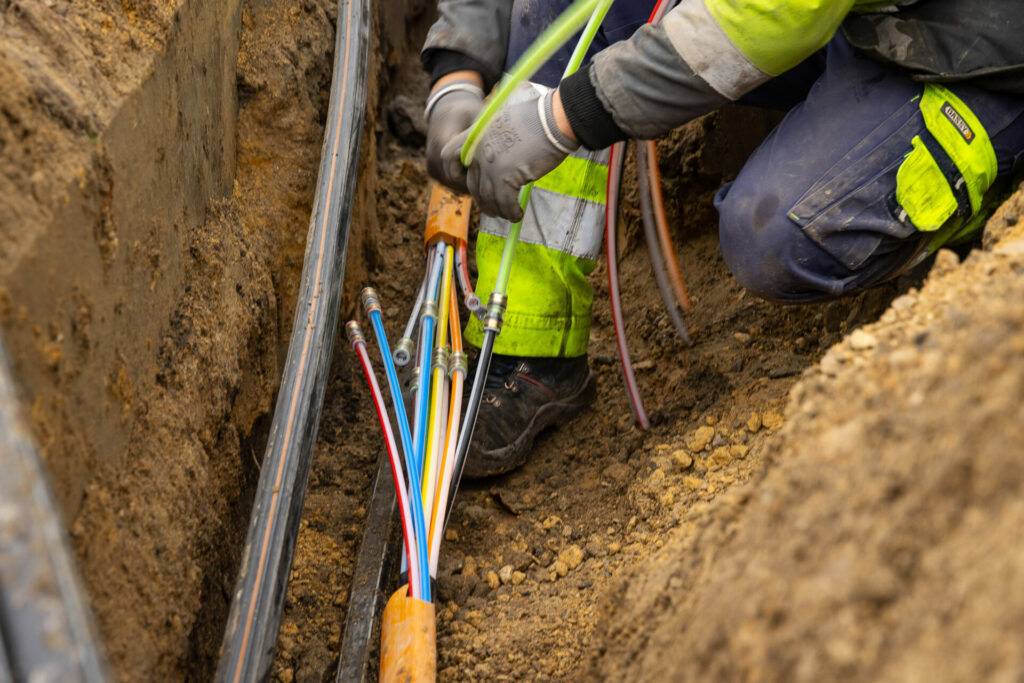
The disruption of two undersea fibre optic cables left Kenyan Internet Service Providers and companies facing significant losses as services were severed, impacting internet users, international voice calls, and business operations.
The incident, attributed to failures affecting the Seacom and EASSY (East African Submarine System) subsea cable systems, was a blow to connectivity in the region, according to the Internet monitoring group NetBlocks.
While services have been partially restored in Kenya, many users continue to experience intermittent connectivity issues. The Communications Authority of Kenya (CA) confirmed that a deep-sea fibre cut at the Mtunzini teleport station affected several submarine cables serving the country, including Seacom and EASSY.
CA assured consumers that the recovery process was underway but cautioned that Internet intermittency and slow speeds may persist for a few more days before services are fully reinstated. Service providers were urged to secure alternative routes for traffic, with close supervision from the regulator to ensure consistent inbound and outbound internet connectivity.
> Telkom Kenya Brings Kenya’s Fastest Internet Speeds Yet
To mitigate the impact of the cable cuts, Kenya’s major telecom operators like Safaricom and Airtel activated redundancy measures to minimize service disruptions. Safaricom informed users of potential reduced internet speeds while assuring them of continued efforts to maintain connectivity until the full restoration of services.
Similarly, Airtel Kenya acknowledged the undersea cable cut’s impact on internet connectivity nationwide, emphasizing the need to address the glitch promptly to restore seamless services for its customers.
HOW SUBMARINE CABLES WORK
Submarine cables, also known as subsea communications cables, are fiber-optic cables laid on the seabed of oceans and seas to transmit data, including telephone and internet traffic, for establishing telecommunications connections across continents worldwide. These cables utilize advanced fiber optic technology to enable high-speed data transmission over vast distances.
Distinguished from satellite technology that broadcasts communication signals to unwired locations, submarine cables are strategically placed underwater using specialized cable layer ships. Closer to the shore, these cables are buried beneath the seabed or beach for added protection against potential damage.
Submarine cables serve as vital infrastructure for facilitating global internet connectivity by linking various continents, and any damage to these cables can result in widespread internet outages affecting multiple regions simultaneously.
What damages submarine cables
TeleGeography, a prominent U.S. telecom market research company, reports that there are over 570 undersea cables worldwide as of early 2024, with submarine cables accounting for approximately 90% of Africa’s internet requirements. Most subsea cables are privately owned by telecommunications operators or investors, with significant investments from tech giants like Google, Meta, Microsoft, and Amazon reported in a 2016 TeleGeography study.
Damage to submarine cables can be caused by various factors, including human activities such as fishing and harbouring in shallow waters near coastlines, as well as natural events like earthquakes and landslides. Incidents like suspected underwater rockslides, ship anchors dragging and severing cables, and even conflicts involving the intentional targeting of cables have been recorded as reasons for submarine cable faults.
Notably, in conflict zones such as the Red Sea, actions like firing missiles have been associated with damaging submarine cables, with accusations exchanged between involved parties. Yemen, for example, has witnessed allegations of Houthi rebels targeting subsea cables, a claim refuted by the rebels who attribute cable damages to foreign military presence in the region.
> Why Junior Secondary School Teachers Went on Strike















Leave a comment