

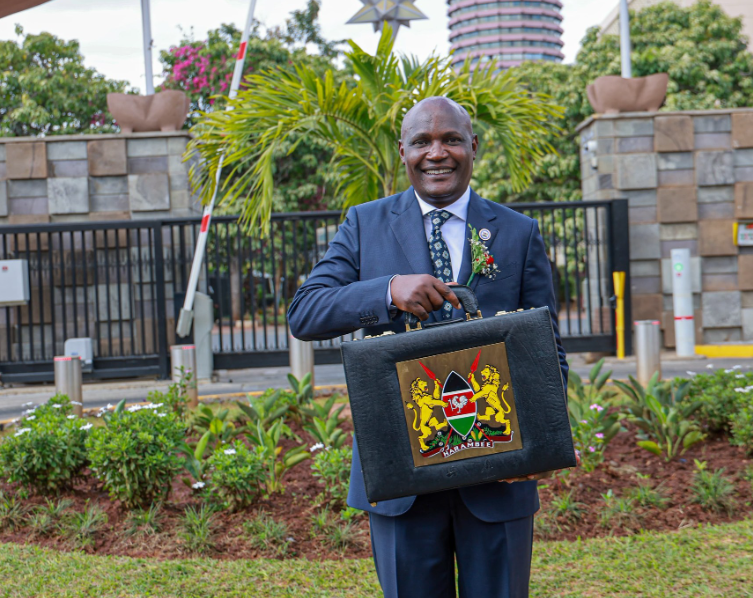
Every budget tells a story. Some budgets tell us where a government wants to go, while others reveal what it is worried about. Kenya’s 2026/27 Budget, presented by Treasury Cabinet Secretary John Mbadi, offers a fascinating glimpse into the country’s priorities. On one hand, it allocates billions of shillings to education, healthcare, housing, infrastructure, security and social protection.
On the other hand, it raises an important question that business leaders, investors and ordinary wananchi cannot afford to ignore: are we investing enough in sectors that create wealth, or are we spending more on sectors that consume it?
This is not to suggest that funding schools, hospitals or social programmes is a bad thing. In fact, these are essential services that improve lives and strengthen the economy over the long term. However, when a country is grappling with unemployment, high public debt, and slow private-sector growth, it becomes important to ask whether enough resources are being directed towards activities that generate income, exports, jobs, and investment.
So, what does the budget tell us?
Education remains king, but can learning alone drive growth?
Education emerged as one of the biggest winners in the budget, receiving more than Ksh 780 billion. This reflects the government’s commitment to teachers, school infrastructure and the implementation of the Competency Based Curriculum.
Investing in education is often described as planting seeds for the future. The challenge, however, is that education alone does not automatically create jobs. A country can produce thousands of graduates every year, but if industries are not expanding and businesses are not hiring, many of those graduates will find themselves carrying certificates instead of pay slips.
The budget rightly prioritises learning, but it also highlights the need for stronger links between education and industry. Skills development should go hand in hand with investments that help businesses grow and absorb the workforce being produced.
Infrastructure continues to receive massive funding
Roads, transport projects and housing programmes remain among the major beneficiaries of government spending. Infrastructure investment has long been viewed as a catalyst for economic growth because it improves connectivity, reduces transport costs and attracts investment.
There is no doubt that a smooth highway is better for business than a road full of potholes that could swallow a small hatchback whole. However, infrastructure is economically meaningful only when it supports productive activity.
A new road serving thriving farms, factories and industrial parks creates value. A new road serving areas with little economic activity offers far less return. The real question is not whether Kenya should build infrastructure, but whether those projects are being connected to sectors that generate exports, manufacturing output and employment.
Agriculture still feeds the nation, yet receives a smaller share
Agriculture remains one of Kenya’s largest employers and contributes significantly to export earnings. From tea and coffee to horticulture and livestock, the sector supports millions of livelihoods directly and indirectly.
Despite its importance, agriculture received a far smaller allocation than education, security and infrastructure. This raises questions about whether enough is being done to modernise farming, improve irrigation, strengthen value addition and support agricultural processing industries.
Many economists argue that countries build wealth by producing more than they consume. Agriculture offers one of Kenya’s strongest opportunities to achieve that goal because it generates export revenue while creating jobs in rural areas.
If Kenya wants to become a more productive economy, increasing support for agricultural innovation, storage facilities, processing plants and export markets could deliver significant returns.
Housing and social programmes reflect a focus on consumption
The affordable housing programme and various social protection initiatives continue to receive substantial government support. These programmes have important benefits. Housing projects create jobs in construction while social programmes provide relief to vulnerable households.
However, these initiatives primarily stimulate spending rather than production. When families receive support, they spend money on food, transport, clothing and other necessities. This helps businesses and boosts economic activity in the short term.
The challenge is that consumption-driven growth can only go so far. Sustainable prosperity often comes from producing goods and services that can be sold locally and internationally. A healthy economy needs consumers, but it also needs producers, innovators and exporters.
Without strong growth in manufacturing, agriculture and technology-driven enterprises, consumption alone cannot carry the economy indefinitely.
The missing piece may be private sector expansion
Perhaps the biggest debate emerging from Budget 2026 is whether enough attention has been given to expanding the private sector. Businesses create jobs, pay taxes, attract investment and drive innovation. Yet many entrepreneurs continue to face challenges ranging from access to affordable credit to high operating costs.
While the budget contains measures aimed at supporting economic growth, many business owners will be looking beyond allocations and asking a simple question: how easy will it be to start, run and expand a business in Kenya?
A productive economy is one where factories manufacture goods, farms increase output, technology firms innovate, and small businesses grow into large employers. Consumption is important because it keeps money circulating, but production is what creates new wealth.
As Kenyans digest the latest budget, the conversation should not only focus on who received the biggest allocation. It should also focus on whether those allocations are laying the foundation for an economy that produces more, exports more and creates more opportunities. After all, a nation cannot spend its way to prosperity forever. At some point, it must also produce its way there.











Leave a comment