

Kenya Vehicle Manufacturers(KVM) has received a KSh 2.4 billion cash injection from CFAO Mobility Kenya, a French-owned auto group, pushing the French stake in the KVM to 99.4%. The French firm has now wiped out substantial stakes owned by the Kenya Government through the National Treasury as well as private companies.
The National Treasury, which held a 35% stake for decades in Kenya Vehicle Manufacturers, has been diluted to 0.3%. CMC Holdings, once sitting at 32.5%, has also since been wiped out.
Kenya assembled its first vehicles at that Kenya Vehicle Manufacturers’ Thika plant.
Kenya Vehicle Manufacturers (KVM), has a diverse portfolio of assembled vehicles for the Kenyan market.
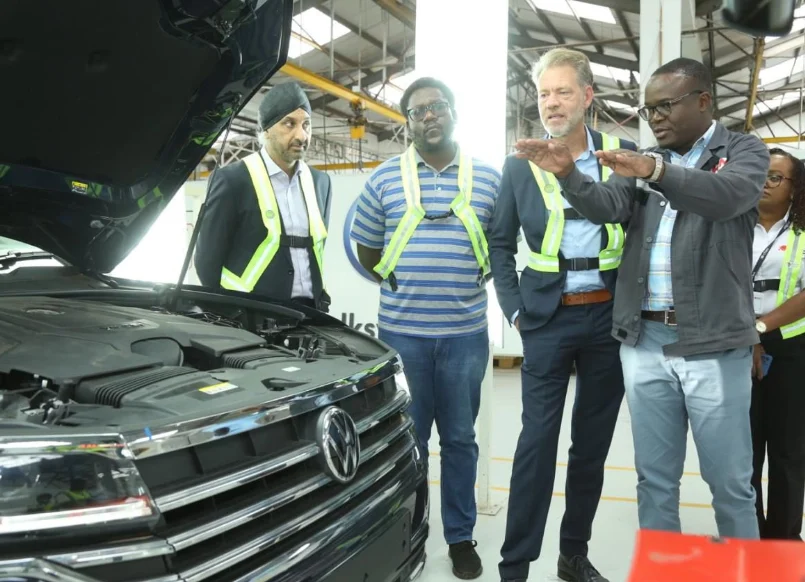
These include Mercedes-Benz trucks and buses, as well as models from Sinotruk, Tata, Hyundai, and BasiGo’s electric buses. The firm also has Volkswagen models to its lineup and multi-brand collection, reinforcing Kenya’s position as the regions’ leading hub for vehicle assembly.
Incorporated in July 1974, at first under the name Leyland Kenya Limited, KVM adopted its current form in 1989. Production at Kenya Vehicle Manufacturers began in 1976, with the first vehicle rolling off its assembly line in August of that year.
Originally designed to produce light and heavy commercial vehicles including Land Rovers, Range Rovers, Volkswagen Microbuses and Leyland trucks and buses, the model range produced by KVM now numbers 11 and includes Nissan Series, Land Rover, Foton and Hyundai models.
Operating in the five key sectors of vehicle assembly, bus body building, special vehicle operations, fabrication and surface branding, KVM also actively engages in the sale of mega tents. The primary markets for the vehicles that depart the company’s factory are located across East Africa and include countries such as Tanzania, Burundi, Uganda, Zambia and Kenya.
In recent years KVM has also become one of East Africa’s preferred producers of high quality buses. From its bus body building facility the company constructs minibuses, and medium and large buses with on board capacity ranging from 29 to 67 seats. Building according to specifications that conform to individual customer requirements, the company has successfully standardised its body frame works by building them off jig.
Bus production facilities at KVM plant are laid out in a flow line, with the actual body building being carried out on a trolley. This layout allows the bodies to be built in advance and temporarily stored away before being attached to the vehicles’ chassis. Additionally, KVM has introduced a number of key features to its production line including the adding of fibre gas windscreens to the front and rear of its 62 to 67 seat buses.
Alongside its bus body building capabilities, KVM has also built a reputation for its ability to construct tough, long lasting truck bodies, designed to suit the intended purpose of individual vehicle types. The company is able to provide its customers in this field with trucks that possess completely covered exterior bodies, back bodies with open spaces or with side doors.
One of the more exciting on-going developments involving KVM, and other vehicle manufacturers throughout the region, is the growing interest from Chinese vehicle manufacturers. At present, KVM collaborates with the Chinese company Foton Motors, assembling its Foton Sup V Double Cab and Foton Sup V Single Cab pick-up models.









Leave a comment