

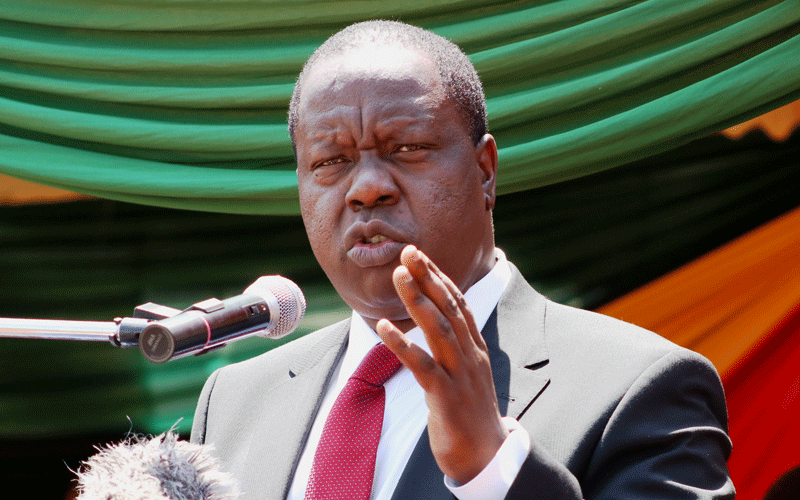
Few disputes in Kenya’s recent history have generated as much legal and political attention as the Ruaraka land saga. What began as a contest over land ownership and compensation has steadily evolved into a broader political debate with eyes on 2027.
Today, another question is emerging alongside the legal proceedings. Why has Fred Matiang’i become the dominant political face of a dispute whose official court record largely revolves around institutions and statutory processes, and doesn’t personally implicate him?
It is a question that deserves discussion, not because it diminishes the importance of accountability, but because public confidence in the justice system depends on investigations being seen as fair, consistent and free from political influence.
The Court Record and the Political Conversation
The official court proceedings focus on the National Land Commission, land ownership, compulsory acquisition, valuation and the legality of compensation paid over the Ruaraka land. The litigation concerns institutions exercising statutory mandates and competing legal claims over public resources.
Yet outside the courtroom, the conversation has increasingly centred on personalities.
That difference is significant; Courts determine legal responsibility through evidence. Politics often determines public perception through repetition as has been done in the Ruaraka Land Saga.
Timing Matters in Politics
The renewed attention to the Ruaraka saga comes at a politically significant moment.
Fred Matiang’i has returned to the national political stage and is widely discussed as one of the opposition figures likely to feature prominently in the run up to the 2027 General Election.
Whether that timing is purely coincidental or has contributed to the intensity of the public debate is a question that political observers continue to ask.
Democracies inevitably produce vigorous scrutiny of those seeking high office. Equally, institutions charged with enforcing the law must ensure that their actions are understood to be guided by evidence and statutory duty rather than electoral considerations.
That distinction is critical to maintaining public trust.
A New Focus on the Money Trail
Recent developments suggest that the conversation may also be shifting.
As the Ethics and Anti Corruption Commission pursues recovery of public funds and traces recipients of the compensation, attention has expanded beyond the approval of the acquisition itself.
Senior Counsel Ahmednasir Abdullahi welcomed that development, posting on X: “Right step in the right direction. Sue the lawyers who received the money… do proper tracing. Congratulations @EACCKenya.”
His remarks reflect a growing public expectation that accountability should extend to everyone who played a role in the transaction, including those who ultimately benefited from the movement of public funds.
Consistency Is the Foundation of Public Confidence
For investigative agencies, consistency is as important as success.
When investigations are perceived to apply the same standards to every institution, office holder and beneficiary, public confidence grows. When public attention appears to settle disproportionately on one individual while a wider institutional story remains in the background, questions naturally arise about whether the complete picture is being presented.
Those questions do not undermine legitimate investigations. On the contrary, they reinforce the principle that accountability is strongest when it is comprehensive, transparent and even handed.
Justice Must Be Seen to Follow the Evidence
Ultimately, the Ruaraka saga is bigger than any one politician.
It is about how public institutions exercise power, how public money is safeguarded and how accountability is pursued when rules are flouted and funds lost.
As Kenya moves closer to another election cycle, the challenge for investigative agencies, political leaders and commentators alike is to ensure that public debate remains anchored in evidence rather than perception.
If the objective is justice, then every institution, every office holder and every beneficiary connected to the disputed transaction should be examined through the same legal standard – not just one person.
That is the surest way to protect both the integrity of public institutions and the confidence of Kenyans in the rule of law.
Read: EABL Starts Construction Of Ksh1 Billion Microbrewery In Ruaraka
>>> Swazuri launches fightback over Ruaraka land saga














Leave a comment