

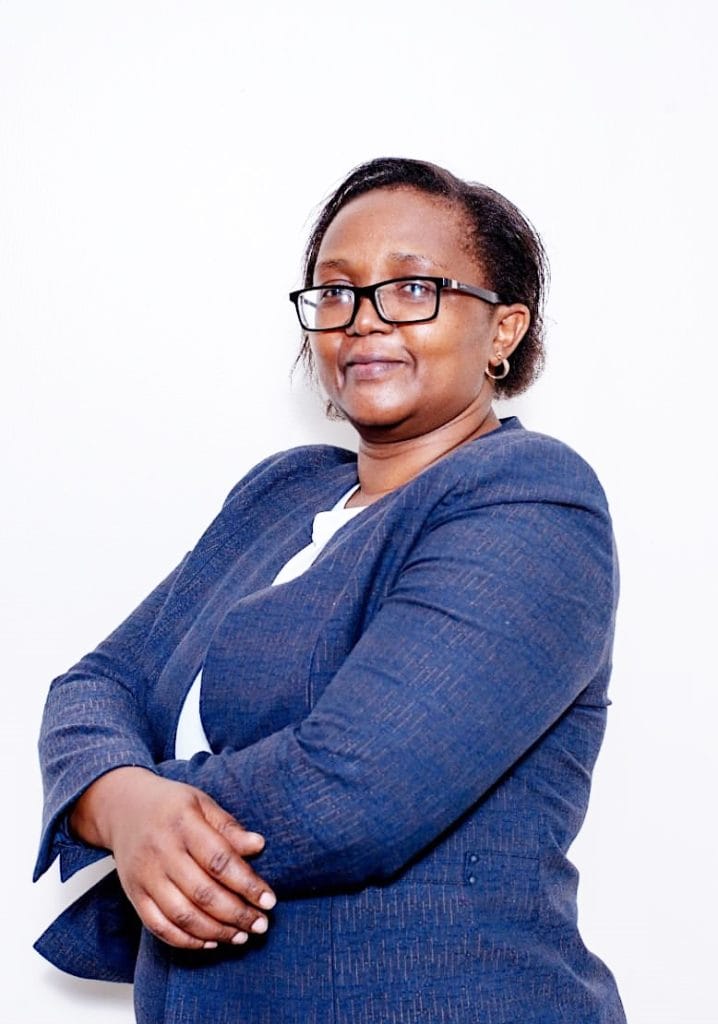
CPA Joyce Waceke Ndegwa, is the CEO of Muranga-based Mentor Deposit-Taking Savings and Credit Cooperative Society(SACCO), a female top executives running one of fastest growing SACCOs in Kenya today. A mother of four children, made up of two boys and two girls, the soft spoken Joyce meticulously runs the affairs of Mentor SACCO from her corner office on the 10th floor of prestigious Mentor SACCO Plaza, located in Muranga town.
Rising from being a clerk at Mentor SACCO to the CEO in 2017, Joyce has quietly built a business that had a debt of KSh 300 million and an asset base of KSh 7 billion into a thriving one that now has a balance sheet size of over KSh 19 billion, all in a span of nine years.
A Certified Public Accountant, also in possession of a Bachelor of Commerce Degree(Finance) from KCA University, Joyce has managed to assembly, and build Mentor SACCO from a small business into one of the largest financial cooperatives in the industry. “When I took over as CEO of Mentor SACCO, the institution had a balance sheet size of KSh 7 billion. Nine years down the line, we are now a business with assets worth more than KSh19 billion.
Under her watchful eye, Joyce-first born in a family of seven, has driven up the Society’s membership to over 55,000, up from 16,500 when she took over as CEO of Mentor SACCO. She has seen Mentor Sacco’s total revenue rise from KSh 890 million in 2017 to KSh 2.2 billion at the close of 2025. Deposits from members has also grown significantly during this period to KSh 13 billion up from KSh 4.3 billion nine years ago.
Read Also >> How a CEO is Redefining Hospitality at Sentrim Hotels & Lodges
“I inherited a loan book size of KSh 5.1 billion back then. This figure has since risen to KSh 14 billion at the end of last year. We project to close this year with a loan book of about KSh 20 billion, based on the unaudited financials that we have now,” said Mrs Ndegwa.
While Joyce found Mentor SACCO with an outstanding loan debt of KSh 300 million, this was cleared the same year that she took over at the institution.
“We currently have no outstanding loan and run the business without any external borrowings. This achievement is largely due to patronage and support from members of Mentor SACCO. We earn most of the income from interest charged on loans to our members. The liquidity of the SACCO is good based on deposits held on behalf of our members. All our successes as an institution revolves around the strong membership patronage of our products and services. I thank members for their loyalty and support as well as being our great ambassadors,” said Mrs Ndegwa.
Mentor SACCO transformation through rebranding
Established in 1977 by a group of 546 primary school teachers in the then Murang’a district, the former Murang’a Teachers SACCO has since evolved into one of the largest financial co-operatives in the industry, joining the top ranks of SACCOs with an asset base of over KSh 10 billion. Mentor SACCO opened its common bond in 2009, allowing the Society to recruit members beyond primary school teachers in Murang’a.
“Mentor SACCO evolved over time until 2009 when the SACCO Board found it prudent to accommodate members beyond primary school teachers to those from various Government departments, especially the Ministry of Education as well as those that relate with the teaching profession,” said Mrs Ndegwa.
The SACCO’s name was Murang’a teachers SACCO until 2011 when the SACCO saw the need to expand its membership beyond Murang’a County as well as serve members who were not necessarily teachers.
“The name Murang’a Teachers SACCO was now restrictive and not easily acceptable especially to people from the non-teaching profession who were interested in becoming members,” said Mrs Ndegwa.
In 2011, the SACCO rebranded from Murang’a Teachers SACCO to Mentor SACCO. The SACCO then begun recruiting from other sectors. The Society shifted its sights beyond Murang’a County and begun recruiting members beyond this catchment area.
Mentor SACCO Governance Structure and Branch Network
“Currently, we have six branches, with two branches outside Murang’a County, one in Nairobi and another in Kiambu County. We have the Head Office here in Murang’a, with other branches in Kenol, Ithanga and Thika, making a total of 4 branches in Murang’a. We also have 5 satellite offices to stay close to our members, especially the founders. These satellites are located within the sub-counties of Murang’a- in Kahuro, Kangema, Kiria-ini, Kangare, and Kandara, making a total of 5 such offices. These are points that Mentor SACCO uses to reach out to members seeking for services such as general enquiries or delivery of documents to the SACCO,” said Mrs Ndegwa.
SEE >> Avocado Farming Clicks For Young Computer Science Graduate
“We have a membership of around 55,000 from the initial 546 members in 1977. The SACCO is governed by 9 board members drawn from each of the 9 Muranga County sub counties. The 9 sub-counties have been merged into three regions from where we draw 3 members who sit on the Society’s Supervisory Board,” said Mrs Ndegwa.
Since the rebranding exercise, Mentor SACCO has received overwhelming response from the public, including acceptability from members who are not teachers as well as those from outside Murang’a County.
“The diversity of membership has come with growth to the SACCO, a benefit to members as well as the institution. We now have teachers from outside Murang’a County, drawn from other regions such as Machakos County and Kajiado. We have a teacher who is a member from each of the 47 counties in Kenya. The SACCO has grown courtesy of our members who have been the brand ambassadors to their relatives and friends,” said Mrs Ndegwa.
Joyce Ndegwa Style of leadership at Mentor SACCO
Even with the successes that she has achieved as CEO Mentor SACCO, she points at the tremendous support that she has had from the Society’s Board of Directors.
“We have grown as an institution because of the warm and cordial relations between management and the board. We sit down together and listen to contributions from all of us as a team. We look at things from the same perspective, learn from each other and move on. I am also an employee and therefore a member of Mentor SACCO staff although I have the privilege of being the team leader. We have sittings with staff, head of departments, discuss and agree, evaluate what we are doing and where we want to go,” said Mrs Ndegwa.
The writer can be reached on: [email protected]














Tuko Mentor milele