

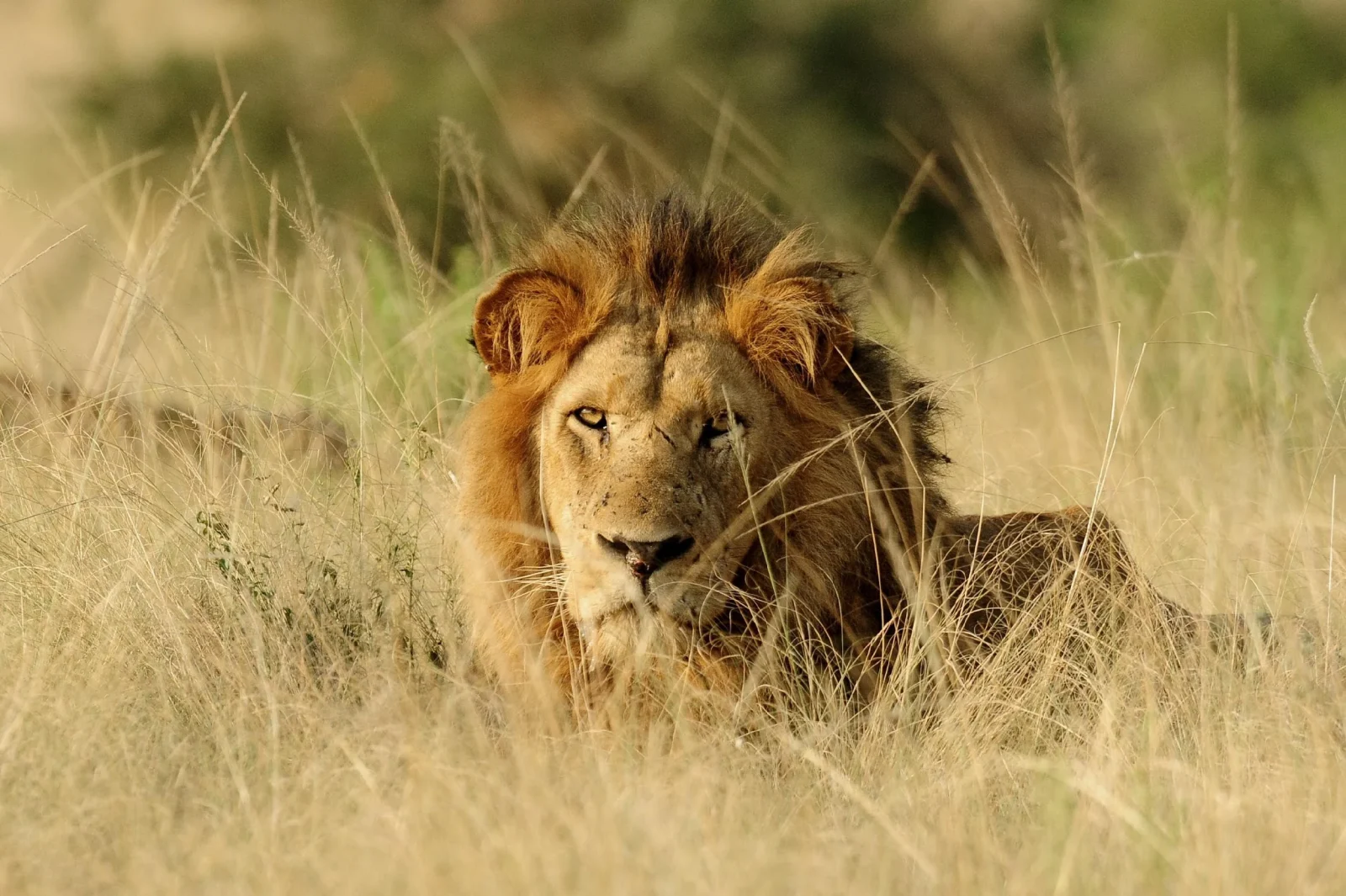
A surge in poaching targeting African lions for their body parts could pose a severe long-term risk to the species unless governments and conservation groups act quickly, according to new peer-reviewed research.
The study, published in Conservation Letters, finds that organized criminal networks are increasingly killing lions to supply a growing illegal trade in bones, claws, skins and teeth destined for markets across Africa and Asia.
African lion populations have already declined sharply over the past century. Once estimated in the hundreds of thousands, the animals now occupy roughly 6% of their historical range, with about 23,000 individuals remaining in the wild. Habitat loss, declining prey and conflict with humans have long driven those declines. Researchers say targeted poaching for body parts is now compounding those pressures.
The report describes an emerging pattern of deliberate and coordinated killing of lions for trade, alongside opportunistic harvesting of body parts from animals that die from other causes.
Poachers increasingly deploy poisoned bait and wire snares, tactics capable of killing multiple animals at once, according to the study’s lead author, Peter Lindsey, who directs the Lion Recovery Fund at the Wildlife Conservation Network. Poisoned carcasses can eliminate entire prides in a single incident and also kill scavengers and other carnivores.
Researchers documented cases in which poisoned carcasses—including giraffes used as bait—were left to attract lions. The approach has resulted in large die-offs that also devastate vulture populations and other scavenging species.
Law-enforcement seizures in recent years illustrate the scale of the trade. Authorities in Zambia confiscated 17 lion skulls, while officials in Mozambique intercepted more than 300 kilograms (about 660 pounds) of lion body parts. Additional incidents have been reported in Botswana, Zimbabwe, Uganda and South Africa.
Conservationists say the trade is increasingly tied to transnational trafficking networks. Lion parts are used in traditional belief systems in at least 37 African countries and are also exported to Southeast Asia, where they may be used as substitutes for tiger products in traditional medicine.
Demand within Africa also plays a role. Researchers note that markets in West Africa—including Senegal—have become important nodes in cross-border trade networks moving wildlife products across the continent.
The trafficking networks often overlap with criminal operations involved in smuggling ivory, rhino horn and pangolin scales, the study says.
The authors warn that trade-driven poaching could become one of the defining threats to the species if left unchecked, drawing comparisons with the pressure illegal markets placed on wild tiger populations in Asia.
To counter the trend, the study outlines six priority actions: strengthening protection and monitoring of lion populations; expanding partnerships with local communities; improving intelligence on trafficking networks; increasing enforcement along trade routes; strengthening legal and judicial responses; and reducing consumer demand for lion body parts through targeted awareness campaigns.
Without coordinated action, researchers say, the emerging trade risks accelerating declines in a species already under significant strain.
The Wildlife Conservation Society, a global conservation organization operating in more than 50 countries, supports lion protection efforts through research and field programs. The group runs one of the world’s largest conservation field networks and works with governments, Indigenous peoples, local communities and the private sector to protect wildlife and ecosystems. Its New York-based zoos and aquarium—including the Bronx Zoo and the New York Aquarium—attract more than 3.5 million visitors each year and help fund conservation initiatives worldwide.














Leave a comment