

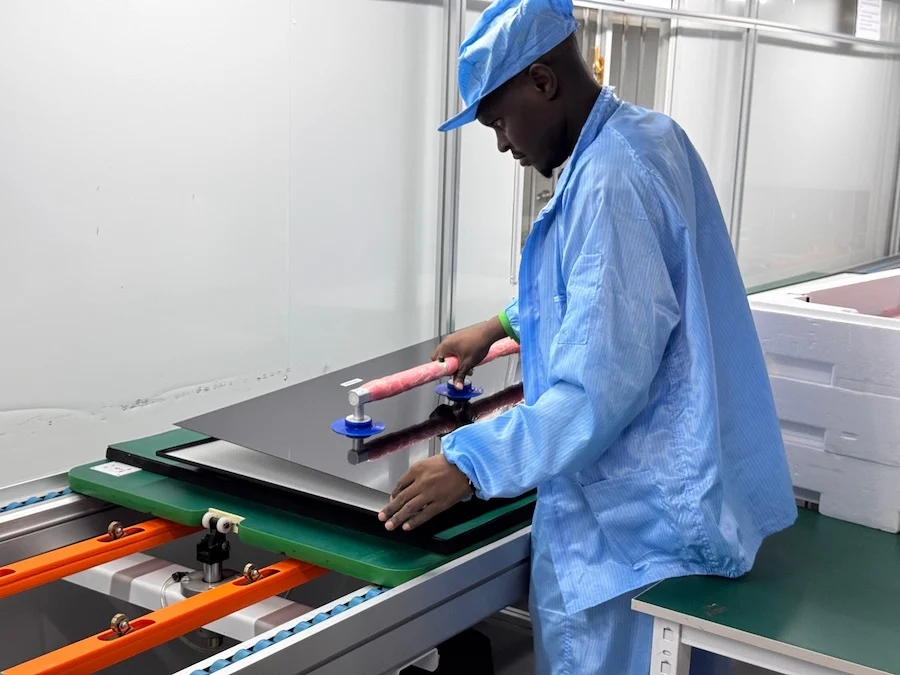
Kenya’s pioneer local assembler of consumer electronics, Vision Plus, has announced that Kenyan consumers stand to save over Ksh 750 million annually in repair and premature replacement fees following the integration of insect-repelling features across its entire range of household electronics.
The groundbreaking technology makes Vision Plus the first manufacturer globally to engineer a synchronised pest-resilient ecosystem for the home. The move is set to save over 10 million TV and audio-owning households in Kenya millions of shillings in avoidable service and replacement costs.
The local assembler operates at the Tatu City industrial special economic zone. Managing Director Umesh Bhojwani said nearly 30% of hardware failures in Kenyan households, ranging from motherboard short circuits to speaker coil corrosion, were caused by insect infestations seeking warmth and shelter in electronic housings.
“To solve this local reality, we integrated Environmental Resilience Technology (ERT) into visual and audio lines to protect the entire home entertainment hub and lengthen the lifetime of these investments, which should ideally last at least three years,” said Umesh. He pointed out that the infestations had shortened the average lifespan of electronics in Kenyan households to approximately four years.
> At Coca-Cola, the Magic of Shared Meals Campaign Kicks Off
He explained that the financial impact of this tropicalised engineering is substantial. Noting that for most Kenyan families, electronics represent a significant long-term investment, pest damage often leads to catastrophic failures that occur just after warranty periods, forcing expensive repairs or total replacements.
The features work by delivering ultrasonic deterrence where integrated modules emit frequencies that are harmless to humans and pets but create an acoustic barrier for insects like cockroaches and ants. Its internal nano-sealing involves treating critical components, including motherboards and chips with a specialized coating to prevent corrosion caused by biological debris.
“In tropical environments like Kenya, insect-driven electrical failure is a silent hardware killer that global manufacturers often overlook,” said Umesh, pointing out that household electronics are magnets for cockroaches, ants, and spiders because the devices act as thermotaxis.
The insects are naturally drawn to the heat generated by power supply units and motherboards. Pheromone trailing makes the insects leave a chemical trail, leading others into the narrow, dark crevices of the electronics. The insects also carry moisture and waste and frequently cause short circuits when they act as conductors.
Traditional repairs for insect damage are often categorized as environmental damage and are usually excluded from standard warranties.
> Saccos to Undergo Radical Reforms Under New Bill














Leave a comment