

The government has stepped up efforts to strengthen Kenya’s cybersecurity framework and develop governance rules for artificial intelligence (AI) as cyber threats become an increasing risk to the country’s fast-growing digital economy.
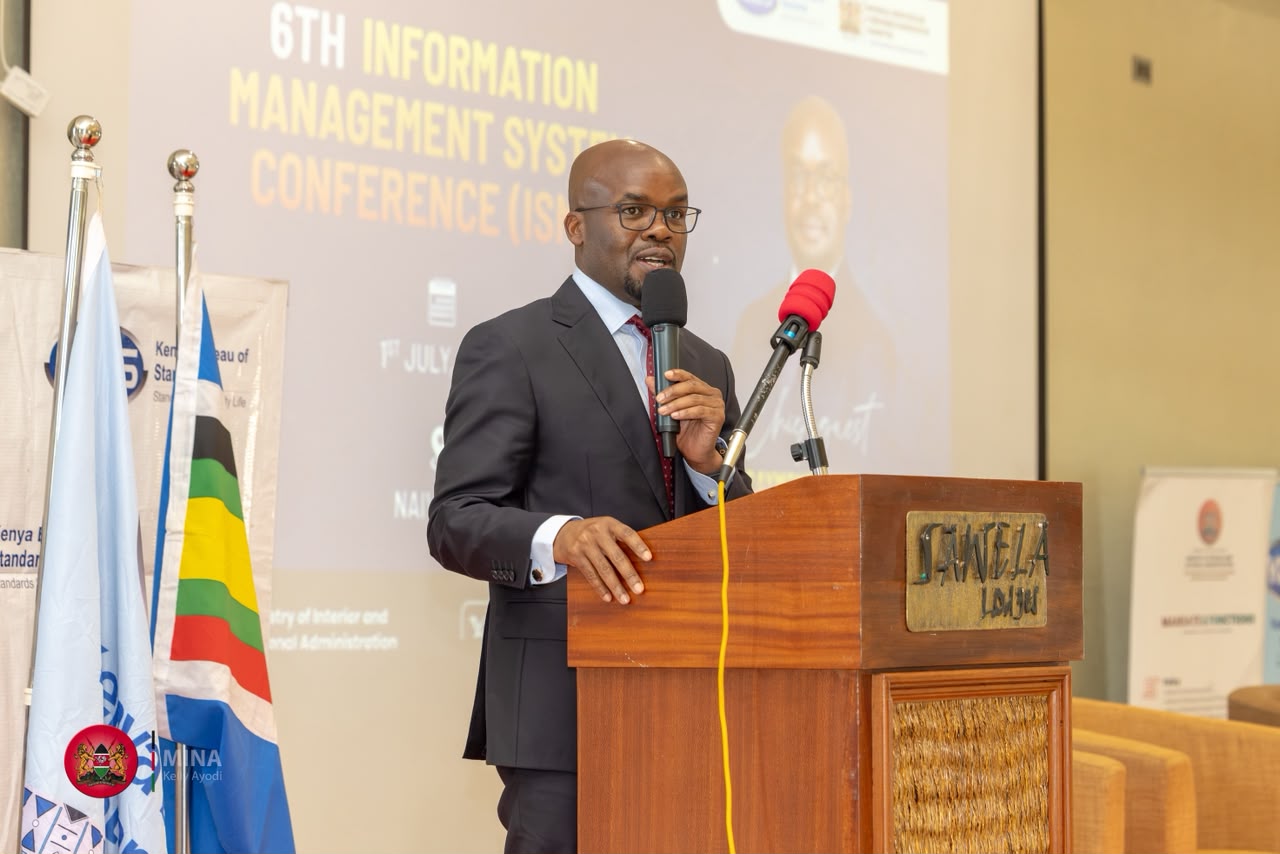
Speaking at the Sixth Annual Information Security Management Systems (ISMS) Conference in Naivasha, Principal Secretary for Internal Security and National Administration Raymond Omollo said the rapid digitisation of government services and businesses has expanded Kenya’s exposure to cybercrime, making stronger safeguards necessary.
The conference, organised by the National Computer and Cybercrimes Coordination Committee (NC4) and the Kenya Bureau of Standards (KEBS), brought together government agencies, regulators, cybersecurity professionals, academia and private sector players to discuss emerging digital security challenges.
Omollo said Kenya’s digital transformation has accelerated in recent years, with the eCitizen platform now supporting more than 24,000 government services, serving over 15 million users and processing about 500,000 transactions daily. While the shift has improved efficiency and access to public services, it has also increased the country’s cyber risk exposure.
“National security is no longer confined to traditional security infrastructure. Today, it includes protecting cloud systems, digital payment platforms, telecommunications networks and critical information infrastructure that citizens depend on every day,” he said.
The government said it is strengthening its cyber resilience through implementation of the Computer Misuse and Cybercrimes Act, the operationalisation of the National Computer and Cybercrimes Coordination Committee and enforcement of the Critical Information Infrastructure Protection and Cybersecurity Management Regulations, 2024. The regulations require operators of critical information infrastructure to identify digital assets, secure systems and continuously monitor cyber threats.
Omollo also welcomed Parliament’s approval of the establishment of the National Cybersecurity Agency, saying the institution is expected to improve coordination and preparedness against increasingly sophisticated cyber threats.
He warned that advances in artificial intelligence are creating new security risks, including AI-generated deepfakes, misinformation campaigns, identity fraud and more sophisticated cyberattacks.
“As technology evolves, we are witnessing the emergence of AI-generated deepfakes, sophisticated misinformation campaigns and new forms of cybercrime that threaten public trust and national security. Our response must evolve just as rapidly,” he said.
Beyond regulation, Omollo called for greater investment in local cybersecurity innovation, urging Kenyan firms and institutions to develop home-grown digital security solutions instead of relying primarily on imported technologies.
“The next generation of cybersecurity solutions should not only be imported into Kenya; they should also be designed, developed and exported from Kenya,” he said.
The three-day conference is expected to produce policy and technical recommendations aimed at strengthening cybersecurity standards across both the public and private sectors as Kenya’s digital economy continues to expand.
Read: Kenya Records 3 Billion Cyberattacks as Businesses Face Rising Digital Security Threats
>>> Parliament Approves Creation of National Cybersecurity Agency














Leave a comment