

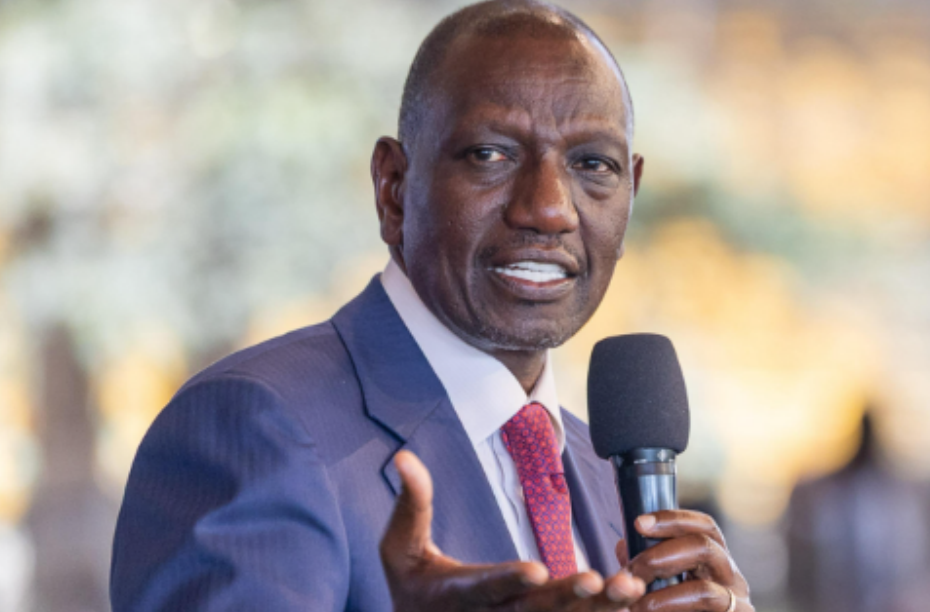
President William Ruto’s launch of the national conversation on Vision 2060 has put Kenya’s long-term economic direction back on the table, with the proposed blueprint expected to influence investment, public spending, industrial policy and private sector growth for decades.
The conversation, launched at the Kenyatta International Convention Centre in Nairobi on Wednesday, August 12, 2026, brought together more than 5,000 delegates from all 47 counties. Unlike an ordinary government policy announcement, the exercise is intended to collect views from citizens before the country settles on a new development framework to succeed Vision 2030.
For the financial and business sector, the timing is important. Kenya is entering the final years of Vision 2030 while dealing with a large public debt burden, pressure on government revenues, high financing costs and the need to create enough productive jobs for a growing population.
The new plan will therefore have to answer a difficult question: how can Kenya grow its economy faster without creating financial pressures that become a problem for future generations?
Five financial issues that will shape Vision 2060
Capital allocation will be crucial
One of the biggest implications of a 30-year development plan will be how Kenya decides where to direct scarce capital.
The government cannot finance every infrastructure, industrial, and social project at once. The new vision will therefore need to identify sectors capable of generating strong economic returns and attracting private investment.
Agriculture, manufacturing, energy, logistics, healthcare, technology and financial services are among the areas with potential to support broader economic growth.
For investors, a clear national investment direction can make it easier to identify sectors likely to receive infrastructure support, policy attention and private capital.
The private sector will need a larger role
Kenya’s development ambitions cannot be financed by government borrowing alone.
Vision 2060 is likely to increase the importance of private capital, public-private partnerships and institutional investors such as pension funds and insurance companies.
This could create opportunities for banks, asset managers, developers, infrastructure funds and other financial institutions to participate in long-term projects.
It also means the government will have to create conditions that make investors comfortable committing money for longer periods.
Predictable regulation, transparent procurement and stable taxation will matter as much as the projects themselves.
Manufacturing could strengthen the tax base
A more productive manufacturing sector would have implications beyond employment.
If Kenya can expand local production and develop competitive export industries, businesses would generate more taxable income while the country earns additional foreign exchange from exports.
This could gradually broaden the tax base instead of relying heavily on a relatively narrow group of formal businesses and salaried workers.
For investors, the important question will be whether government policies can reduce the cost of production enough to make Kenyan-made goods competitive both locally and internationally.
Infrastructure must generate economic returns
Kenya has invested heavily in transport, energy and other infrastructure under Vision 2030. The next phase should put greater emphasis on the economic returns from these investments.
For the business community, infrastructure is valuable when it lowers costs and improves productivity.
A more efficient port can reduce the cost of imports and exports. Reliable electricity can reduce losses for manufacturers. Better roads can connect farmers to markets and reduce transport expenses.
Vision 2060 therefore presents an opportunity to move from measuring development by the number of projects completed to measuring it by the economic activity those projects create.
Policy certainty could attract long-term capital
Long-term investors need more than attractive projects. They need confidence that the rules will remain reasonably predictable.
This will be particularly important for pension funds, insurers and foreign investors whose investment decisions can stretch over decades.
Ruto has said Vision 2060 should provide a long-term framework that is not disrupted by changes in political leadership. Turning that idea into reality could be one of the plan’s biggest economic advantages.
A credible long-term framework could help businesses make investment decisions with greater confidence, while inconsistent implementation would weaken the value of the entire exercise.
The national conversation therefore carries significant financial implications. Vision 2060 is ultimately about more than where Kenya wants to be in 2060. It is about how the country will mobilise capital, manage public finances, support productive businesses and create wealth along the way.
The success of the blueprint will be judged less by the quality of its language than by what happens to investment, productivity, incomes, exports and public finances once implementation begins.












Leave a comment