

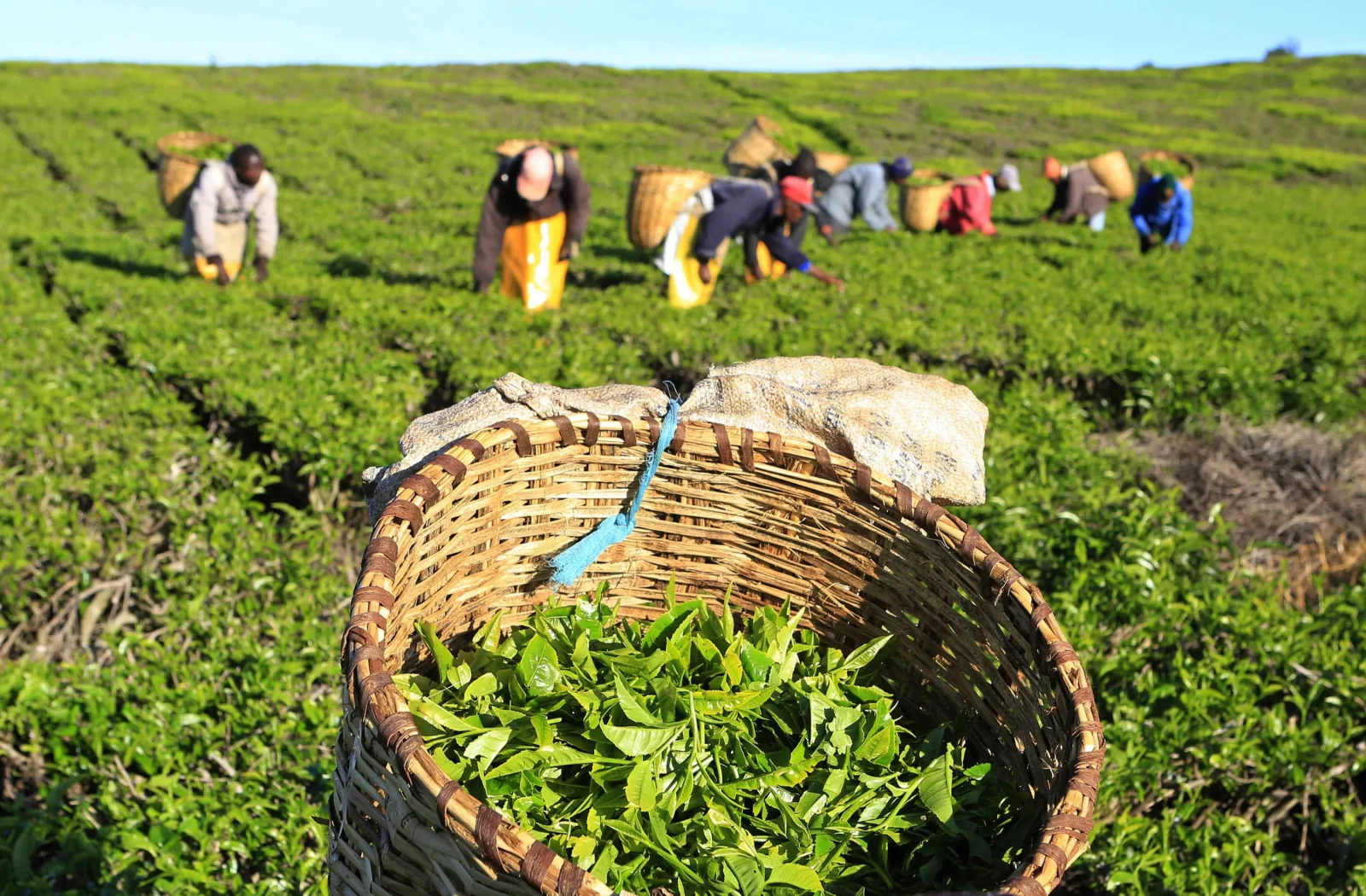
Government interventions in Kenya’s tea sector over the past four years have contributed to higher green-leaf payments, increased export earnings and greater investment in smallholder factories, even as farmers call for further improvements in their returns.
The reforms have focused on reducing production costs, modernising tea factories, expanding markets and increasing the amount of value generated from Kenyan tea that reaches farmers.
Among the key interventions has been the distribution of subsidised fertiliser to smallholder growers.
Since 2022, more than 650,000 tea farmers have received about 290,000 tonnes of subsidised fertiliser, providing relief to growers facing high production costs.
The government has also invested Sh850 million in modernising machinery and equipment in 17 smallholder tea factories as part of efforts to improve efficiency and the quality of Kenyan tea.
The Tea Board of Kenya says the interventions are beginning to translate into improved returns for farmers.
Average green-leaf payments increased from about Sh35 per kilogramme in 2021 to Sh64 in 2024, before settling at Sh56 in 2025.
Tea production also increased from 537 million kilogrammes in 2021 to 598 million kilogrammes in 2024, although output declined to 550 million kilogrammes in 2025.
At the same time, the value of tea exports rose substantially, from Sh136.5 billion in 2021 to Sh181.6 billion in 2024 and Sh186.9 billion in 2025.
The Government is targeting average farmer payments of at least Sh100 per kilogramme by next year, with officials pointing to improved quality, lower production costs, increased value addition and more competitive selling channels as key drivers of the target.
Focus shifts to value addition
The reform programme has also sought to reduce the industry’s reliance on bulk tea exports and enable Kenya to capture more value from its produce.
The Government removed VAT on tea purchased from factories for value addition, while packaging materials for value-added tea were zero-rated.
It has also provided a Sh100 million grant to Kenya Tea Packers (Ketepa) to establish a common-user facility for value addition.
The measures are intended to support the production of more finished tea products and strengthen Kenya’s position in international markets.
The Government has simultaneously stepped up efforts to diversify export destinations, promoting Kenyan tea in traditional and emerging markets including Pakistan, Egypt, the United Arab Emirates, the United Kingdom, China, Saudi Arabia, Germany and Malaysia.
The reforms have also extended to the regulatory framework, with the introduction of the Tea (Registration and Licensing) Regulations and Tea (Levy) Regulations in 2026.
Farmers report improved earnings
For tea growers, the changes are being felt at farm level, although some say there is still room for improvement.
In Baraton, Nandi County, seven-acre tea farmer Kennedy Kemboi says the increase in green-leaf prices has made it easier to meet some of the costs of running his farm.
Kemboi says the current price has enabled him to pay farm workers and retain some income to meet household needs.
He is also waiting for subsidised fertiliser, which he expects will help lower the cost of maintaining his farm.
In Nyamache, Kisii County, farmer Teresa Moraa says tea remains her main source of income but argues that growers need stronger returns to meet household expenses, including school fees.
Her concerns highlight the challenge facing the reform programme: ensuring that improvements recorded at industry level translate into sufficiently higher and more predictable incomes for individual growers.
Building on the gains
The Government’s next phase of reforms is expected to focus on strengthening factory governance, reducing production costs, expanding value addition and widening access to international markets.
The aim is to ensure that Kenyan tea earns more across the value chain while increasing the share of that value retained by farmers.
The changes come against a backdrop of longstanding challenges in the sector, including production costs, fluctuations in international tea prices, limited value addition and dependence on a relatively narrow range of export markets.
For Kenya’s hundreds of thousands of smallholder tea farmers, the success of the reforms will ultimately be measured not only by production and export figures but by the income they receive from every kilogramme of green leaf delivered to their factories.
The Government’s Sh100-per-kilogramme target therefore represents the next major test of the reform programme as Kenya seeks to build a tea industry that is more competitive, diversified and rewarding to growers.
Read: Ruto @ 4: Govt’s Teacher Recruitment Drive Cuts Staffing Gap
>>> NSE: Winners and Losers as Tea firms Dominate















Leave a comment