

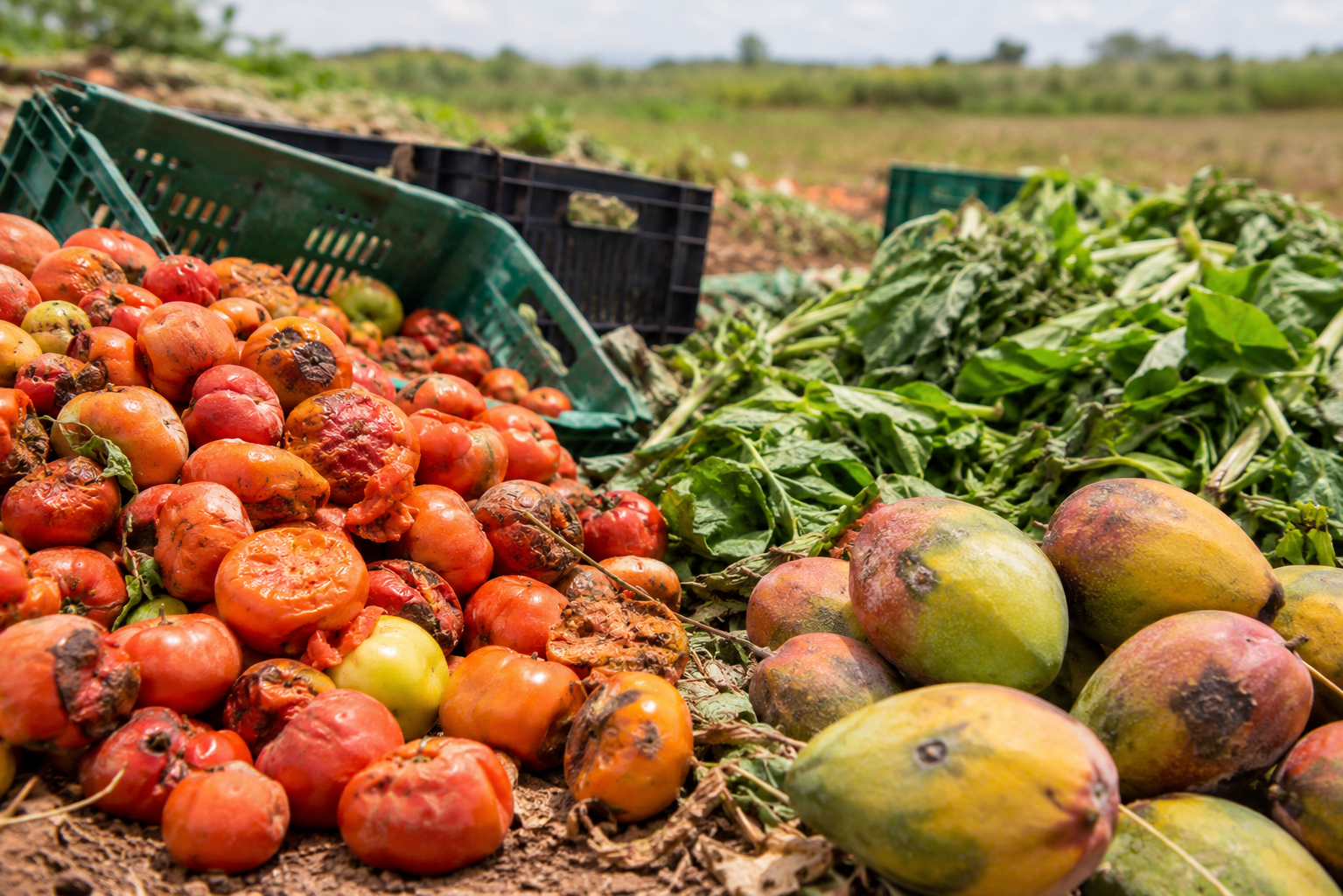
Kenya loses approximately nine million tonnes of food every year, costing the economy an estimated Ksh 72 billion as millions of people continue to face food insecurity.
TechnoServe’s NutriSave programme examines ways to reduce food losses and improve access to affordable, nutritious fruits and vegetables.
The programme is funded by the Gates Foundation and the UK’s Foreign, Commonwealth and Development Office.
TechnoServe estimates that between 30 and 40 per cent of food produced in Kenya is lost or wasted before reaching consumers. At the same time, nearly one-third of the population is food insecure, while only about two per cent consumes recommended amounts of fruits and vegetables.
The research focused on tomatoes, mangoes and indigenous leafy vegetables, identifying challenges at various stages of the supply chain.
For tomatoes, losses stem from poor-quality seeds, pests, diseases, unsuitable harvesting practices, and rough handling. Transport delays, inadequate storage and poor market conditions further contribute to produce damage.
Mango farmers face additional challenges from fruit flies, diseases, poor harvesting techniques and limited processing capacity during peak seasons. Indigenous leafy vegetables are affected by inadequate packaging, poor transport, weather conditions and limited cooling facilities.
Research conducted by Jomo Kenyatta University of Agriculture and Technology and other NutriSave partners identified improved harvesting, sorting, packaging and storage as potential ways to reduce losses.
The findings also highlighted the importance of consumer demand in developing businesses that process surplus produce.
A survey of 1,281 households and 176 retailers found that consumers generally preferred fresh produce to processed products, including mango juice, tomato paste and flour containing indigenous leafy vegetables.
Mango juice recorded the highest consumer demand index among the three products. Packaging and affordability also influenced purchasing patterns, with many consumers opting for smaller packages.
TechnoServe acting country director for Kenya Sebastian Oggema said informal food vendors were important to the programme’s objectives.
“Informal food vendors were central to achieving NutriSave’s dual objectives of reducing food loss and waste while improving access to nutritious food for low-income consumers,” he said.
The programme has worked with businesses to redirect surplus and cosmetically imperfect produce into minimally processed ready-to-cook products.
Its recommendations include improving transport infrastructure, expanding access to finance, strengthening cold-chain systems and enhancing coordination between farmers and markets.
The research also identifies opportunities for processors, distributors, aggregators and food-supply businesses to develop commercial solutions that preserve produce and reduce waste.
TechnoServe food systems specialist Richard Pluke said reducing food waste was an important measure of a regenerative food system.
“Reducing food loss and waste is one of the clearest indicators that a food system is truly regenerative,” he said.













Leave a comment