

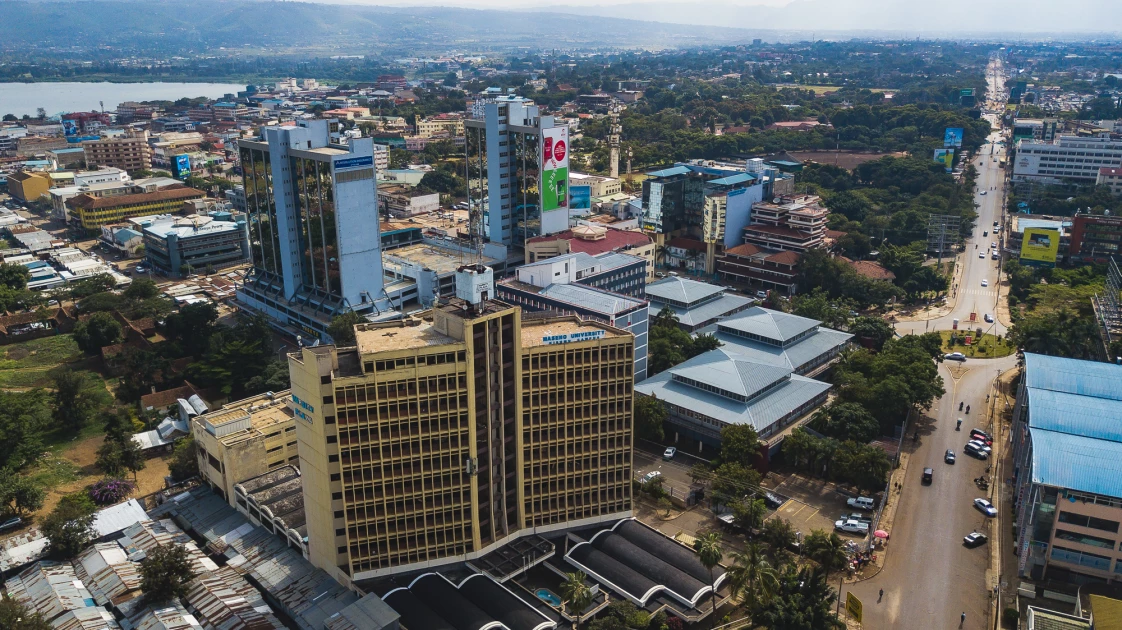
Kisumu County is banking on a Ksh 900 million allocation to ease its debt burden, with officials projecting that unpaid bills to contractors and suppliers could drop to Ksh 700 million after the payments.
The county government says it currently owes the two groups Ksh 1.6 billion, a figure that County Executive Committee Member for Finance George Okong’o says is lower than the Ksh 5.9 billion reported in the 2024/25 financial year.
Speaking on Wednesday, September 23, Okong’o explained that the larger figure covered several financial obligations, including pension liabilities, court decrees and other legal claims.
He said Kisumu inherited about Ksh 3.2 billion in pending bills when Governor Anyang’ Nyong’o assumed office in 2017.
The county hopes to reduce the outstanding debt by settling part of the amount owed in the current financial year, although the projected balance depends on the full utilisation of the allocation.
The county has also defended its revenue performance following a drop in reported collections from Ksh2.7 billion in 2024/25 to Ksh 1.8 billion in 2025/26.
Okong’o said the decline was linked to a change in how money collected by Jaramogi Oginga Odinga Teaching and Referral Hospital (JOOTRH) is accounted for.
The hospital generated about Ksh1.1 billion, but the funds were retained under the Facilities Improvement Fund and excluded from the county’s reported own-source revenue.
“The actual revenues have increased,” Okong’o said, noting that collections outside the hospital had grown by about Ksh200 million.
He added that the county’s revenue figures did not include Kisumu Water and Sewerage Company (KIWASCO), which collects about Ksh1.4 billion. Including the company’s collections would have raised the county’s reported revenue in 2024/25 to approximately Ksh4.1 billion.
County targets revenue losses
Okong’o acknowledged that weak collection systems and interference by individuals had affected the county’s ability to collect all the revenue due to it.
“We must admit that we also lose a lot of revenue because of human action. People actually steal,” he said.
The county is reviewing its revenue collection technology and plans to conduct fresh vetting of staff involved in the process. It is also working on improving revenue data, land services and Geographic Information System operations.
The finance executive said court awards and decrees had further strained the county’s finances, citing a claim of about Ksh7.1 billion that he questioned during the briefing.
He said Kisumu had raised concerns with the Judicial Service Commission over the conduct of some judges but maintained that oversight institutions, including the Auditor-General and Senate, would continue examining its financial records.
Okong’o also defended the county’s approach to development spending, saying it had to balance project implementation with its ability to meet financial obligations.
He attributed some of the pressure to a high wage bill inherited from former municipal councils and said unfinished projects would be carried into the next financial year alongside their outstanding obligations.









Leave a comment