

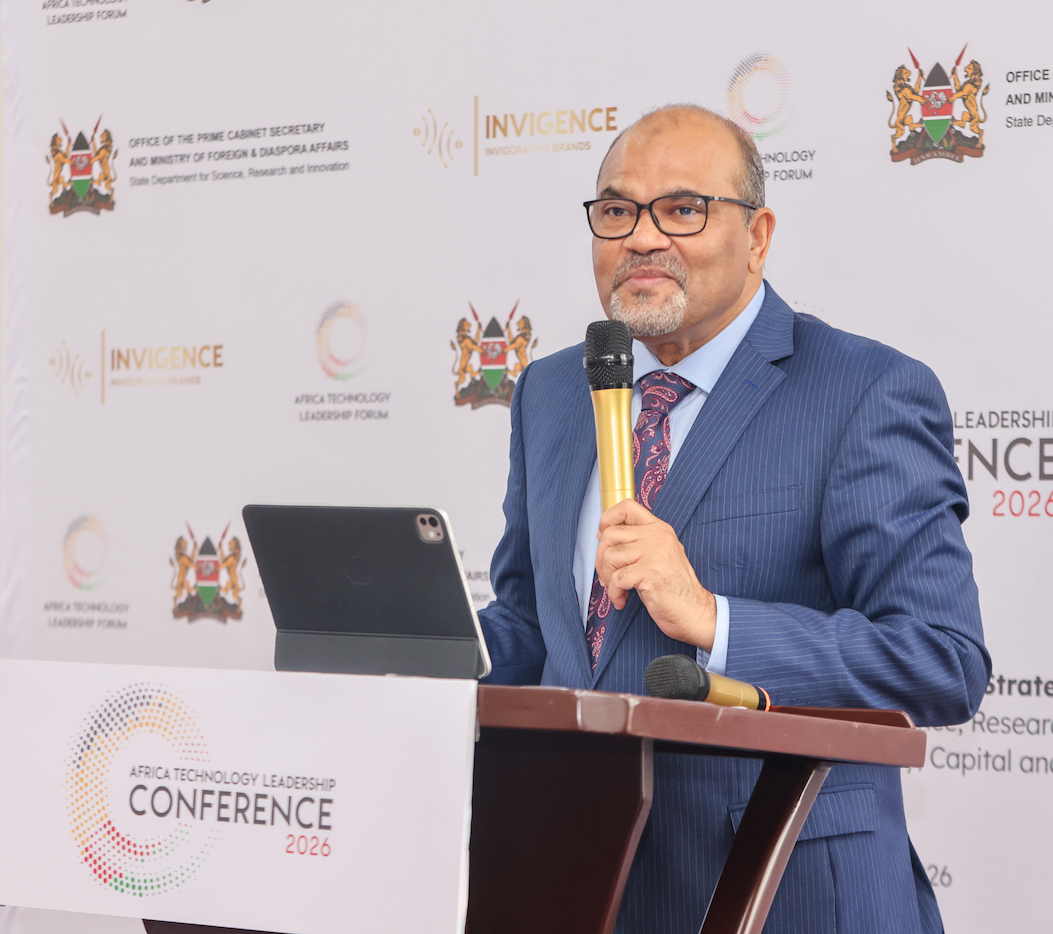
Kenya’s research and innovation community has outlined practical priorities for helping more locally developed knowledge, prototypes and technologies move from research into commercial use. The priorities emerged from the Research Innovation and Commercialisation Roundtable held at Weston Hotel in Nairobi as part of the preparations for the Africa Technology Leadership Conference 2026.
The session brought together representatives from public and private universities, TVET institutions, national research organisations, government departments, standards bodies and the private sector. Participants examined why promising work often stalls between the laboratory, validation, certification, investment and market entry. The discussion highlighted that Kenya has significant research and technical talent, but that stronger systems are needed to identify promising capabilities, involve industry earlier, finance development at each stage, and prepare innovations for standards approval and commercial scale.
“We are producing knowledge. Do we have the talent and ideas? The answer is yes. The question is whether we can convert more of this knowledge, consistently and sustainably,” said Professor Shaukat Abdulrazak, the Principal Secretary, State Department for Science, Research and Innovation. “The country must show clearer results from investment in universities and research institutions by converting more research into enterprises, jobs, useful products and measurable public benefit.”
He also called for stronger links between public institutions and the private sector, with industry participating in the research ecosystem rather than entering only after a prototype is complete. Priorities from the roundtable Some of the key priorities that were identified and that need focus included:
• Creating working links between academia, research institutions, TVETs and industry around defined national and commercial problems.
• Organising institutions into focused clusters, supported by a national repository of expertise, facilities and research outputs and stronger access to shared laboratories.
• Developing a financing pathway that distinguishes ideation, proof of concept, prototyping, validation, commercialisation and scale.
• Addressing standards, metrology, regulation and intellectual property requirements from the concept stage, including affordable testing support for smaller institutions and innovators.
• Giving TVET institutions a defined role and use ATLC 2026 to connect screened innovations with investors and corporate partners through deal rooms and structured one-to-one engagements.
The Kenya Bureau of Standards emphasised the importance of considering standards from the early stages of product development, rather than treating compliance as a final step before market entry. Participants also called for clearer intellectual property ownership and benefit-sharing arrangements so researchers, institutions, students and commercial partners can enter projects with greater certainty.
“We are here to reflect and prepare ourselves to be part of the upcoming Africa Technology Leadership Conference in October by shaping what we want to find and what we want to give there,” remarked Professor Vasey N. Mwaja, Chair of NACOSTI From Discussion to Action at ATLC 2026.
The roundtable will inform a Kenyan position paper for ATLC 2026, which takes place on 22nd and 23rd October at Argyle Grand Hotel in Nairobi. Before the conference, participating institutions are expected to identify their strongest research areas, leading researchers, major facilities and promising innovations for an initial national capability inventory. A first portfolio of innovations will be screened for engagement with investors, corporate partners and technical institutions.
The proposed deal-room model is intended to connect selected projects with potential finance, testing facilities, commercial expertise and distribution partnerships. The roundtable also called for more domestic financing, with public funding, industry investment, matching grants, blended finance and long-term capital aligned to the risk at each development stage. ATLC 2026 will bring together government, academia, research organisations, industry, investors, innovators and international partners around these priorities and investable opportunities.
To register as a speaker and for more conference information see, https://www.africaforum.tech/speakersubmission














Leave a comment