

In an era where AI is simplifying nearly everything technology, farming may appear a distant relative. Jembe or rake in hand, the image of the Kenyan farmer has for long invariably remained that of the soiled guy in gumboots.
But a wind of change is blowing in farms, leaving behind a new face of a farmer brandishing a smartphone and swiping through apps and the internet. Smart farming, where technology is being used to increase efficiency and productivity, is becoming the new normal in Kenya. “Digital or smart farming is the in-thing,” says Ms Janet Kariuki, a research expert and digital farming specialist. “It’s all about optimizing operations to maximize production and profit.”
Smart-Farming is simply using improved methods, better seed or breeds, technology and information to produce more food, reduce costs and increase profits – while taking good care of land and animals.
According, Janet, who featured as an expert on Co-operative Bank Youth Forum on Friday last week, all it takes is for a farmer to have a smartphone to dig into this bold new world of smart farming. With the smartphone, a farmer can download apps to check the weather, climate changes, markets and even perform digital recording. Whether farming crops or keeping livestock, digital technology is proving a winner.
The Youth Forums are sponsored by Co-operative Bank of Kenya as part of financial training for students, young entrepreneurs and employed youth. The latest training focused on smart farming, drone technology and other says of applying digital technology in agriculture.
RELATED >> Co-operatives Lower Entry Point For Youth Into Farming
Listening to Alex Mugane, it’s easy to understand how technology can make farming hip and more profitable. Mugane, who lives in Kiambu County, says he made the discovery during the COVID-19 outbreak in Kenya, which forced him to stay on his farm. He converted his 50×100 plot into a model training centre on farming crops like kale and spinach through horizontal gardens.
Using improvised pipes and horizontal gardens, Mugane said young people can practice farming on small pieces of space including even a house balcony. This can be supplemented by smart ways of dealing with pests organically like intercropping crops with onions or Mexican marigold and other herbs that act as pests repellants.
Agriculture has become a serious business increasingly being embraced by young people in Kenya. Technology is fuelling this trend with the use of data and applications to guide farming processes like soil testing, planting and spraying. In addition, digital farming helps farmers adapt to various situations – to different spaces and environments, for instance, and even practising organic farming.
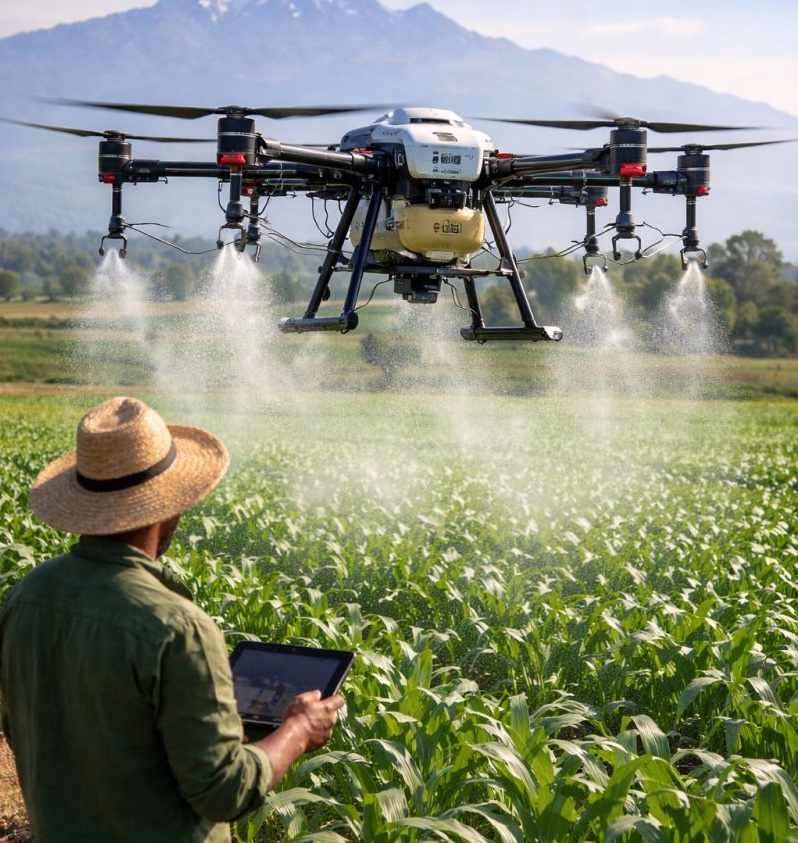
In various farms across the country, a new trend of using drones is merging and lifting small scale farmers to a level never imagined before. Mugane says drones are now being used to execute some technical farming processes such as irrigation monitoring, spraying, stress and pest detection. “Using drones is more accurate and efficient,” he says. “Drones can monitor soil moisture and irrigation efficiency to optimise water usage as opposed to doing it manually.”
Small farmers and young people can work with cooperative societies and banks such as Co-operative Bank to finance deployment of drone technology collectively. Drones use aerial imagery to identify or detect crop stress, nutrient deficiency and growth patterns. It can also be used effectively in targeted fertilizer application.
Part of digital farming training by Co-op Bank includes using climate-smart technologies that help in dealing with global warming. Some of the activities under this farming culture include drip irrigation, conservation agriculture, mulching and planting drought-resistant crops, which reduces water consumption.
Smart farming presents a number of agri-tech opportunities for young people in Kenya, including students, entrepreneurs and those employed. Using smart technologies, young people can transform innovation into revenue-generating activities such as delivering farming advice as well as training and offering technical support through online and mobile platforms. They can create digital channels for marketing and charge or earn commissions from linking buyers to sellers.
Overall, digital farming is a new world that is changing how Kenyans practice farming and promises bigger returns if well adopted. Financiers like Co-operative Bank and walk those interested through the funding journey.















Leave a comment