

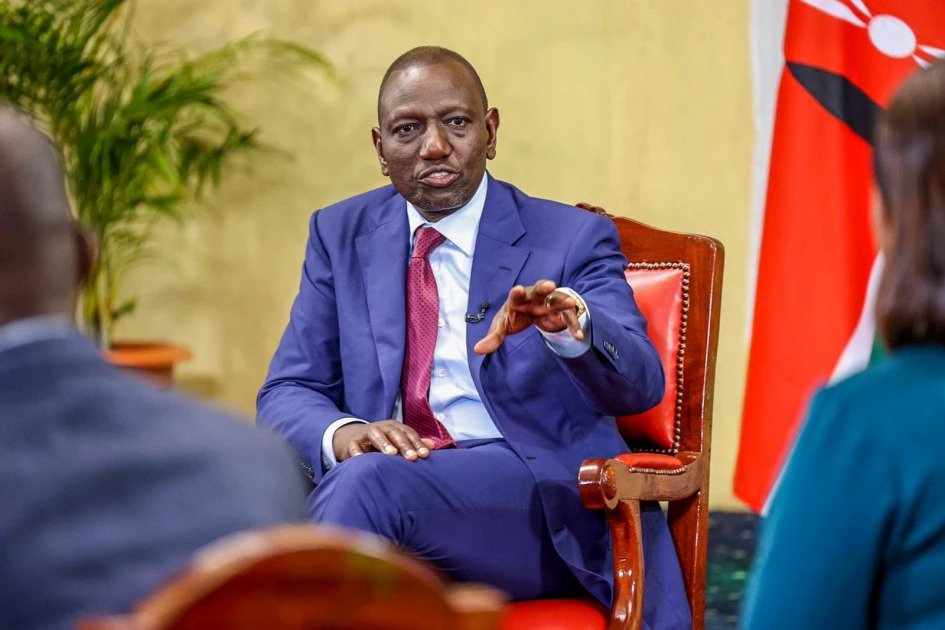
On April 11, President William Ruto confidently predicted that the Shilling would gain significantly against the dollar over the coming month. Prior to that, in March, he had warned those holding dollars that, within a few weeks, their fortunes would be wiped away by shifts in the market.
As of April 11, when the President spoke, the Shilling was trading at Ksh133.55 against the US dollar. Over a month later, its prolonged slide has continued with the Shilling at Ksh137.7 against the Dollar on May 21, defying Ruto’s prediction.
“In the next one month or so, you will see the exchange rate coming down in a very phenomenal way,” Ruto stated on April 11, talking up the deal to import oil on credit from Saudi Arabia and how it would ease demand for the dollar. “In fact, in my estimation, in the next couple of months, The exchange rate will come below 120 shillings, maybe 115. You never know,” he added.
Earlier, in March, he had cautioned those holding dollars. However, the Shilling’s downward spiral shows no signs of slowing down.
“I am giving you free advice that those of you who are holding dollars, you shortly might go into losses. You better do what you must do because this market is going to be different in a couple of weeks,” the President stated in March.
READ>KCB Pumps Ksh150M Into 2023 WRC Safari Rally
The Shilling has over the past two years been on a steady decline that continues to contribute to expensive imports, rising inflation and distress in debt servicing.
Importers paying increased costs for bringing in goods including raw materials for manufacturers pass on the cost to consumers, resulting in a rise in the prices of key products including food items. Among the country’s top imports are petroleum products, machinery, medicine, cars, wheat, clothing, vegetable oil and pharmaceuticals.
The weakened shilling also means that it will cost the cash-strapped government more to meet its foreign debt repayment obligations.
NEXT>Inside Aden Duale’s Hotels in Nairobi, Garissa








Leave a comment