


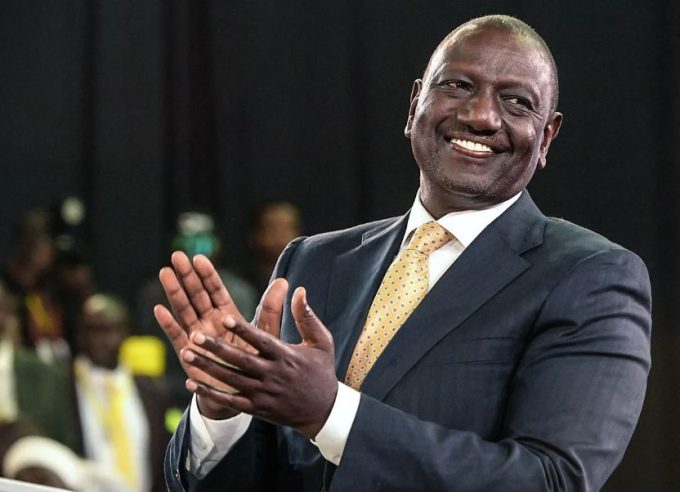
President William Ruto has announced a KSh5 billion livestock investment initiative targeting more than 350,000 pastoralists across 21 Arid and Semi-Arid Land (ASAL) counties as part of a broader strategy to transform Kenya’s livestock sector into a major driver of economic growth.
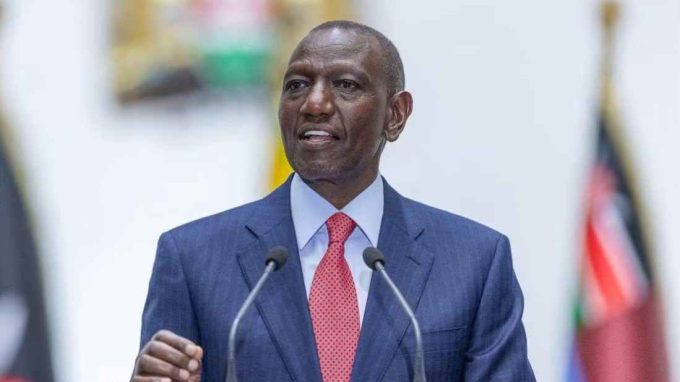
Speaking during the 63rd Madaraka Day celebrations in Wajir, Ruto said the government was shifting its approach to pastoralism by treating livestock as a commercial enterprise capable of generating wealth, jobs and export earnings.
The President noted that the livestock sector contributes about 12 per cent of Kenya’s Gross Domestic Product (GDP) and 42 per cent of agricultural GDP. In ASAL counties, the sector accounts for more than 90 per cent of employment and nearly 95 per cent of household income.
Despite its significance, Ruto said pastoralism has historically received limited investment in animal health, market access, infrastructure and financing.
To address the gap, the government has implemented a series of interventions, including a major livestock restocking programme that has seen more than 52,000 sheep, goats and cattle distributed to over 10,000 households across 16 ASAL counties.
The government has also vaccinated more than 10 million animals, expanded local vaccine production to over 123 million doses, established feedlots and hay storage facilities, rehabilitated more than 305,000 hectares of degraded rangelands and strengthened livestock training and marketing infrastructure.
In a further push to modernise agriculture in dryland regions, Ruto announced the deployment of an additional 2,000 agripreneurs to ASAL counties.
The officers will provide last-mile agricultural advisory services, connect pastoralist communities to markets and financing opportunities, and support the adoption of climate-smart farming practices. Their deployment brings the total number of agripreneurs across the country to 7,000.
According to the President, the interventions are already yielding results.
He said meat exports have risen by 84 per cent from KSh8.9 billion in 2022 to KSh16.4 billion in 2025. During the same period, milk production increased from 4.6 billion litres to 5.3 billion litres, while dairy exports grew from KSh4.9 billion to KSh14.2 billion.
Ruto said the gains were translating into higher incomes for pastoralist families and stronger markets for livestock producers.
The centrepiece of the government’s next phase of reforms is the establishment of County Livestock Investment Companies, which will be owned by pastoralists themselves.
Under the programme, more than 350,000 pastoralists across 21 ASAL counties will be supported to form and operate livestock investment companies that will provide access to markets, financing, insurance and value-addition opportunities.
The President said the initiative is expected to improve the livelihoods of more than two million household members during its first phase. He directed the Ministry of Agriculture and Livestock Development, working with county governments, to immediately begin registering the companies.
Ruto likened the model to successful farmer-owned institutions in other sectors, such as tea factories under the Kenya Tea Development Agency (KTDA) and dairy cooperatives.
The government also plans to operationalise the Livestock Enterprise Development Fund, establish a National Strategic Fodder Reserve, strengthen pastoral cooperatives, roll out the Animal Identification and Traceability System (ANITRAC), and invest in infrastructure aimed at unlocking premium export markets across Africa and the Middle East.
The President said Kenya must move beyond exporting live animals and focus on higher-value products such as processed meat, leather and dairy products.
He described Northern Kenya as a future gateway for Africa’s livestock trade with the Middle East and global markets, arguing that the region’s economic potential can be unlocked through deliberate investments in infrastructure, water, agriculture and livestock development.
Ruto also announced an ambitious water infrastructure programme that will see the government construct 50 mega dams, 200 medium and small dams and thousands of micro-dams across the country over the next five to seven years.
The projects are expected to bring an additional 2.5 million acres under irrigation, with several major dams planned for Northern Kenya, including Bute Dam in Wajir North and a mega dam on River Daua in Mandera.
The President said the investments were part of a broader effort to ensure that historically marginalised regions receive their fair share of development and economic opportunities.
Read: ASAL Governors Sensitized On Ksh14 Billion Drought Insurance Project
>>> President William Ruto Full Madaraka Day Speech In Wajir










Leave a comment