

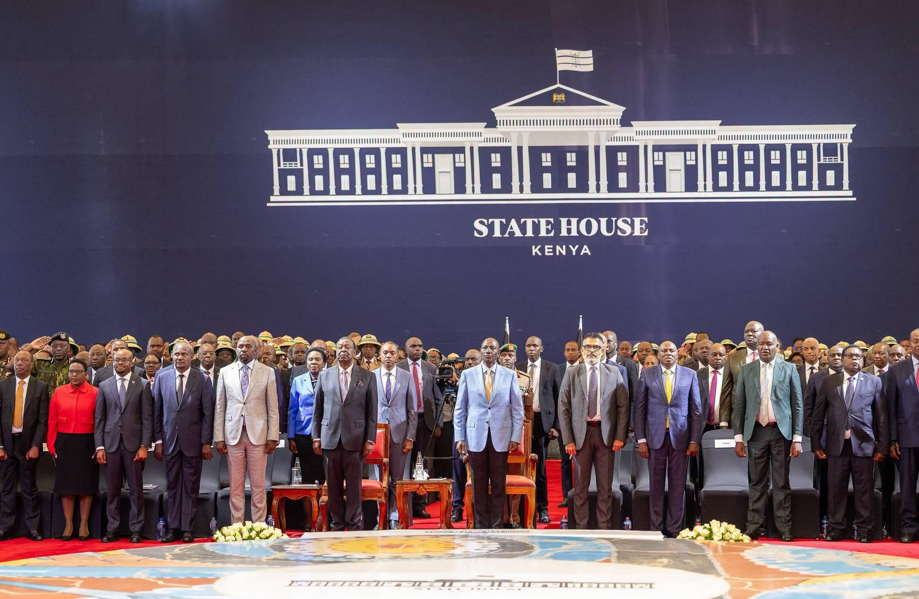
President William Ruto has formally onboarded more than 106,000 village elders across all 47 counties into the National Government Administration system and announced that each will begin receiving a monthly facilitation of KSh3,000 starting this month.
Speaking at State House, Nairobi, during a meeting with National Government Village Administrative Elders on August 4, 2026, the President described the move as a major milestone in bringing government services closer to wananchi and strengthening grassroots administration.
“The onboarding of more than 106,000 village elders across the 47 counties into the National Government Administration system is a major milestone in bringing Government closer to the people,” Ruto said.
He said village elders had for generations served as custodians of peace, mediators in conflict, protectors of families and the trusted link between citizens and government long before many formal state institutions reached all parts of the country.
Ruto acknowledged the different traditional names by which village elders are known across communities, including mghosi wa lughongo among the Taita, olpayian lemuria among the Maasai, omukasa among the Luhya, athuuri a ituura among the Kikuyu, jaduong’ gweng’ among the Luo, mutumia wa musyi among the Kamba and boyob kok among the Kalenjin.
“Wazee wa vijiji ndiyo uti wa mgongo wa jamii yetu. Ndiyo wanaotuunganisha, wanaopatanisha na kutuongoza. Leo tunasema wazi kuwa huduma yenu imeonekana, imeheshimiwa na imepewa nafasi yake inayostahili,” he said.
The President said the KSh3,000 facilitation was not a salary or payment for patriotism but a recognition of the elders’ contribution and practical support for their work.
“This is neither payment for patriotism because patriotism cannot be bought nor is it the price of your service because that service is priceless. It is the recognition of a grateful nation and practical support for the work you perform,” he said.
Ruto noted that village elders had for years mobilised communities for vaccination campaigns, census exercises, voter registration, school enrolment, drought relief, disaster response, Nyumba Kumi activities and community policing, often without remuneration.
He said the government’s Bottom-Up Economic Transformation Agenda (BETA) depends heavily on trusted grassroots leadership to ensure citizens understand and benefit from public programmes.
“Whether we are raising agricultural productivity, enrolling families in Taifa Care, expanding affordable housing, supporting vulnerable households, creating digital opportunities, or restoring our environment, success depends on trusted leadership at the grassroots,” he said.
The President described village elders as the bridge between government policy and community action, saying they help turn national programmes into tangible benefits for households.
He also challenged the elders to uphold integrity, reject corruption, serve all Kenyans fairly and protect vulnerable members of society.
“Your authority does not come from Government alone. It rests upon the confidence of the community. Guard that trust carefully because it is your greatest strength,” he said.
Beyond the administrative reforms, Ruto used the meeting to rally support for the National Conversation on the National Development Charter, which he recently announced as part of the process of shaping Kenya’s development vision beyond Vision 2030.
He said the conversation was intended to give practical meaning to the economic and social rights guaranteed under Article 43 of the Constitution, including healthcare, housing, sanitation, food security, clean water, social security and education.
“Our ambition is to build a Kenya that is not only democratic, but also wealthy; not only free, but also prosperous; not only united by citizenship, but also empowered by opportunity,” he said.
Ruto directed the village elders to help take the national conversation to every county, ward, village and household, saying it should not remain confined to conference halls or government offices.
“Mobilise your communities around our national development agenda. Encourage children to remain in school and families to seek healthcare. Promote productive farming, enterprise and environmental responsibility,” he told them.
He urged the elders to identify vulnerable households and connect them with public services while promoting peace, unity and shared responsibility in nation-building.
The President concluded by calling on the elders to leave State House “renewed in purpose” and help build a Kenya “in which no village is forgotten, no citizen is excluded, and every community contributes to and shares in the prosperity of our nation.”
Read: Government Proposes Sh3,000 Monthly Stipend for Village Elders
>>> 432 Assistant County Commissioners Graduate as Govt Pushes AI, Public Service Reforms









Leave a comment