

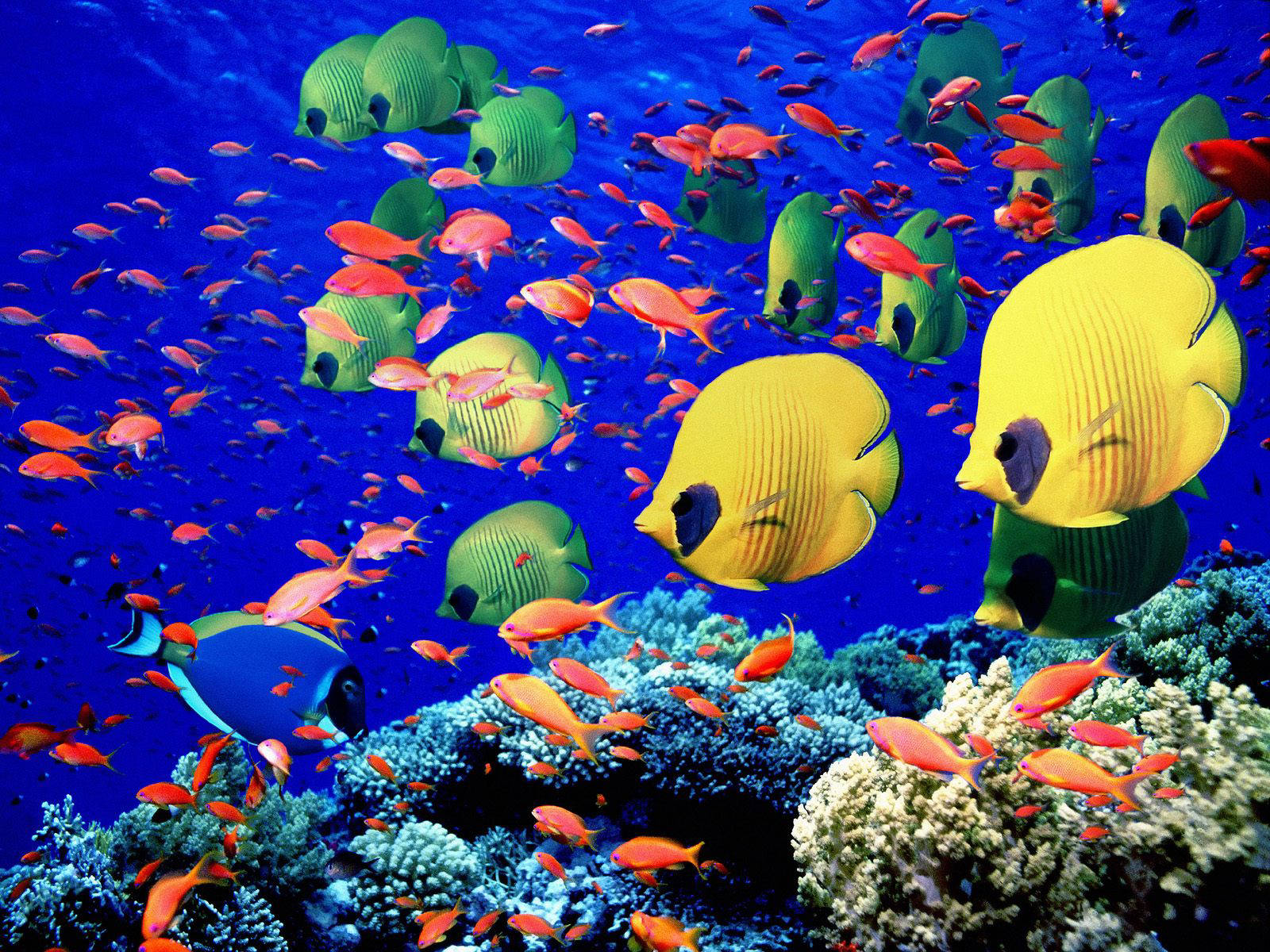
An Australian-led study has revealed that ocean acidification, driven by climate change, is fundamentally altering the social behaviour of reef fish by eroding the structural complexity of their habitats, resulting in smaller and more vulnerable shoals.
Reef fish are highly specialized, colourful marine species that inhabit coral reefs. Accounting for 25% of all marine fish species despite reefs covering less than 1% of the ocean floor, they support complex ecosystems through grazing and population control.
Researchers led by Australia’s Adelaide University found that as coral reefs lose the intricate architecture that provides shelter and hunting grounds, fish populations are forming significantly smaller groups. This shift threatens their collective defence against predators and changes how they forage and interact.
Published in the Journal of Animal Ecology, the study highlights how the size of fish shoals directly influences both group dynamics and individual behaviour. Shoals of reef fish are social groups that congregate for protection, foraging, and mating.
“Fish in bigger groups tend to be bolder, as they forage more efficiently, stay out in the open more, and spend less time hiding,” said lead author Angus Mitchell from the University of Adelaide. “Smaller groups offer less protection from predators and alter how fish feed and move.”
Crucially, the researchers emphasised that these behavioural changes are not primarily caused by the direct physiological stress of warmer temperatures or lower pH levels on the fish themselves. Instead, the disruption stems from the physical degradation of the reef habitat caused by acidification, which dissolves the calcium carbonate structures that build complex coral ecosystems.
“Our results suggest that even when individual fish seem to be coping fine behaviourally under climate stress, the social structures supporting their behavioural expression can quietly fall apart,” Mitchell said.
The team used a unique natural laboratory – volcanic carbon dioxide seeps off the coast of Japan – to study fish communities under conditions that mirror projected future ocean chemistry.
The findings add to a growing body of evidence that ocean acidification, driven by the absorption of excess atmospheric carbon dioxide, poses multifaceted threats to marine ecosystems.
















Leave a comment