

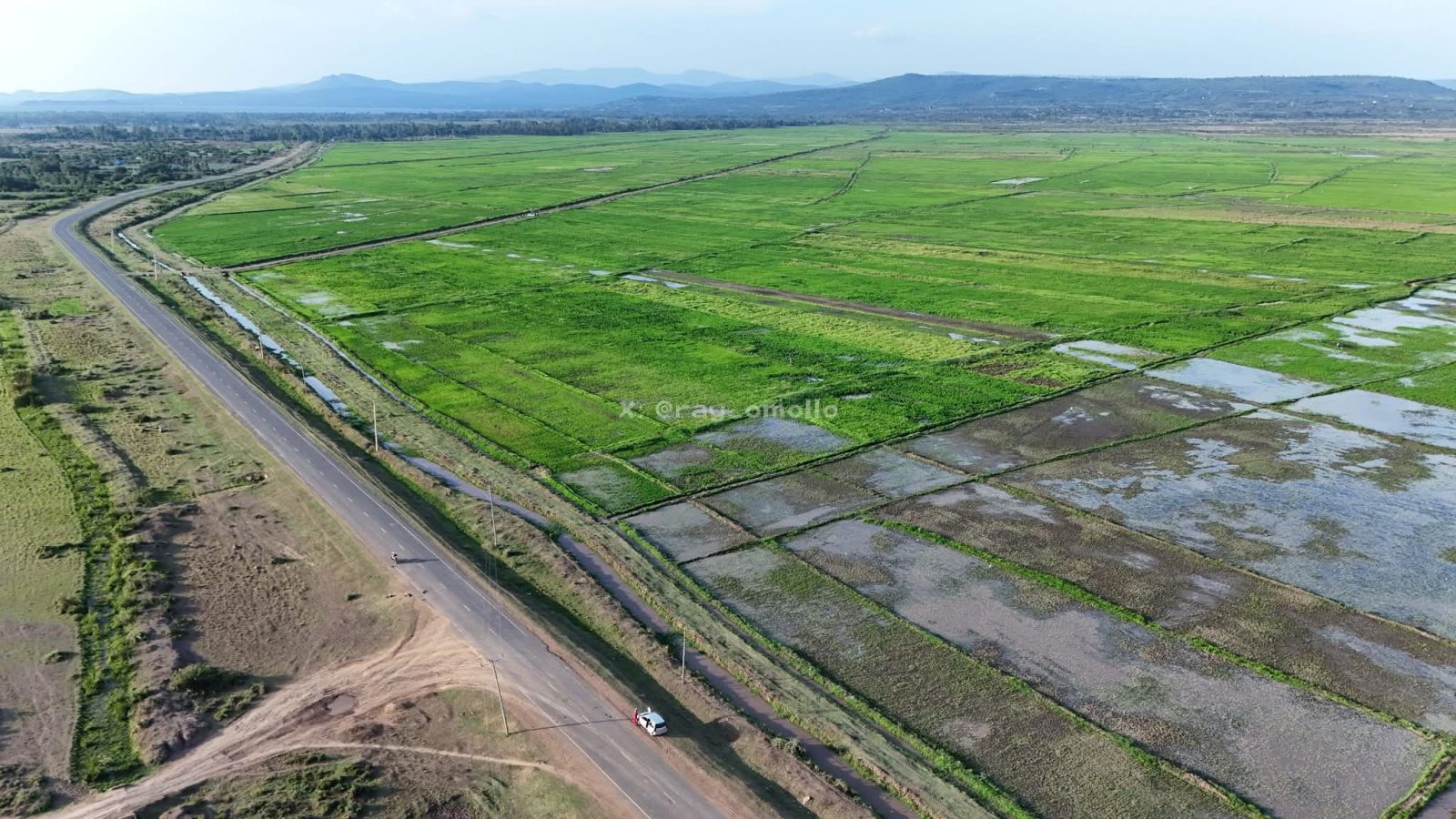
The expansion of the Lower Kuja irrigation scheme in Migori County is driving a major economic revival in the region, with renewed rice farming activities creating jobs, boosting household incomes and transforming livelihoods for hundreds of smallholder farmers.
The irrigation project, backed by national government investment, has restored confidence among farmers who had either abandoned farming or reduced production due to unreliable water access and low yields.
With improved irrigation infrastructure now supporting cultivation, many farmers are returning to their farms and scaling up rice production, turning the Lower Kuja scheme into one of the region’s emerging agricultural success stories.
The renewed farming activity has also triggered wider economic benefits across Migori County, particularly for young people who are increasingly finding work in farming, transport, harvesting and rice processing activities.
Local leaders and farmers say the project has helped reduce unemployment and idleness among youth by creating sustainable income opportunities linked to agriculture.
The growth of the rice sector is also reshaping women’s economic participation in the region, with many now joining community savings groups and table banking initiatives supported by increased farm earnings.
Women involved in rice farming and related businesses are reportedly reinvesting profits into family welfare, education and small enterprises, further strengthening household financial stability.
The project is additionally improving access to credit for farmers, many of whom are now able to secure micro-loans to expand production, purchase farm inputs and transition from subsistence farming into commercial agriculture.
Agricultural experts say irrigation remains critical to Kenya’s food security strategy, especially as climate change continues to disrupt rain-fed farming in many parts of the country.
Rice consumption in Kenya has steadily increased over the years, with local production still falling short of national demand, forcing the country to rely heavily on imports.
The Lower Kuja project is therefore expected to contribute to efforts aimed at reducing the rice import bill while strengthening local food production and rural economies.
The success of the scheme is increasingly being cited as an example of how targeted public investment in irrigation and rural infrastructure can unlock agricultural potential, stimulate local economies and improve living standards in underserved regions.
Read: Irrigation Project Turns Homa Bay Swampland into Thriving Rice Farming Hub
>>> PS Omollo Announces Nationwide Crackdown on Goons Used by Politicians










Leave a comment