

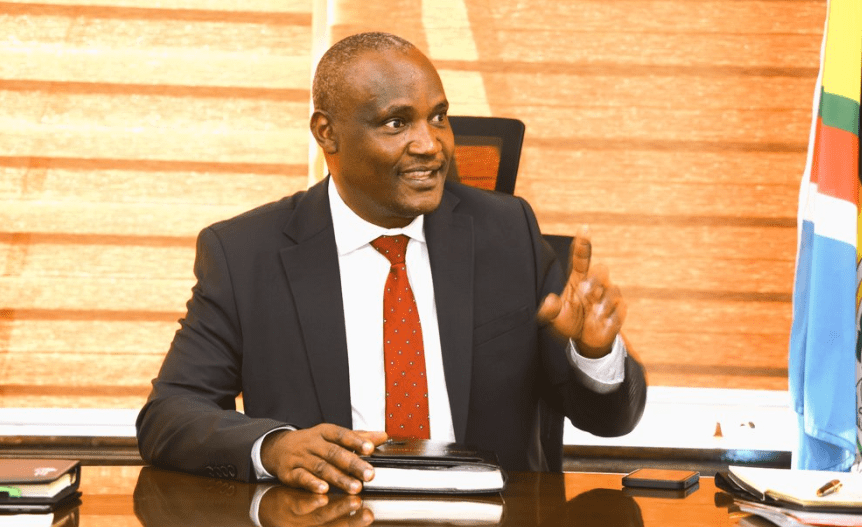
Kenya’s public debt has risen to Ksh 11.81 trillion, equivalent to 67.8 per cent of the country’s gross domestic product (GDP), according to Treasury Cabinet Secretary John Mbadi.
Speaking on Tuesday during a briefing with financial journalists, Mbadi said that while the debt remains at a sustainable level, it carries a heightened risk of distress. In present value terms, the debt stood at 63.7 per cent of GDP.
“Sound and prudent debt management remains the central pillar of my stewardship at the National Treasury. Our focus is on safeguarding essential public services, restoring fiscal space to spur growth, and fortifying Kenya’s economic sovereignty,” Mbadi said.
Of the total debt, Ksh 6.33 trillion is owed to domestic lenders such as banks, pension funds, and other local institutions. The remaining Ksh 5.48 trillion is external debt, owed to major development partners and creditors, including the World Bank, the African Development Bank (AfDB), China, and holders of Kenya’s Eurobonds.
During the 2024/25 fiscal year, the government spent Ksh1.72 trillion on debt service payments. Of this, Ksh1.14 trillion went to domestic lenders, while Ksh579 billion was paid to external creditors.
Mbadi said the Treasury is implementing a series of measures to ease the pressure of repayment and ensure long-term debt sustainability.
These include refinancing high-cost loans, extending repayment periods, and increasing the uptake of cheaper concessional loans.
“To mitigate prevailing debt vulnerabilities, we have embarked on liability management operations, including the refinancing of high-cost obligations, extending debt maturities, and increasing the uptake of concessional financing to improve debt sustainability metrics,” he explained.
The Treasury is also working under the 2025 Medium-Term Debt Management Strategy, which aims to lengthen the maturity profile of Kenya’s debt and minimise exposure to interest rate and exchange rate shocks. The government plans to source 75 per cent of new borrowing from the domestic market and 25 per cent from external lenders.
Mbadi said that by maintaining fiscal discipline and pursuing structural reforms, Kenya’s debt-to-GDP ratio is projected to decline over the medium term.
He also announced that the National Treasury will now engage financial journalists every month to enhance transparency and improve public understanding of the country’s debt situation.
“We want to strengthen public understanding of debt dynamics and cultivate a well-informed discourse on Kenya’s economic trajectory,” he said.
Kenya’s growing public debt has been a source of public concern, with rising repayments often blamed for crowding out spending on essential services.













Leave a comment