

There is a version of me the public has always known: the journalist, storyteller and cultural critic who observes society with clarity and conviction.
But behind deadlines, newsroom conversations and the polished language of professional life, I have also carried a quieter reality for years — my experience with mental illness.
This is the first time I am saying it publicly: I live with schizoaffective disorder.
For a long time, silence felt safer. In our society, mental illness is still treated as something shameful, dangerous or career-ending. As someone working within a healthcare environment while also navigating journalism and public-facing work, I worried about perception.
I worried people would reduce me to a diagnosis instead of seeing the disciplined, ambitious and creative person I have always fought to remain. So I mastered the art of appearing “fine” even when internally, I was struggling.
One of the hardest chapters of that struggle came between August 2025 and January 2026, when I was on antipsychotic injections as part of treatment. The medication may have been clinically necessary at the time, but the experience was deeply difficult for me.
I struggled constantly with waking up in the morning. At work, I often felt overwhelmingly sleepy and physically exhausted. My productivity suffered. Conversations became difficult because I no longer had the emotional energy or motivation to engage the way I normally would. I became quieter, slower, emotionally withdrawn — almost like I was watching my own life from a distance.
What made that period particularly painful was that many people around me could see the exhaustion, but very few understood what was happening beneath it. Mental illness is already isolating. Medication side effects can deepen that isolation further. There were days I questioned whether I would ever fully feel like myself again.
And yet, amid all of this, something else happened too: I experienced support.
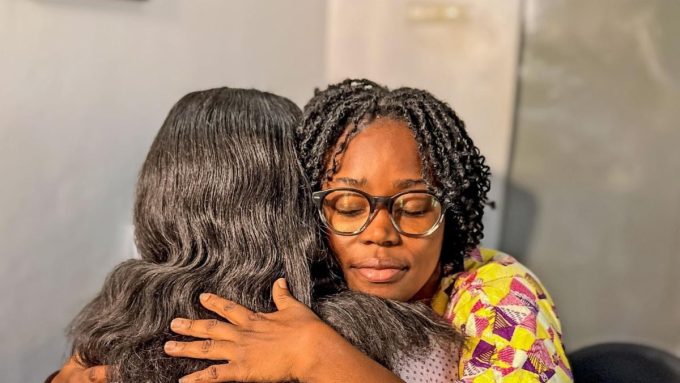
Working in a healthcare environment exposed me not only to medicine, but also to humanity. Some colleagues offered emotional support. Others showed psychological understanding without judgment. Some extended professional grace during moments when I was clearly struggling to function at my usual capacity. They may never fully know how much those acts mattered to me. In a world where mental illness is often met with mockery, suspicion or silence, compassion can become life-saving.
Over time, after stopping the injections, I slowly began reclaiming parts of myself again. The improvement was gradual. First came slightly easier mornings. Then clearer thinking. Then the return of emotional presence, conversation, motivation and energy. Recovery did not arrive dramatically; it arrived quietly, piece by piece.
This Mental Health Awareness Month, I choose not to remain silent. Not because disclosure is easy, but because silence can become its own form of burden. Too many people are navigating invisible struggles while expected to perform normalcy. Too many professionals fear that honesty about mental health will negate their competence. Too many Africans still grow up believing psychiatric conditions are moral failures instead of health conditions deserving care, dignity and support.
I am learning that schizoaffective disorder does not erase my intelligence, creativity or ambition. It describes a condition I live with — not the limits of who I am. And perhaps that is the message I most want people to understand: mental illness does not automatically destroy a person’s humanity, ambition or value.
Sometimes the people smiling in meetings, writing headlines, caring for patients, creating art or showing up to work every day are also quietly fighting battles nobody sees.
For months, I kept this part of my life private. Today, I choose honesty over fear — and in that choice, a form of freedom.













Leave a comment