

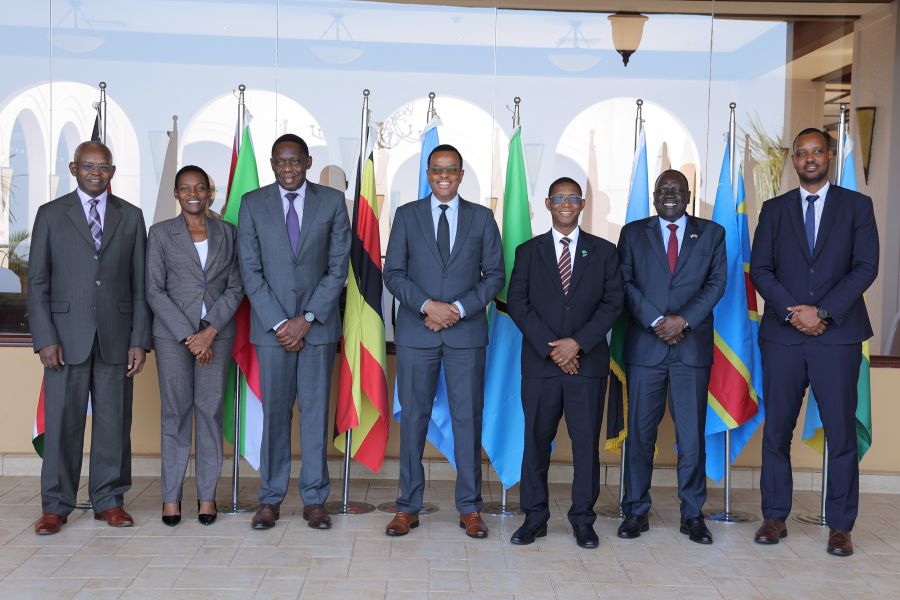
East African Community(EAC)Central Bank Governors have announced that they are in advanced stages of introducing a common currency in the region that will boost trade and deepen regional integration.
The governors announced the development after a meeting in Kampala, Uganda. Seven central bank governors from Kenya, Uganda, Tanzania, South Sudan, Rwanda, and Burundi attended the meeting.
The EAC monetary authority chiefs indicated that progress had been made in establishing a common policy framework, strengthening coordination on monetary policy, and modernising payment systems that will allow a seamless transition to a shared currency by 2031.
EAC Monetary Affairs Committee confirmed its commitment to East African Monetary Union and regional financial integration. This will be achieved by accelerating the implementation of the East African Monetary Union (EAMU) roadmap and strengthening regional financial integration during its 29th Ordinary Meeting held in Kampala, Uganda.
In a meeting held on 24th July, 2026, chaired by Dr. Michael Atingi-Ego, Governor of the Bank of Uganda and current Chairperson of the EAC Monetary Affairs Committee, the Governor came together with senior officials from the Central Banks of the EAC Partner States, alongside representatives of the EAC Secretariat.
The Committee reviewed developments in the regional and global economic environment, noting that despite heightened global uncertainties arising from elevated energy prices, increased shipping costs and persistent geopolitical tensions, the East African region continues to demonstrate remarkable resilience.
Regional economic growth is projected at 5.2 percent in 2026, significantly outperforming the Sub-Saharan Africa average of 4.3 percent.
The Committee further observed that inflationary pressures have continued to ease, with average headline inflation across the EAC declining to 6.7 percent in FY2025/2026, down from 9.6 percent in FY2024/2025, reflecting the impact of prudent macroeconomic policies and improving economic conditions.
Regional currencies are also expected to remain broadly stable, supported by diversified foreign exchange inflows and ongoing reforms to deepen and enhance domestic foreign exchange markets.
EAC Roadmap and progress made towards a single currency for the region
A key focus of the meeting was the implementation of the revised roadmap towards the East African Monetary Union and the establishment of a single East African currency by 2031.
The Committee noted encouraging progress by Partner States in modernising monetary policy frameworks, strengthening macroeconomic surveillance, enhancing regional policy coordination, promoting the use of the East African Payment System, and building institutional capacity across central banks.
While acknowledging this progress, the Committee observed that Partner States have made uneven progress towards meeting the agreed macroeconomic convergence criteria. Members therefore called for renewed efforts to strengthen macroeconomic stability, reinforce peer review mechanisms and accelerate implementation of the agreed convergence programmes while supporting critical infrastructure investments and building resilience against evolving global economic challenges.
In his opening remarks, Dr. Michael Atingi-Ego reaffirmed the Committee’s resolve to advance the East African Monetary Union agenda.
“The East African Monetary Union remains a strategic objective that demands sustained commitment, policy harmonisation and strong regional institutions. While our commitment to the Monetary Union is unwavering, we must accelerate implementation, strengthen peer review mechanisms and reinforce national action plans to ensure we remain on course towards a single East African currency by 2031,” said Dr. Atingi-Ego.
To further advance regional integration, the Committee agreed to accelerate implementation of the EAMU roadmap through enhanced peer review mechanisms and the operationalisation of the EAC 7th Development Strategy (2026/27–2030/31).
The meeting also reviewed progress in implementing the EAC Cross-Border Payment System Masterplan, which provides the strategic framework for modernising and integrating regional payment systems. The Committee welcomed the commencement of implementation activities, including the development of annual work plans, prioritisation of key initiatives, and mobilisation of financial and technical resources.
The Masterplan is expected to facilitate seamless cross-border payments, reduce transaction costs, improve interoperability, promote financial inclusion, and boost intra-EAC trade.















Leave a comment