


For decades, fishing communities along Kenya’s Coast relied almost entirely on the ocean for their livelihoods, often using traditional methods while battling declining fish stocks, poor storage facilities, low prices and limited opportunities for young people.
But residents say increased government focus on the blue economy is beginning to change the way coastal communities work and earn their livelihoods, with new investments opening opportunities beyond traditional fishing.
For Asman Ambeta, a resident of Shimoni and Wasini Island who works as a tour guide and turns to fishing during the low season, the changes are increasingly visible.
Ambeta says residents of Shimoni have always depended on the ocean, but fishermen previously faced numerous challenges, including damaged coral reefs, declining fish stocks, inadequate storage and poor market prices.
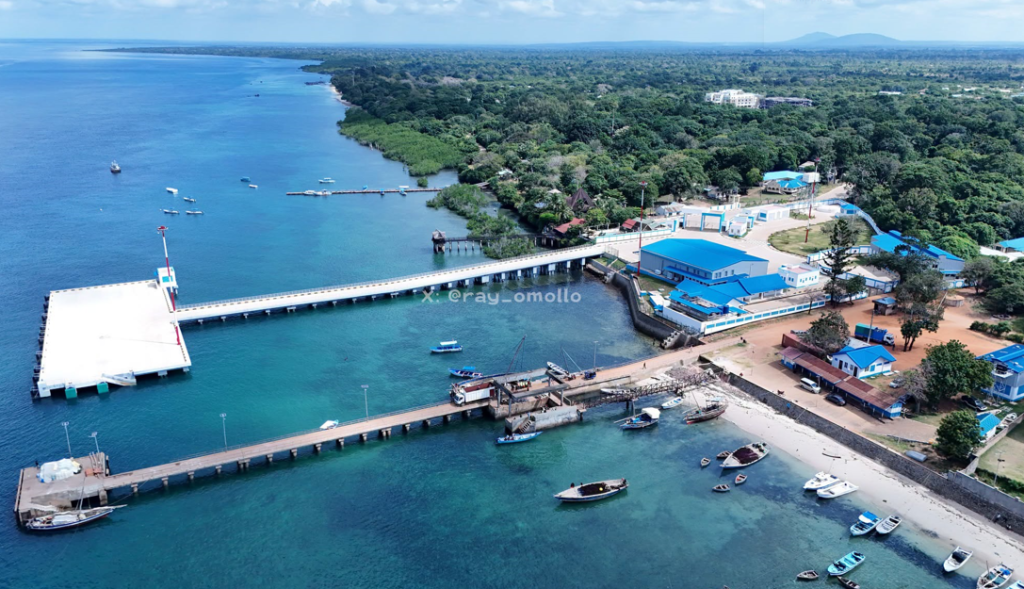
He says the construction of the Shimoni Port has made work easier for the local community, allowing fish to be handled more quickly while creating new employment opportunities for young people.
Ambeta says the development has also given residents a sense that Shimoni, one of Kenya’s southernmost coastal points, is finally being included in national development.
“The ocean is no longer about fishing alone,” he says, pointing to emerging opportunities in tourism, boat operations, passenger transport and seaweed farming.
Seaweed farming, in particular, is creating opportunities for women and young people, with residents turning seaweed into products such as soap and oil.
Ambeta believes continued investment in the blue economy could transform Shimoni into a major development centre within the next five years.
He says better roads, electricity, schools, hospitals, infrastructure and skills development would enable the ocean economy to generate more jobs, expand businesses and give young people more reasons to remain in their communities.
Fishermen acquire new skills
In Mombasa, fishing communities are also undergoing changes in how they manage their activities and generate income.
Salim Amin Salim, a resident of Old Town in Mvita Constituency and chairman of Old Town Beach Management Unit (BMU), says fishermen are increasingly receiving training to improve their businesses and strengthen the management of their organisations.
He says BMU leaders have undergone training in areas including Kilifi and Ukunda, focusing on leadership, financial management, cooperation and effective management of beach units.
Salim commended the government and fisheries officials for placing greater emphasis on training fishermen and helping them obtain the permits required to operate legally.
He says fishermen have also gradually moved away from traditional canoes to motorised fibreglass boats fitted with engines, improving their ability to venture further into the sea.
BMUs in Mombasa and other areas have also established cooperatives where fishermen can save part of their earnings and build financial security.
Salim says the changes are helping transform the perception of fishermen, who were previously regarded as people with little formal education.
Through training and cooperative structures, he says fishermen are gaining skills that can help them manage their businesses and improve their livelihoods.
He, however, wants the Government to continue supporting alternative sources of income for coastal communities.
Fishing remains highly dependent on weather conditions, he says, meaning fishermen need other options during periods when rough seas make it difficult or dangerous to venture into the ocean.
He cites cage fishing, which has been embraced by communities around Kenya’s lakes, as one possible alternative for coastal communities.
Modern boats replace traditional canoes
For Salim Mazera, who was born in Kwale County and now lives in Kilifi County, the transition from traditional fishing methods is another sign of progress.
Mazera says fishermen have moved from using canoes and paddles to motorised boats and modern fishing equipment, making their work more efficient.
He says registration under BMUs and acquisition of fishing licences have also provided fishermen with greater confidence to operate, provided they have the necessary permits for themselves and their boats.
According to Mazera, the Government has increasingly listened to the concerns of fishermen, with support helping communities move to a better level.
In his area, he says, there are now six boats, a development he considers evidence of how the fishing industry is changing.
Mazera is, however, calling for Government support to be distributed according to the specific needs of individual landing sites.
He says every landing site faces different challenges and should not be treated in the same way.
He also wants greater attention directed towards young people as older fishermen gradually leave the sector.
Providing young people with fishing gear, boats and engines, he says, would help ensure that the next generation can continue earning from the ocean.
Title deeds open door to new projects
At Kidongo Beach Management Unit, chairman Kokota Chivatsi says securing a title deed for the landing site has opened new possibilities for the community.
The title deed has provided a foundation for Government projects, including a cold storage facility, offices and a social hall, which Chivatsi says are helping improve fishing activities, incomes and conservation efforts.
Kidongo BMU is also looking to expand fishing activities around Mtwapa Creek and the Mombasa side.
Chivatsi says the BMU has seven landing sites, although six have yet to be formally gazetted.
He believes gazetting the sites would create room for additional development projects and allow fishing activities to expand in an orderly manner.
He says continued investment in the blue economy could create more employment opportunities for young people and women while benefiting the wider community.
Chivatsi recalls that when BMUs were established in 2006, fishermen faced numerous challenges, including having to travel long distances to fishing grounds, fish spoiling before reaching markets and operating from landing sites where they could sometimes be forced to leave.
The situation, he says, has gradually improved as Government investment and community organisation have strengthened.
For the coastal communities, the emerging blue economy represents more than an expansion of fishing. Residents say it is creating opportunities in tourism, aquaculture, seaweed farming, transport, conservation and other marine-based enterprises.
They are now calling for sustained investment in infrastructure, training, modern equipment and alternative livelihoods to ensure that the growing ocean economy benefits the next generation as well.
With better organisation and access to modern technology and finance, coastal residents believe the ocean can become a stronger engine of employment and economic development across Kenya’s Coast.
Read: SACCOs Defy Harsh Economy to Grow Deposits, Loan Book and Assets
>>> University Graduate Turns to Fishing After Failing to Secure a Job













Leave a comment