

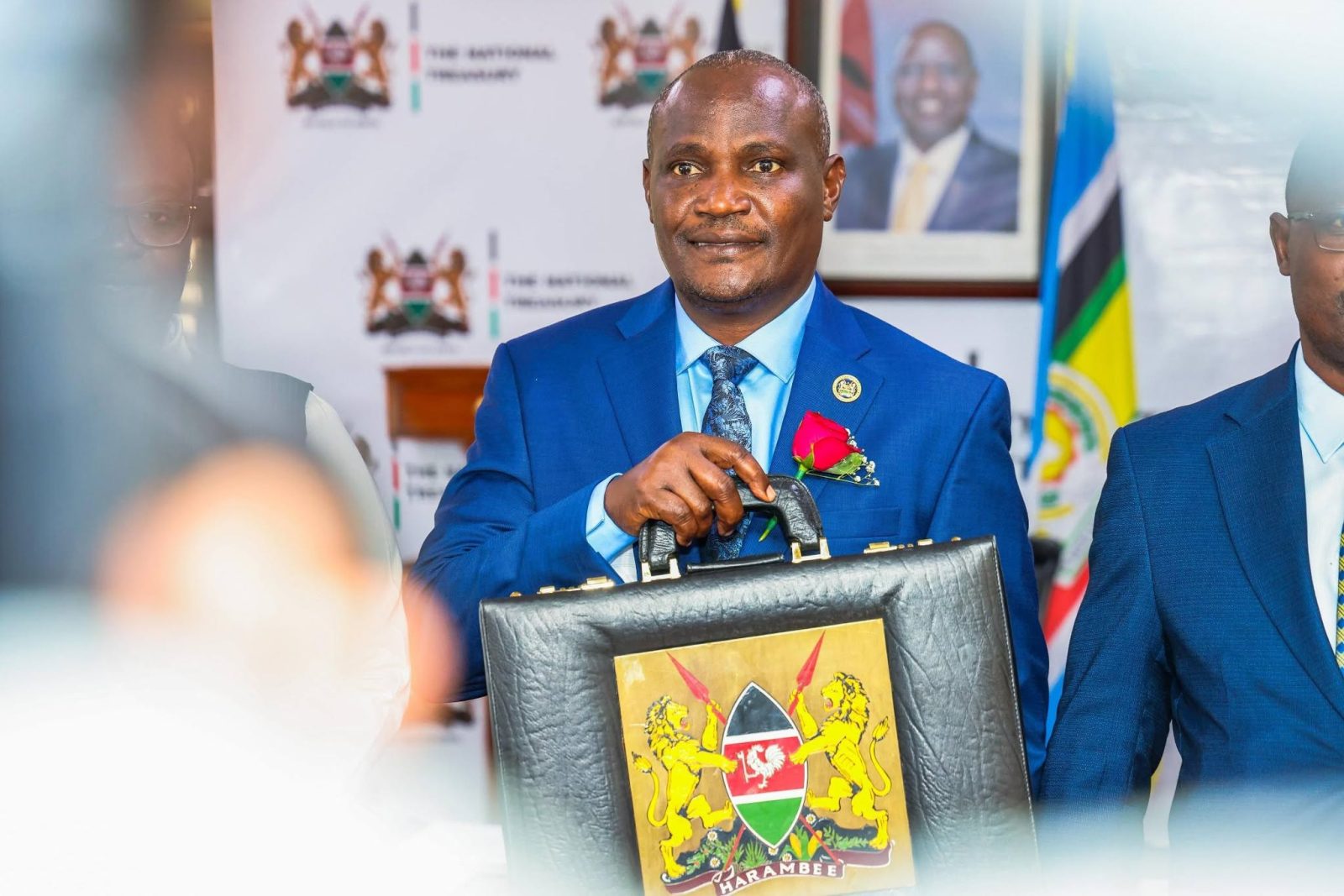
The National Treasury has set a Ksh 1.15 trillion borrowing target for the 2026/27 financial year as the government seeks to finance its budget deficit while refinancing part of its existing debt.
The borrowing target is contained in the Annual Borrowing Plan published by Treasury on Monday, August 24, 2026, which outlines how the government intends to raise funds between July 1, 2026, and June 30, 2027.
Treasury expects to raise Ksh898 billion from domestic sources and Ksh 247.2 billion from external financing. Together, the two sources will provide Ksh1.145 trillion in net financing, equivalent to 5.5 per cent of Kenya’s GDP.
“The total net financing requirement for the FY2026/2027 is Ksh 1,145.2 billion (5.5 per cent of GDP),” Treasury said.
The amount is part of a larger gross financing requirement of Ksh 1.996 trillion. This includes funds needed to finance the budget deficit as well as money required to repay loans and other debt falling due during the year.
Domestic market to provide most funds
The government will depend largely on the local financial market to meet its borrowing needs.
Treasury expects to raise Ksh 987.4 billion through net domestic borrowing, mainly through Treasury bills and Treasury bonds. The government will also use domestic loan receipts as part of its financing strategy.
Treasury bonds will play a major role, with the government planning to issue securities with maturities of between two and 25 years.
“The primary instrument for mobilising domestic financing will be the issuance of Government securities, with a strategic emphasis on Treasury bonds,” the Treasury said.
The increased reliance on domestic borrowing allows the government to reduce some of the risks associated with foreign currency debt. External loans are largely denominated in foreign currencies, meaning changes in the exchange rate can increase the shilling cost of repaying them.
However, heavy domestic borrowing also puts the government in competition with businesses and households for funds available in the local financial system.
Kenya expects Ksh 247 billion from external borrowing
The government expects to receive Ksh660.1 billion in gross external borrowing during the financial year.
The amount will include Ksh285.4 billion in commercial borrowing, Ksh191.6 billion in project loans and Ksh183.1 billion in programme loans.
A large part of these inflows will, however, be used to meet existing obligations. Kenya expects to make Ksh412.9 billion in external principal repayments during the year.
After accounting for those repayments, net external financing will amount to Ksh247.2 billion.
The figures show that Kenya will continue using new borrowing to partly refinance old debt while also raising money for government programmes.
Public debt crosses Ksh 13 trillion
The borrowing plan comes as Kenya’s public debt continues to grow.
Public and publicly guaranteed debt reached Ksh 13.01 trillion at the end of June 2026, up from Ksh 11.81 trillion a year earlier.
Domestic debt accounted for Ksh 7.33 trillion, representing 56.3 per cent of the total debt, while external debt stood at Ksh 5.68 trillion, or 43.7 per cent.
The increase in debt has largely been linked to borrowing to finance the fiscal deficit, placing greater pressure on government finances as debt repayment costs continue to take up a significant share of public revenue.
For the 2026/27 financial year, Treasury has projected a fiscal deficit of Ksh 1.145 trillion, equivalent to 5.5 per cent of GDP.
The borrowing plan will therefore be closely watched by investors and the wider economy, particularly because the government remains one of the largest borrowers in the domestic financial market.
Treasury said the borrowing plan may be reviewed during the financial year depending on economic developments and conditions in the financial markets. The government will also seek to manage borrowing costs and refinancing risks as it implements the programme.








Leave a comment