

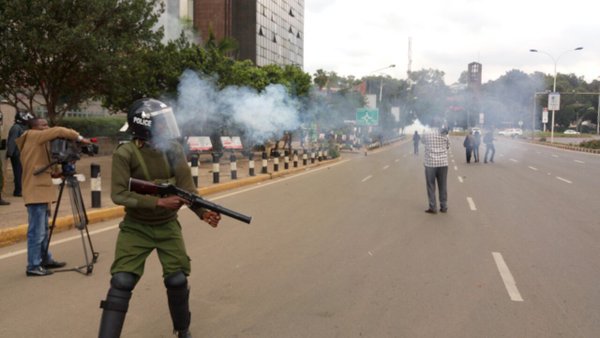
Kenya’s Constitution guarantees every citizen the right to assemble, demonstrate, picket, and petition public authorities peacefully and unarmed. It is a right born from decades of struggle for democratic freedoms and one that remains central to holding governments accountable. Throughout the country’s history, public protests have often served as catalysts for political reforms, policy changes, and civic engagement.
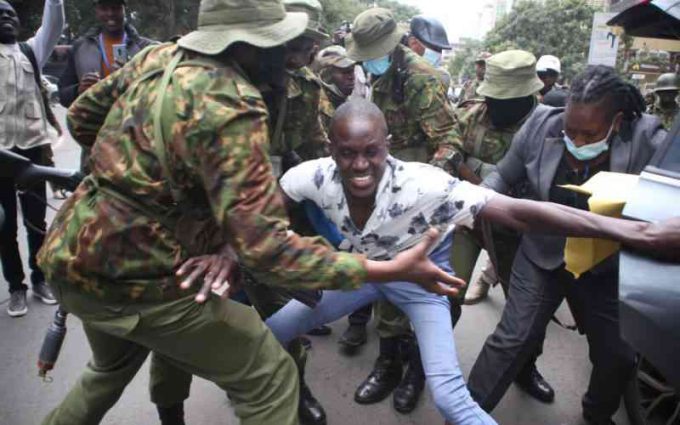
Yet recent demonstrations, commonly referred to as Mandamano, have reignited a difficult national conversation: what happens when legitimate protests are infiltrated by criminal elements, resulting in looting, vandalism, and widespread destruction?
While many Kenyans continue to defend the constitutional right to protest, growing concern has emerged over the economic and social consequences witnessed during recent demonstrations. Across Nairobi and several counties, business owners, workers, transport operators, and ordinary citizens have been left counting billions of shillings in losses after protests descended into chaos.
The debate is no longer merely about the right to demonstrate. It is increasingly about balancing civil liberties with public safety, economic stability, and protection of livelihoods.
The KSh18 Billion Question
The most striking figure emerging from the latest wave of protests is the estimated KSh18 billion loss in economic output recorded within just 24 hours.
Nairobi alone reportedly accounted for approximately KSh10.4 billion of those losses after large sections of the capital were effectively shut down. Businesses remained closed, roads were barricaded, public transport operations were disrupted, and thousands of workers were unable to report to work. Reports indicate that the figure corresponds to the city’s average daily economic output, illustrating how a single day of paralysis can have national consequences.
For a country already grappling with high unemployment, rising living costs, and fiscal pressures, the loss of KSh18 billion in one day is not merely a statistic. It represents lost wages, missed business opportunities, reduced tax collections, interrupted supply chains, and delayed economic activity that may never be recovered.
Unlike government revenue losses that can sometimes be offset over time, many of these losses fall directly on small traders and informal businesses operating on narrow margins. For them, one day without income can mean the difference between staying afloat and closing permanently.
Nairobi: The Epicenter of Economic Disruption
As Kenya’s commercial hub, Nairobi bears the greatest burden whenever large-scale demonstrations occur.
The city contributes more than a quarter of Kenya’s economic output and serves as the headquarters for major corporations, financial institutions, manufacturers, logistics companies, and thousands of small enterprises. When Nairobi stops, much of Kenya slows down with it.
During the recent protests, police roadblocks and security measures restricted access to key roads leading into the Central Business District. Businesses closed their doors preemptively, banks suspended operations in some locations, and retail outlets remained shuttered for fear of looting. Thousands of workers either stayed home or spent hours attempting to navigate blocked transport routes.
The result was an economic standstill rarely seen outside periods of national crisis.
While large corporations may possess the financial reserves to absorb temporary disruptions, smaller businesses often do not. For street vendors, kiosk owners, shopkeepers, and informal traders, a lost business day translates directly into lost household income.
The Human Cost Behind the Numbers
Economic statistics can sometimes obscure the personal tragedies behind them.
Across Nairobi, traders reported losing stock worth millions of shillings after looters broke into shops and vandalized premises. Businesses along Tom Mboya Street, River Road, Moi Avenue, Kirinyaga Road, and other commercial corridors were among those hardest hit. Some shop owners reported being completely stripped of merchandise accumulated over years of investment.
For many entrepreneurs, especially those operating small and medium-sized enterprises, insurance coverage is either unavailable or prohibitively expensive. Consequently, losses are borne entirely by the owners.
The destruction does not end with the business owner. Every shuttered shop affects employees, suppliers, landlords, transporters, and customers. A looted electronics store may leave technicians unemployed. A vandalized supermarket may interrupt supply contracts with local farmers and distributors. A burned kiosk may deprive an entire family of its sole source of income.
These ripple effects spread far beyond the immediate scene of destruction.
Murang’a and Kirinyaga: Local Economies Under Siege
The impact of protest-related violence has not been limited to Nairobi.
In Murang’a County, traders reported widespread losses after demonstrations degenerated into vandalism and property destruction. Business owners described being forced to close early as groups moved through towns breaking windows and damaging premises. Many remained fearful about reopening, uncertain whether calm had truly returned.
Particularly striking was the case of a businesswoman from Kenol who estimated losses exceeding KSh200 million after several of her businesses were vandalized during the July protests. According to reports, supermarkets and other enterprises under her ownership in both Murang’a and Kirinyaga counties were targeted, resulting in extensive destruction and theft.
In Kirinyaga County, business leaders reported that looting and vandalism destroyed property worth more than KSh200 million in Mwea alone. County officials described the destruction as a direct attack on local economic growth and livelihoods.
Such incidents reveal that the economic consequences of unrest extend well beyond major urban centers. Rural and semi-urban economies, often less resilient and more dependent on a smaller number of enterprises, can suffer disproportionate damage.
The Matatu Industry: A Casualty of Unrest
Perhaps no sector illustrates the immediate economic impact of protests better than public transport.
The Matatu Owners Association reported that demonstrations caused a significant decline in revenues, with operators in Nairobi alone losing roughly 40 percent of their daily income during protest days. Estimates suggested losses of approximately KSh150 million during a single day of demonstrations.
The matatu industry is not merely a transport service. It is a major employer supporting drivers, conductors, mechanics, fuel stations, spare-part dealers, financiers, and countless informal businesses that depend on commuter traffic.
When demonstrations disrupt transport routes, the effects cascade throughout the urban economy. Workers cannot reach offices. Students miss classes. Deliveries are delayed. Businesses receive fewer customers.
Every parked vehicle represents lost income not only for owners but for an entire ecosystem of workers who rely on daily operations.
Opportunity for Crime
One of the most contentious aspects of recent demonstrations has been the distinction between peaceful protesters and criminal opportunists.
Many Kenyans who support the right to demonstrate argue that looters and vandals should not be conflated with legitimate protesters. Community discussions and eyewitness accounts repeatedly point to groups taking advantage of unrest to steal goods, destroy property, and terrorize businesses.
This distinction is crucial.
A peaceful protest seeks to communicate grievances and influence public policy. Looting seeks personal gain through criminal acts. The former is protected by constitutional rights; the latter violates both the law and the rights of fellow citizens.
Unfortunately, when violence erupts, public perception often shifts from the original grievances to the resulting destruction. Legitimate political messages become overshadowed by images of burning buildings, broken storefronts, and frightened business owners.
As a result, movements risk losing public sympathy, while governments gain stronger justification for restrictive security responses.
Economic Consequences
The immediate destruction visible after protests represents only part of the overall economic cost.
Long-term consequences can be even more damaging.
Repeated unrest discourages investment by creating uncertainty about business continuity. Investors seek predictable environments where operations can proceed without interruption. Frequent disruptions increase perceived risk and can influence decisions about where capital is allocated.
Insurance premiums may rise in areas repeatedly affected by unrest. Businesses may incur additional security costs. Retailers may reduce inventories to limit exposure to theft. Financial institutions may tighten lending criteria in vulnerable regions.
Tourism, another key pillar of Kenya’s economy, can also suffer when international media coverage focuses on instability and violence.
Over time, these indirect effects may exceed the value of the immediate physical destruction.
The Cost to Government
Public resources are also heavily strained during major demonstrations.
Security deployments require substantial expenditures on personnel, transport, equipment, and logistics. Emergency medical services must respond to injuries. Courts process arrests and prosecutions. Local authorities allocate resources toward repairs and cleanup.
Meanwhile, reduced business activity translates into lower tax revenues at both national and county levels.
Thus, even citizens who are not directly affected by protests ultimately bear part of the financial burden through reduced public resources and slower economic growth.
Protecting Rights While Protecting Livelihoods
The challenge facing Kenya is not whether citizens should retain the right to protest. That right is fundamental and non-negotiable within a constitutional democracy.
The challenge is how to ensure demonstrations remain peaceful while preventing criminal infiltration and destruction.
Many leaders, business groups, and citizens have called for stronger enforcement against looters, vandals, and individuals who exploit demonstrations to commit crimes. Others argue that authorities must improve intelligence gathering, crowd management, and protection of commercial districts during periods of unrest.
At the same time, concerns remain about ensuring security responses do not undermine constitutional freedoms through excessive restrictions on lawful assembly.
The solution lies not in choosing between rights and order but in protecting both simultaneously.
A National Balancing Act
The recent Mandamano have exposed a difficult reality: democratic freedoms carry responsibilities alongside rights.
Citizens have the right to protest. Business owners have the right to security. Workers have the right to earn a living. Communities have the right to safety.
When demonstrations remain peaceful, these rights can coexist. When violence, looting, and vandalism take hold, society is forced into a costly trade-off where everyone loses.
The estimated KSh18 billion lost in a single day serves as a stark reminder that the consequences of unrest extend far beyond politics. They affect jobs, investments, livelihoods, public finances, and the future growth of the country.
As Kenya continues to navigate political dissent and civic activism, the challenge ahead will be finding ways to preserve the constitutional right to protest while ensuring that legitimate grievances are not overshadowed by criminality, destruction, and economic harm.
The true cost of protests is therefore not measured solely in shillings lost or buildings damaged. It is measured in interrupted dreams, lost opportunities, threatened livelihoods, and the growing tension between democratic expression and economic survival.
Read: Omollo Urges Peaceful Exercise of Constitutional Rights, Warns Against Violence During Protests
>>> Two Shot Dead After Protests Turn Deadly Over US Ebola Center in Kenya











Leave a comment