

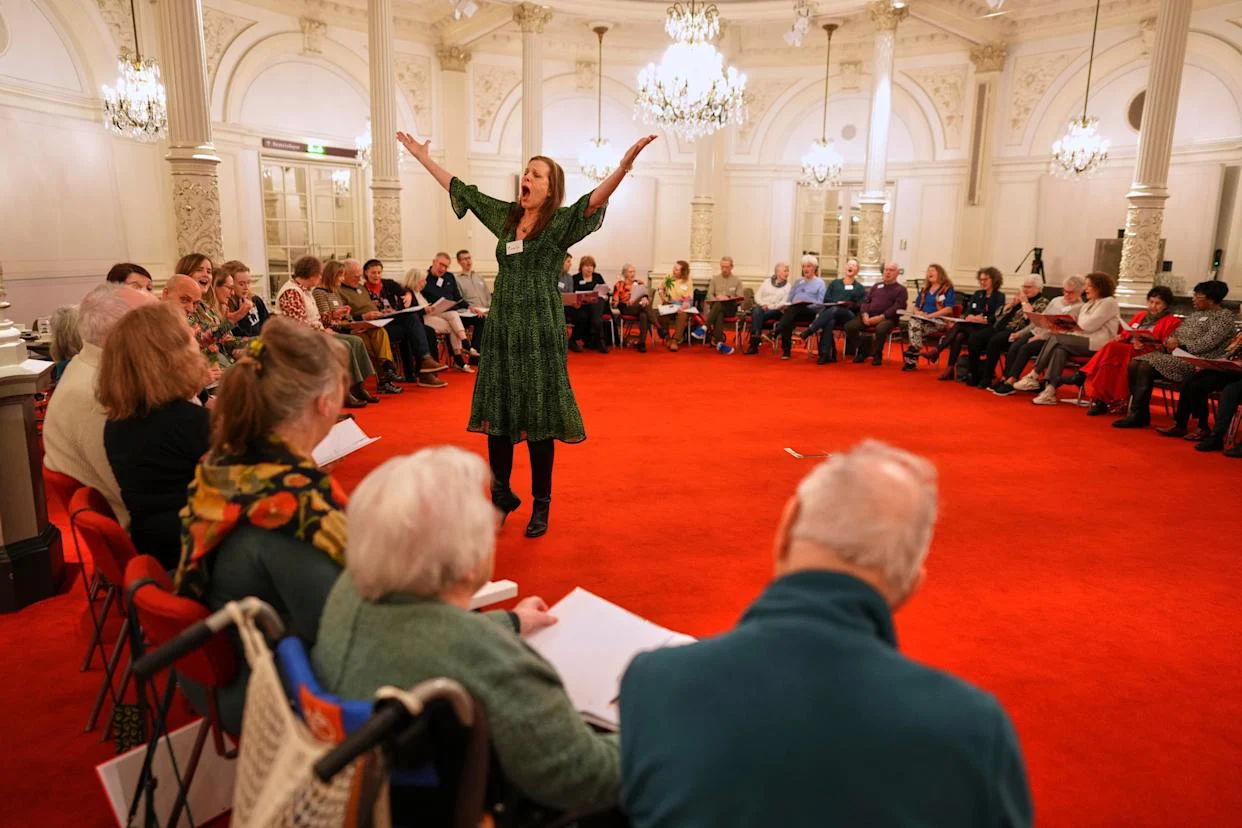
A music program at Royal Concertgebouw is drawing people with dementia and other neurological conditions to group singing sessions designed to stimulate memory and emotional connection.
The initiative, led by opera singer Maartje de Lint, brings participants and their carers together in the venue’s ornate Mirror Hall for what organizers call a “singing circle.” Many attendees are older adults living with dementia or Parkinson’s disease, conditions that can impair memory, language and cognitive function.
Among them is Megan Worthy, 58, who has Posterior Cortical Atrophy, a rare form of early-onset dementia affecting vision and other brain processes. The former choir singer from Canberra, Australia, says the sessions revive memories of her musical past as she sings alongside her daughter and other participants.
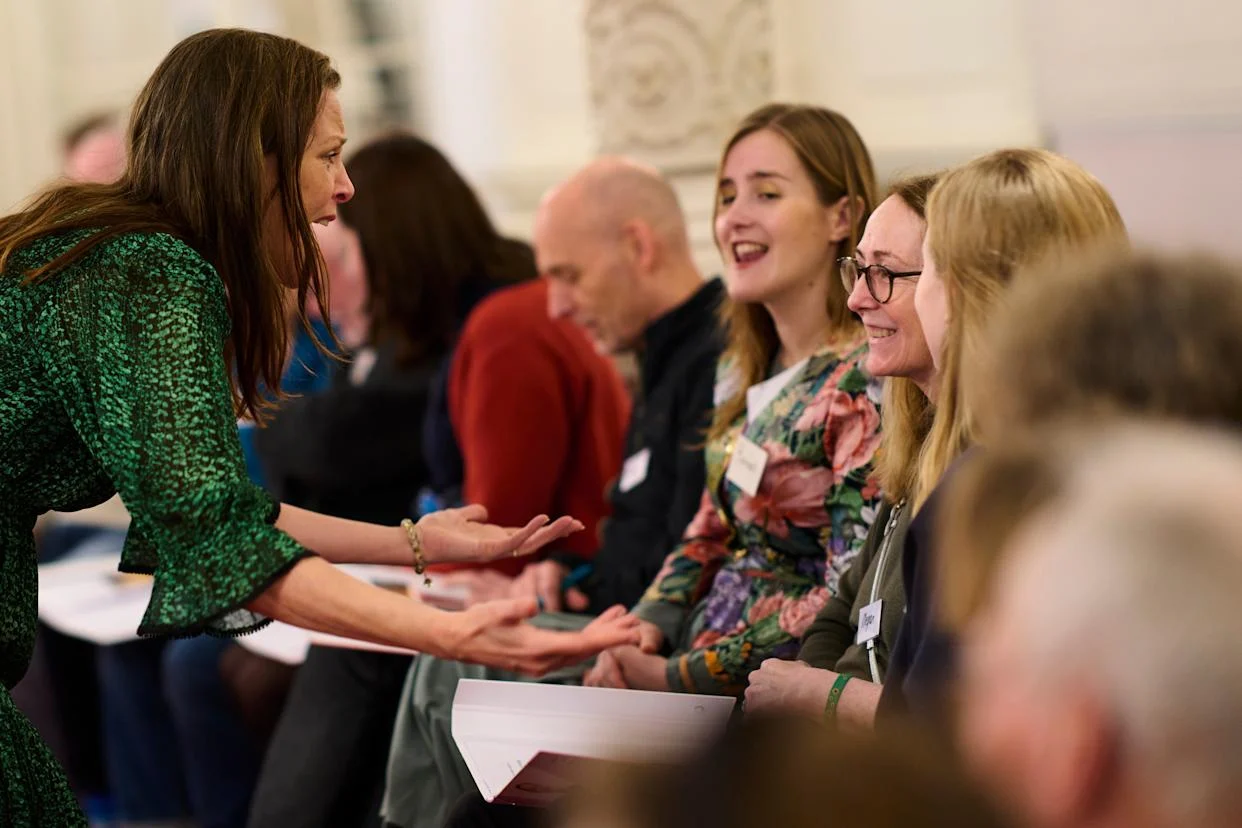
The hour-long workshops, which cost €20 ($23.50) to attend, place singers and carers in a circle beneath crystal chandeliers in the hall. Repertoire ranges from Love Me Tender by Elvis Presley to Fly Me to the Moon, popularized by Frank Sinatra, and the hymn Amazing Grace.
De Lint, who organizes similar workshops across Europe, says singing helps keep the brain active while strengthening bonds between patients and family members.
Researchers say the approach reflects growing scientific interest in music’s role in neurological care. According to neurobiologist Brankele Frank, music can stimulate brain regions that may remain relatively intact in people with conditions such as Alzheimer’s disease and Vascular dementia, potentially supporting emotional processing and identity even as language skills decline.
Scientists are increasingly studying music therapy’s potential benefits for people with dementia, traumatic brain injury, stroke and Parkinson’s disease, as music activates multiple neural networks linked to memory, emotion and movement.
For participants and families, organizers say the program offers something beyond clinical treatment: a shared cultural experience that reconnects people through music.













Leave a comment