

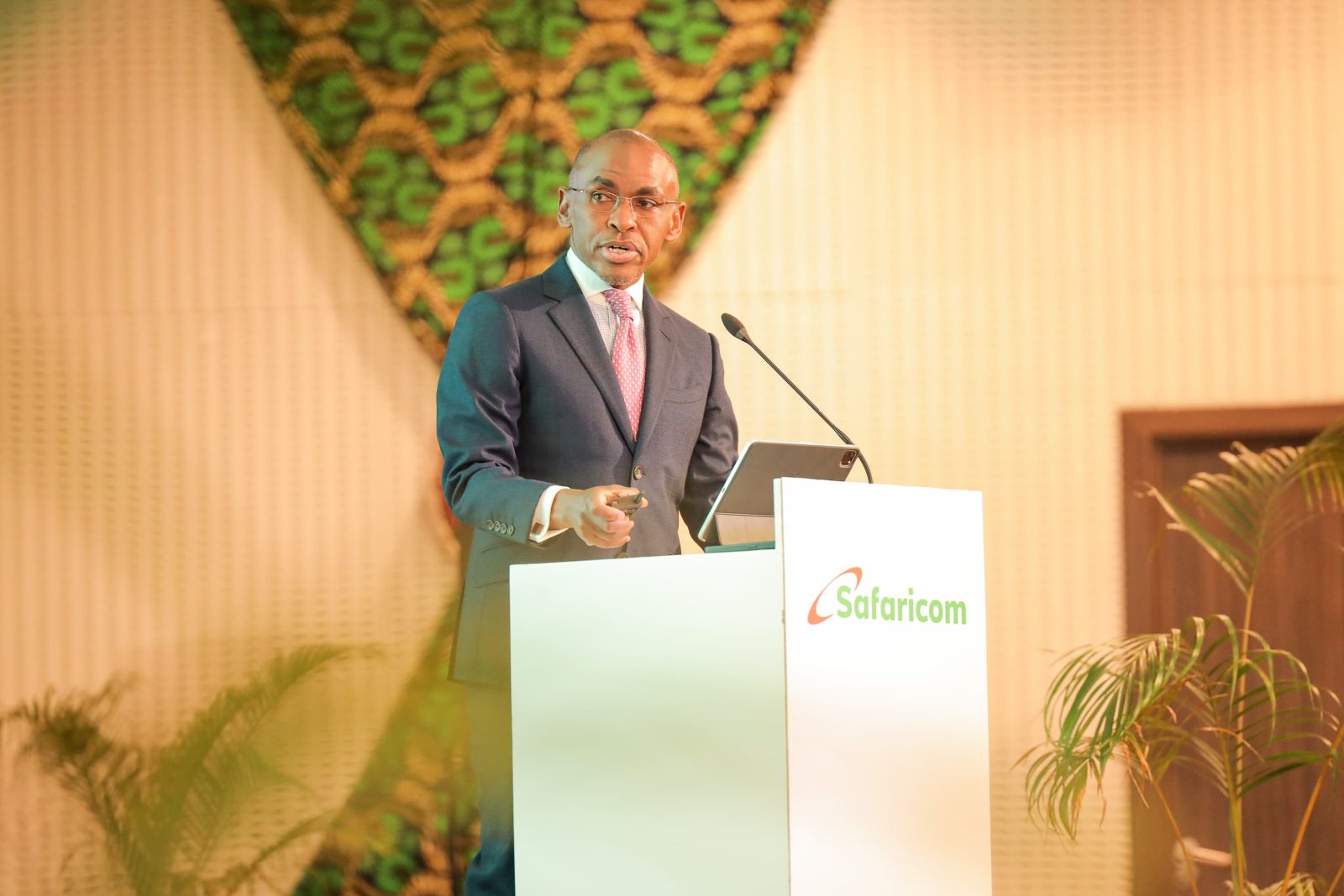
Safaricom has lifted the lid on the scale of transactions moving through M-Pesa, revealing the mobile money platform is processing about Ksh 100 billion every day as digital payments continue to deepen across Kenya and the wider region.
Safaricom Chief Executive Peter Ndegwa disclosed during the Connected Africa Summit 2026, where he said the platform now handles roughly 500 million transactions daily, underlining M-Pesa’s growing position as critical financial infrastructure rather than just a payments service.
“Today, M-Pesa processes around Sh100 billion daily, across nearly 500 million transactions,” Ndegwa said. “The platform can support up to 10,000 transactions per second, which gives us the capacity needed for future growth.”
The figures offer a glimpse into how deeply mobile money is embedded in Kenya’s economy, with millions of users relying on the platform for merchant payments, remittances, utility bills, savings, lending and business transactions.
Analysts say the volumes also reflect how M-Pesa has expanded beyond peer-to-peer transfers into a broader financial ecosystem that powers trade and public service payments. Small businesses, county governments and state agencies are increasingly using digital payments, helping drive transaction growth.
Ndegwa said sustaining those volumes has required heavy investment in infrastructure to ensure speed, stability and security as demand rises.
He noted Safaricom has significantly upgraded the platform’s transaction processing capacity from about 4,000 transactions per second two years ago to 10,000 today, a move aimed at reducing downtime and supporting growing activity.
“The opportunity now is not just in scaling payments, but in removing friction,” he said. “We need stronger collaboration between governments and private sector players to accelerate digital transformation in public services.”
His comments come as governments across Africa push for stronger digital public infrastructure, with mobile money platforms increasingly seen as tools for delivering tax services, social payments and citizen services.
Ndegwa said M-Pesa is now active in seven markets, a sign of Safaricom’s broader regional ambitions as it looks to expand financial access beyond Kenya.
The announcement also comes as competition in mobile money intensifies, with operators across Africa racing to strengthen their fintech ecosystems. But Safaricom appears to be leaning on scale and infrastructure investment to defend its lead.
At Ksh100 billion moving through the platform daily, M-Pesa’s latest figures highlight not just growth in transactions, but the extent to which the service has become woven into the region’s economic activity.
For Safaricom, the next phase appears to be less about simply handling more payments and more about positioning M-Pesa as a platform at the centre of Africa’s digital transformation.
“The infrastructure is ready,” Ndegwa said. “What we need now is policy and partnerships moving at the same pace as innovation.”








Leave a comment