

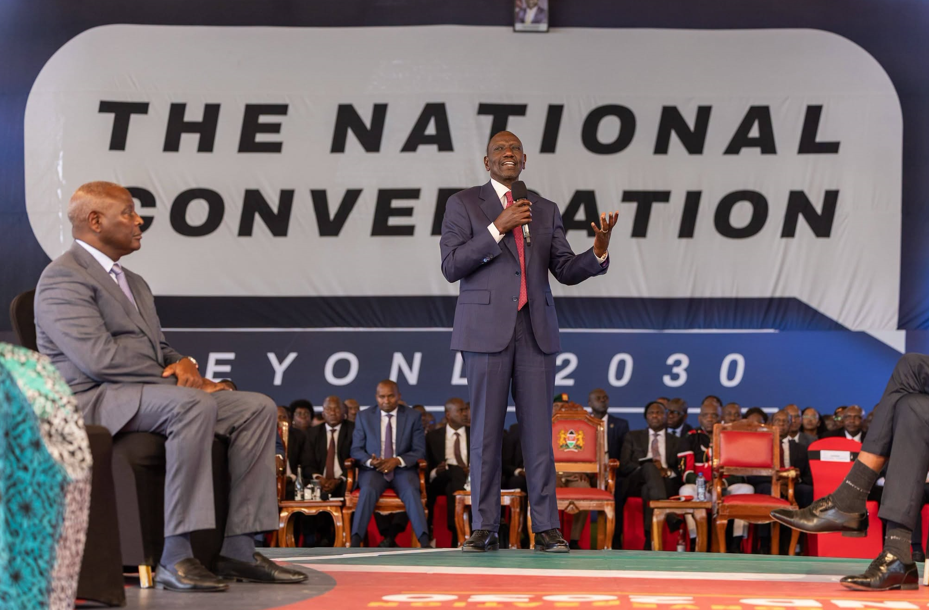
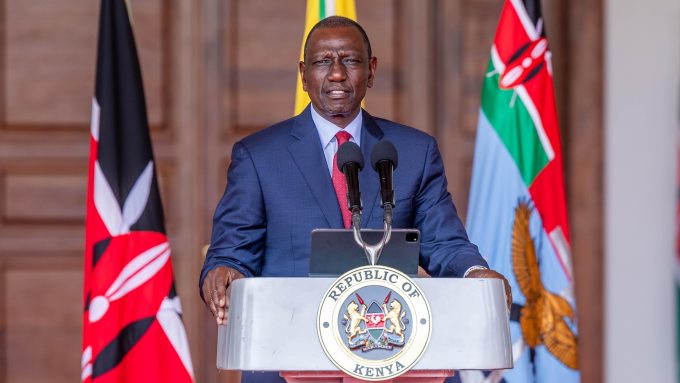
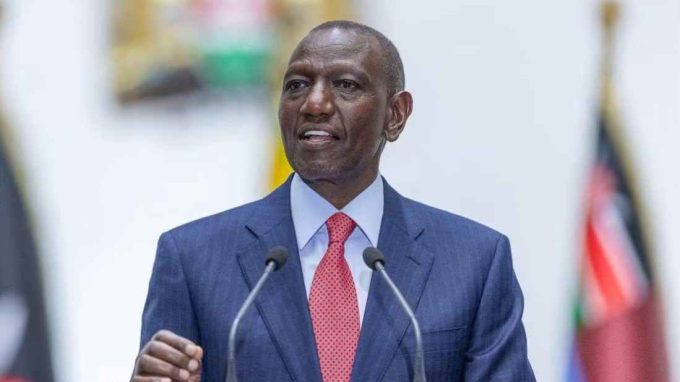
President William Ruto has urged Kenyans to shift their focus from electoral politics to long-term national development, saying the country’s future should be planned with the next generation in mind rather than the next election.
Speaking during discussions on Kenya’s post-Vision 2030 development agenda, Ruto said short-term political considerations had often undermined the country’s ability to achieve its development targets.
“For far too long, we have made elections seem like a matter of life and death. It’s not,” the President said.
“The reason why we’ve not achieved some of our targets is that we have made our plans not with the foresight of the future, but simply thinking about the next election. Even as a leader, you are told, ‘This will affect your next election, don’t do it.’ Many are telling me, ‘Leave this thing until after the next election.’ I am telling them, Kenya must think beyond the election and think about the next generation.”
Ruto said the conversation on a successor framework to Vision 2030 was necessary because the current blueprint was approaching its conclusion and because global conditions had changed significantly since it was formulated.
“We are having this conversation now because, number one, Vision 2030 will come to an end. Number two, the world has changed, with technology, AI and climate change reshaping our reality. Number three, Vision 2030 was developed before the new Constitution, which provides a clearer framework for long-term planning,” he said.
The President defended Vision 2030 as a transformative roadmap that had guided Kenya’s development for nearly two decades.
“Vision 2030 has provided Kenya with a long-term roadmap for development, setting the country on a path towards industrialisation, a middle-income economy and a higher quality of life,” he said.
“The journey has delivered notable progress, particularly on the political pillar, with a new Constitution, a robust Bill of Rights and stronger democratic institutions.”
Ruto also pointed to gains in infrastructure, energy and education, saying Kenya had made significant progress compared with many countries in the region.
“Today, we have significantly done well in our region in terms of paved roads. We have 20,000 km of paved roads. We have a working SGR. We have an Expressway. We have dualled some of our roads. We’ve extended electricity. We now have 10 million households going to 11 million households connected to electricity. Our transition on education is significant. We have done fairly well,” he said.
The Head of State argued that Africa was becoming the new center of global economic growth and that Kenya needed to position itself strategically to benefit from that shift.
“Global gravity in terms of growth is moving to Africa and this is because we have the largest reserves of renewable energy, youngest population, largest market that is emerging and largest reserves of uncultivated arable land for food security going into the future,” Ruto said.
“Therefore, as the center of gravity global growth moves to Africa, we must position Kenya appropriately so that we become that epicenter.”
Ruto emphasized that the next development plan should not be viewed as a government initiative alone but as a national undertaking requiring broad public participation.
“This is not a government project. This is a people’s project. Kenyans must prepare themselves. It is a responsibility put on our shoulders collectively,” he said.
“We want to pick the minds of everybody: the farmers, entrepreneurs, students, technocrats, everybody.”
He called for inclusivity in shaping Kenya’s future, saying ideas should be drawn from all sectors of society.
“To the people of Kenya, nobody has the monopoly of good ideas. Beyond 2030 is our collective responsibility,” the President said.
Kenya launched Vision 2030 in 2008 with the aim of transforming the country into a newly industrialising, middle-income economy by 2030. With four years remaining before the target year, the government has begun consultations on a new long-term development framework expected to guide the country beyond 2030.
Read: PS Raymond Omollo Rallies Kenyans to Shape Post-2030 Development Vision
>>> Kenyan Youth Optimism Could Drive Long-term Growth, Says Duke University Professor









Leave a comment