

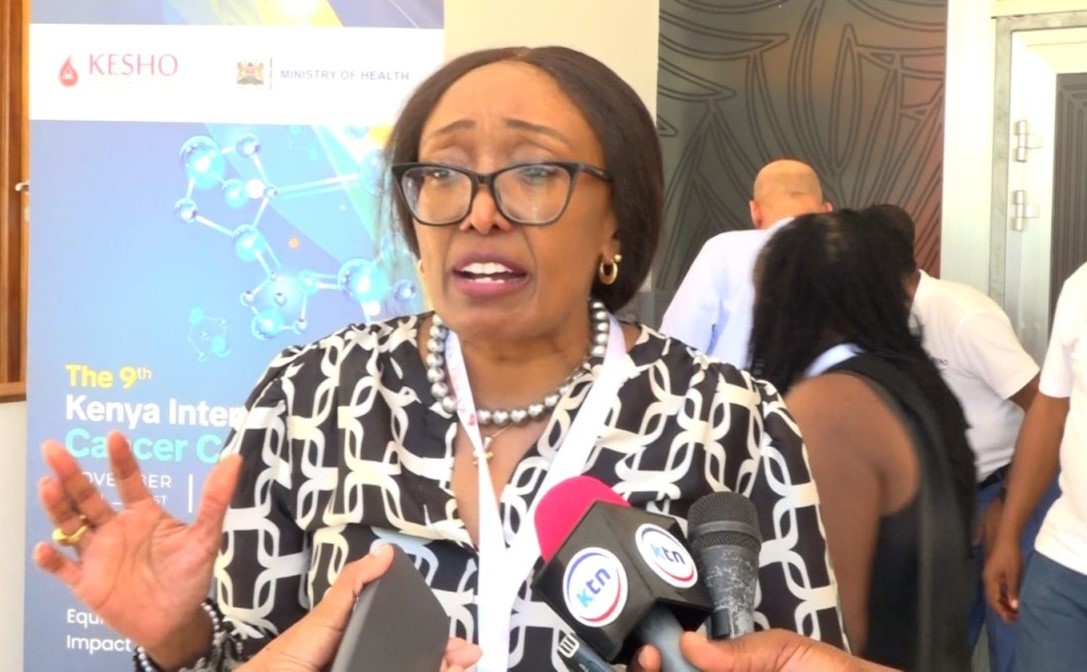
Kenya’s push to use artificial intelligence (AI) in cancer diagnosis could be undermined by fragmented patient records, weak referral systems and unequal access to specialist treatment, medical experts have warned.
Speaking at the 9th Kenya International Cancer Conference in Mombasa over the weekend, physician Prof. Joseph Aluoch said AI could help doctors detect cancer earlier and improve treatment decisions, but its effectiveness would depend on hospitals being able to share accurate patient information.
Warning comes as the country grapples with an estimated 35,867 new cancer cases and nearly 23,000 deaths annually, according to figures cited from the Global Cancer Observatory.
Prof. Aluoch said disconnected hospital information systems could limit the benefits of AI, particularly for patients who seek diagnosis and treatment at different facilities.
“You may have your data in Mombasa; the next time you go to Kisumu, you will be seen by another doctor,” he said. “If no system can connect the data in Mombasa to Kisumu, then AI is not going to be very useful.”
His concerns come as cancer specialists intensify efforts to bring screening and treatment closer to underserved communities.
Earlier, Kenya Society of Haematology and Oncology (KESHO), working with Kilifi County and Kilifi County Referral Hospital, conducted an integrated medical outreach offering cervical, breast and prostate cancer screening alongside sickle cell disease testing and specialist consultations.
The programme established referral pathways to Kilifi County Referral Hospital, Moi County Referral Hospital in Voi, Mombasa Cancer Center and Coast General Hospital to support patients requiring further assessment and treatment. It illustrates one of the challenges facing Kenya’s cancer response: ensuring patients who undergo screening can access diagnosis, specialist treatment and follow-up care without being lost along the referral process.
KESHO Secretary Dr. Anne Mwirigi, a haematologist at Aga Khan University Hospital, and the society’s Treasurer, Dr. Peter Oyiro, a haemato-oncologist at Kenyatta National Hospital, emphasised the importance of effective referrals and continued patient support. Their position reinforces concerns that expanding cancer screening alone will have limited impact unless patients can access timely diagnosis and treatment.
Research cited by KESHO shows the importance of strengthening these services. A 2016 Kenyan study involving 1,094 women attending three breast screening camps found that 14 per cent had abnormal clinical breast examinations, while approximately 1.3 per cent were diagnosed with invasive breast cancer. The findings highlight the need for diagnostic capacity and reliable follow-up arrangements when screening identifies potentially serious conditions.
At the Mombasa conference, Prof. Aluoch said AI could improve the speed and accuracy of cancer diagnosis by helping specialists analyse pathology samples and identify abnormalities that may be difficult to detect through conventional examination. He cited cervical cancer screening as one area where AI-assisted analysis could support earlier detection and reduce the workload on healthcare professionals.
Unlike human specialists, AI systems can process large volumes of diagnostic information without fatigue. However, he cautioned that the technology requires reliable clinical data and cannot compensate for poorly organised health records.
“It’s not like a big computer that you bring from London and sit here,” he said, arguing that Kenyan hospitals must first invest in generating and maintaining accurate digital patient records.
He compared AI to a navigation system that can recommend possible routes but cannot replace the judgement of the person responsible for making the final decision.
The physician maintained that doctors must remain responsible for clinical decisions, even as technology becomes increasingly important in diagnosis and treatment planning.
KESHO President Dr. Gladwell Kiarie also called for stronger government policies and sustainable health financing to ensure advances in cancer care benefit patients beyond major urban hospitals.
She said AI was already helping improve diagnostic processes and multidisciplinary consultations, but warned that patients in rural and marginalised communities continued to face barriers arising from treatment costs and limited specialist services.












Leave a comment