

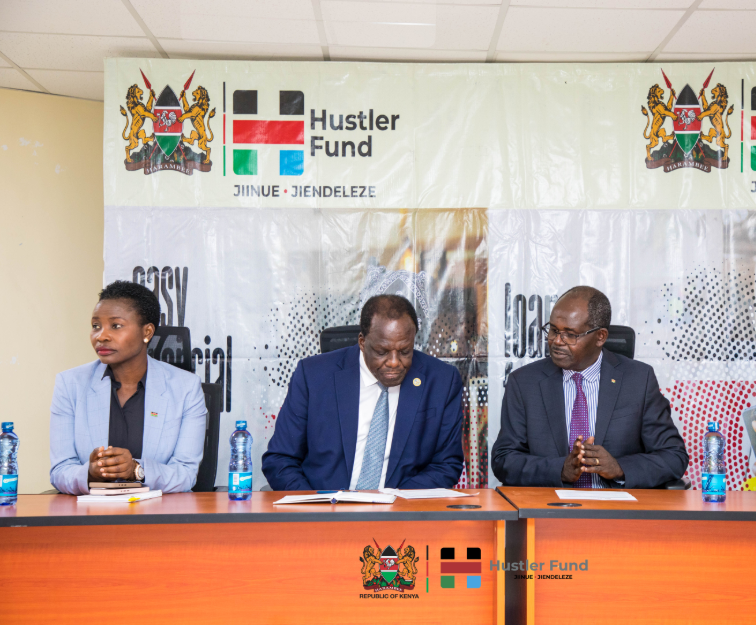
Parliament has been told that the Hustler Fund is facing a Ksh 5 billion liquidity shortage that has disrupted lending and left thousands of small borrowers unable to access credit, especially under the bridge loan facility.
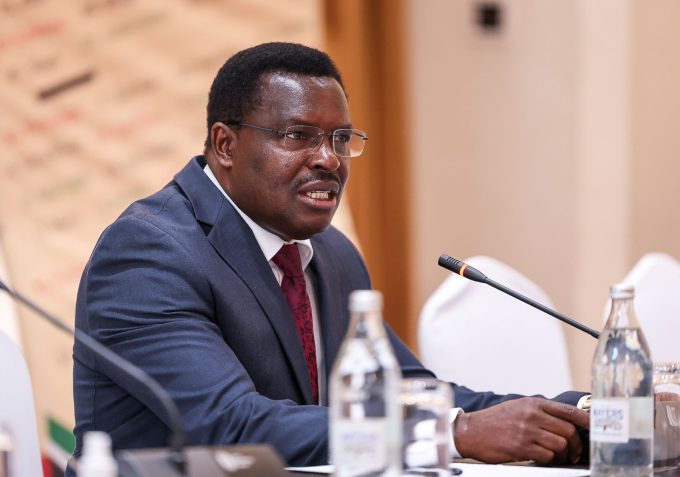
The revelation was made during a session of the Parliamentary Committee on Trade, Industry and Investment, chaired by Hon. Bernard Shinali. Lawmakers were reviewing the FY 2026/27 budget estimates when officials from the State Department for MSMEs disclosed that the fund is under serious financial strain.
According to the officials, the shortfall has made it difficult for the programme to continue lending to existing borrowers who had already opted into the system and were expecting repeat or bridge loans to support their businesses.
The committee was told that the fund currently requires an additional Ksh 5 billion to address liquidity challenges affecting clients who have already opted into the programme but are unable to access borrowing facilities, particularly under the bridge loan product,” the parliamentary briefing read in part.
Launched in late 2022, the Hustler Fund was positioned as a major financial inclusion tool aimed at supporting millions of Kenyans in the informal sector, including boda boda riders, small kiosk owners, mama mbogas and young entrepreneurs who often struggle to access bank loans due to a lack of collateral and credit history.
At inception, the government committed Ksh 50 billion to the initiative, with an initial Ksh20 billion injection in the first year. The model was built on a revolving fund structure, where repayments from borrowers were expected to sustain lending without continuous reliance on the national budget.
However, official figures presented to Parliament show a steady decline in government support. The allocation fell to Ksh5 billion in 2023/24, dropped further to Ksh2 billion in 2024/25, and was reduced to just Ksh 300 million in the current financial year. No allocation has been proposed for the 2026/27 cycle. By June 2025, about Ksh 14.8 billion had been released against the original Ksh50 billion commitment.
Treasury officials maintain that the fund was designed to sustain itself through repayments. However, MPs questioned whether the revolving model is working as intended, noting that continued reliance on Exchequer top-ups suggests the system has not become self-sustaining.
Liquidity crunch
The liquidity crunch has already been felt by borrowers, with many reporting delays or an inability to access repeat loans despite meeting repayment requirements. This has affected small traders operating in a difficult economic environment marked by high living costs, elevated fuel prices and increased taxation pressures.
During the same sitting, MPs also called for stronger financial literacy programmes before any expansion of government-backed credit schemes. They warned that without proper training, beneficiaries risk misusing loans, leading to defaults and weakening the sustainability of the programmes.
The committee also reviewed the NYOTA Programme, which targets youth enterprises and is seeking an additional Ksh11.3 billion to onboard 121,800 new beneficiaries. Officials noted that Ksh 2.28 billion has already been disbursed, with the programme focusing more on skills development and structured business support compared to the Hustler Fund’s direct lending model.
Lawmakers raised concerns that the rapid expansion of credit programmes without adequate training could create long-term dependency rather than sustainable entrepreneurship.
The discussions signal a gradual policy shift toward more structured and donor-supported interventions, as questions continue to grow around the long-term viability of large-scale revolving loan schemes.
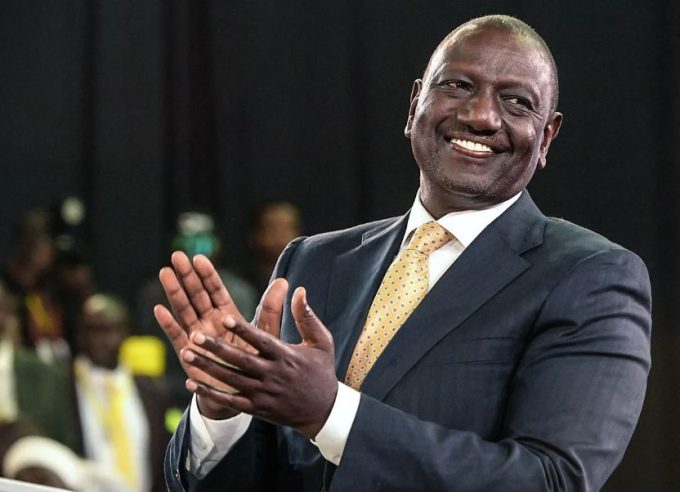
For President William Ruto, the Hustler Fund remains a politically significant programme tied to his 2022 campaign promise of supporting ordinary Kenyans. However, the current liquidity challenges and shrinking budget allocations now place it under renewed scrutiny, with its future direction increasingly under review within government planning circles.








Leave a comment