

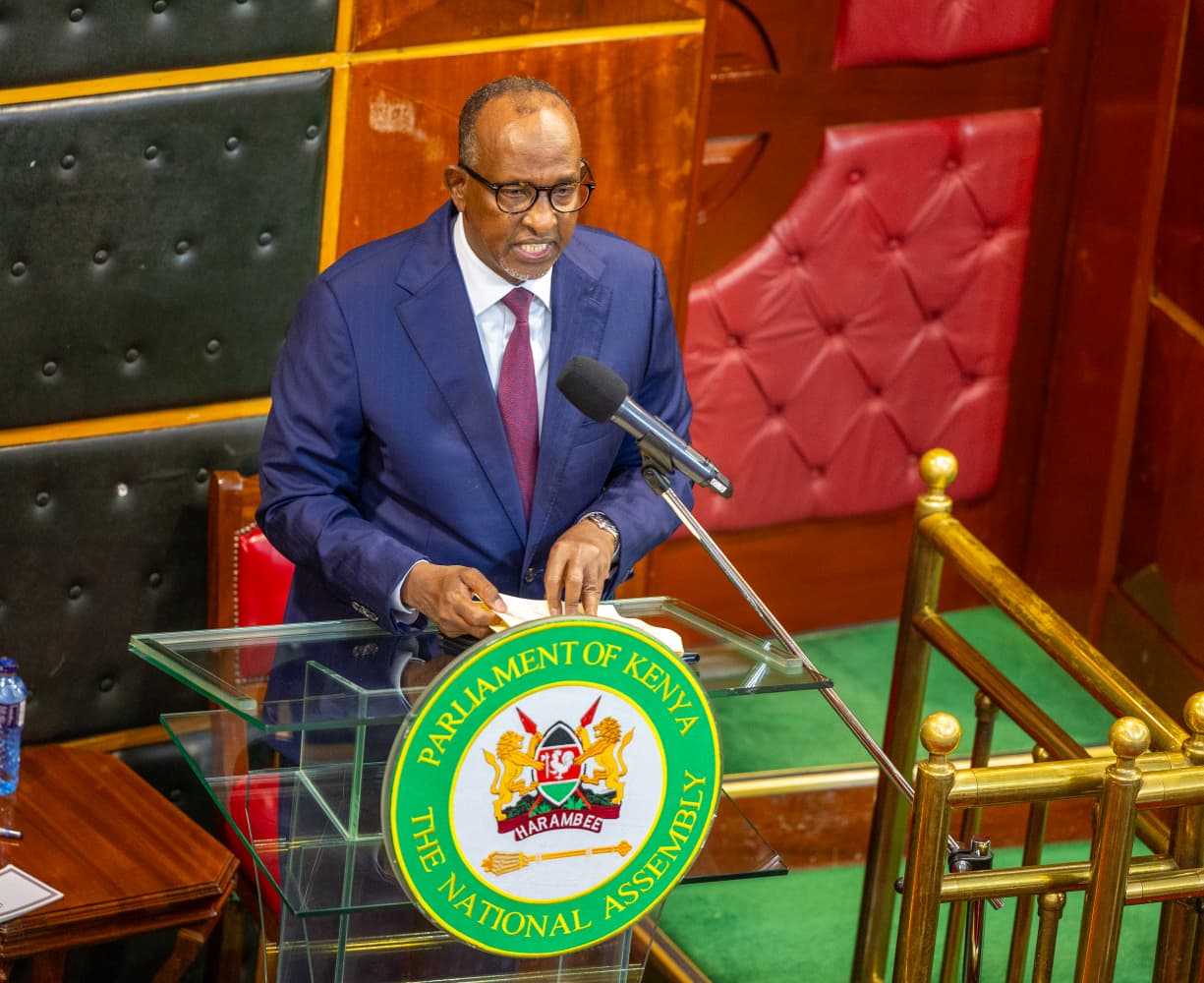
Health Cabinet Secretary Aden Duale on Wednesday pushed back against calls for greater public consultation on the government’s Ebola preparedness measures, saying authorities have a constitutional duty to act decisively to protect the country from a potential outbreak.
Speaking in Parliament, Duale emphasized that Kenyan law empowers the government to move quickly in response to public-health threats, without requiring prior input from citizens.
“We are not going to consult citizens. Under the Public Health Order, it does not require any consultation,” he told lawmakers.
The CS emphasised the government’s responsibility to protect both Kenyan citizens and international travellers passing through the country. “We as a government have a moral and constitutional responsibility to protect Kenyans and non-Kenyans who transit within our country,” Duale said.
He warned that any delay in critical interventions could have severe consequences if the virus reaches Kenya.
“God forbid if Ebola is in the country, this House will call me back here,” he added.
At points of entry, authorities have intensified health declaration requirements, temperature checks, symptom assessments, and referral protocols, according to CS Duale.
The government has designated four laboratories for Ebola testing, including the National Public Health Laboratory, Kenya Medical Research Institute (KEMRI) facilities in Nairobi and Kisumu, and a mobile laboratory for rapid response in border areas.
Thermal scanners, holding facilities, and ambulance systems are being reviewed and activated at major airports and high-traffic land borders.
The World Health Organization has provided 1,000 personal protective equipment kits, which are being prepositioned at strategic locations.
Officials have classified 12 counties as very high risk, including Nairobi, Mombasa, Kisumu, Busia, Bungoma and Turkana. A further 13 counties, among them Nakuru, Kiambu, Kakamega and Garissa, have been placed in a high-risk category.
Duale disclosed that authorities have investigated 22 Ebola alerts across nine counties, with all samples testing negative.
Read: Two Shot Dead After Protests Turn Deadly Over US Ebola Center in Kenya















Leave a comment