

![David Ndii chairs the President's Council of Economic Advisers (CEA), and noted that he had shared his thoughts with President William Ruto. [Photo/ Standard]](https://businesstoday.co.ke/wp-content/uploads/2023/04/T0D3fkyPd7kqJ0Sm3Nad0fZo108FFNNu4k9tuWlr.jpg)
A public exchange between Economist David Ndii and Narok Senator Ledama Ole Kina has laid bare sharp differences over how Kenya’s fuel pricing system works, amid growing public concern over rising pump prices.
The dispute was sparked by claims from Senator Ole Kina, who alleged irregularities in fuel import pricing after reviewing official correspondence involving Oryx Energies and officials from the Ministry of Energy.
“I sat in the committee room yesterday reading emails between ORYX ENERGY LTD and the Ministry of Energy officials, including the Cabinet Secretary, and I was shocked to discover that they were all in agreement to import fuel at USD 253.94 per MT—while the same government they serve imports fuel at USD 84.00 per MT. If OMCs are not taking advantage in cohorts with ministry officials, who is fooling whom?” Ole Kina said.
“This is an artificial get-rich-quick scam orchestrated by a fuel cabal! We are not stupid—only for the deal to be cancelled at the last minute when a shipment of substandard fuel imported by ONE PETROLEUM LIMITED arrived and was offloaded, costing Kenyans the equivalent of USD 198,855 per MT—still USD 114 more per MT than the government’s own G-to-G rate.”
The senator’s remarks suggested possible collusion between oil marketing companies and government officials, as well as irregularities in fuel procurement outside the government-to-government (G-to-G) framework.
However, Ndii, who chairs the President’s Council of Economic Advisers, dismissed the claims as a misunderstanding of industry pricing terminology, moving to clarify the distinction between product cost and associated import charges.
“These are not product prices. It is “Freight & premium” (made up of shipping, insurance and trade margin). Product price has increased from $700 – $800 to ~ $1400. G-to-G only freight & premium is fixed, product price is market based. For product price we use Platts Index,” Ndii explained.
Technical vs Political Interpretation
At the core of the disagreement is how fuel pricing is structured. While Ole Kina interpreted the figures as inflated product costs, Ndii emphasized that the amounts cited refer to logistics and trading margins, not the base price of fuel itself.
According to Ndii, the actual product price is determined by global benchmarks such as the Platts index, which has seen significant increases in recent months due to rising global demand and market volatility.
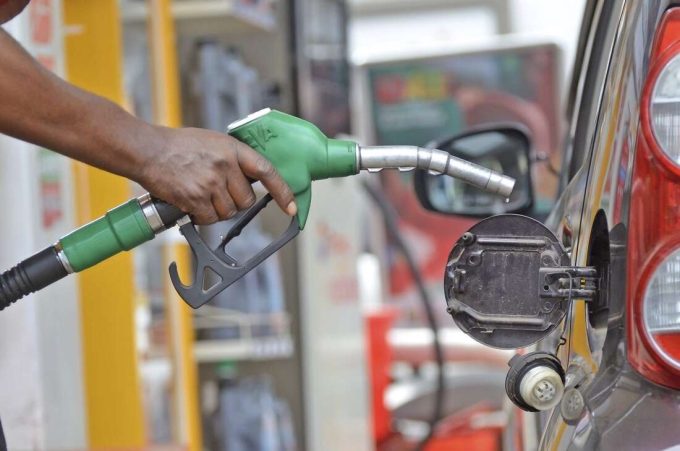
The exchange comes at a time when fuel prices in Kenya have surged beyond Ksh200 per litre following recent adjustments by the Energy and Petroleum Regulatory Authority (EPRA).
Following the review, consumers in Nairobi will now pay KSh 206.97 per litre for Super Petrol, KSh 206.84 for Diesel, and Ksh 152.78 for Kerosene. The new prices take effect at midnight and will remain in place for the next 30 days.
EPRA noted that the listed prices are inclusive of the Value Added Tax (VAT), in line with the VAT Act, 2013, as read together with Legal Notice No.69 dated April 14, 2026, the Finance Act, 2023, and the Tax Laws (Amendment) Act 2024. The prices also factor in revised excise duty rates adjusted for inflation under Legal Notice No. 194 of 2020.
The increases have sparked public debate over transparency in fuel procurement and the role of private oil marketers, with lawmakers stepping up scrutiny of the sector.
Broader Implications
The back-and-forth highlights the tension between political oversight and technical economic explanations in a highly sensitive sector that directly impacts the cost of living.
While Ole Kina framed the issue as a possible “fuel cabal” exploiting Kenyans, Ndii’s response underscored the complexities of global oil pricing mechanisms and the need for accurate interpretation of industry data.
Read: Economist Odhiambo Ramogi Says Fuel Price Hike Was Inevitable
>>> Pain at the Pump as Diesel increases by Ksh 40.30, Petrol by Ksh 28.69 in New EPRA Review











Leave a comment