

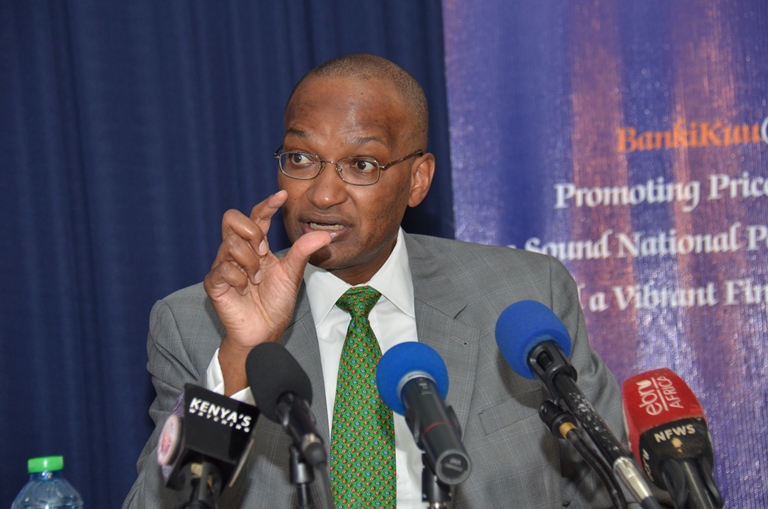
For the second month running, the Central Bank of Kenya (CBK) on Monday slashed its base lending rate citing an economy punching way below its weight and an already stressed business environment.
CBK Governor Dr. Patrick Njoroge announced that the Monetary Policy Committee (MPC) had resolved to trim the base lending rate to 8.25% from 8.5% in December 2019 after being encouraged by the effects of cutting the rate from 9% in November 2019.
Dr. Njoroge said that there was a need to provide a more accommodative monetary policy environment to cushion Kenyans from the grim economy.
“The MPC noted that inflation rates remained well anchored within the target range, that the economy was performing way below its potential and the tightening of fiscal policy,” read a statement released by the monetary policy regulator.
Further, the CBK boss said that the MPC will continue to monitor the impact of the latest change to its policy stance as well as developments in the domestic and global economies which will inform how the committee will respond to developments in economies.
CBK in its statement observed that the country’s economy remained ‘resilient’ with Gross Domestic Product (GDP) growing by 5.4% between January and September 2019.
“This growth was supported by macroeconomic stability, growth of SMEs and a robust services sector particularly hospitality, information & communications as well as transport and storage,’ read the statement.
BK expects stronger growth in 2020 largely on the government’s interventions in the agricultural sector announced by Presiden Uhuru Kenyatta that lines up farmers for better earnings from their produce.
Private Sector Credit
Conversely, private sector credit grew by 7.1% in the 12 months to December 2019.
Manufacturing (9.2%), trade (8.9%), transport& communication (8.1%) and consumer durables (21%) sectors were the biggest recipients of funding from lenders.













Leave a comment