

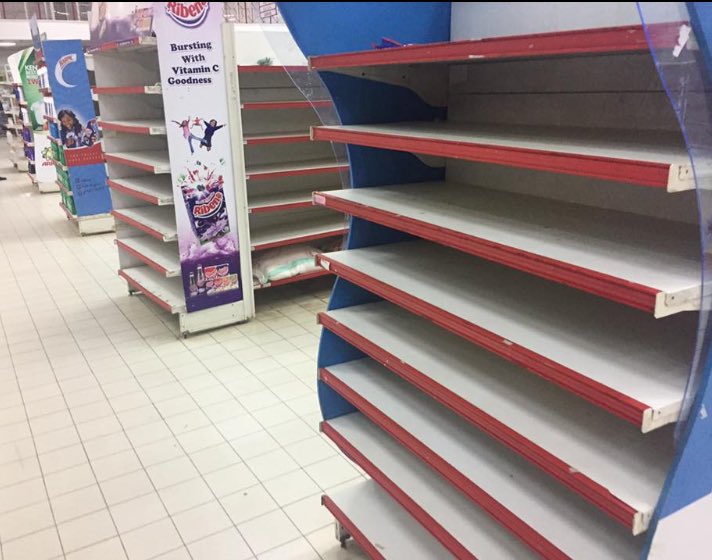
Nakumatt Holdings has moved to court seeking an administration order in a bid to ward off piling pressure from creditors it owes an estimated Ksh 35 billion.
The company, which operates the Nakumatt Supermarkets chain, wants the High Court to appoint Mr Peter Kahi of PKF Consulting Limited as the administrator.
Mr Kahi, a turnaround business professional, will act as an independent administrator and perform his functions in the interests of Nakumatt’s creditors.
According to the Insolvency Act 2015, an administration order is an order appointing a person as the administrator of a company and providing for the administration of the company by that person. The Court may make an administration order in relation to a company only if satisfied that the company is or is likely to become unable to pay its debts and that the administration order is reasonably likely to achieve an objective of administration.
Nakumatt has been facing financial difficulties that has led to closure of most of its branches, retrenchment of staff and loss of property to lenders and suppliers they owe.
If granted, the administration will enable Nakumatt to be maintained as a going concern and also enable them (Nakumatt) enjoy a moratorium against enforcement of security over the company’s property or the exercise of a right of forfeiture be peaceable re-entry, without the consent of the administrator or the approval of the court.
ALSO SEE: Shoprite to take up Nakumatt’s space
“The decision to apply for an administration order was difficult and complex one that was carefully considered by Nakumatt and its advisors. Nakumatt is apprehensive that in the absence of an administration order, there is a significant danger of being wound up with the inevitable consequence that the company, its employees, lenders, landlords and suppliers would suffer significant losses, with a broader impact on thousands of farmers, small businesses and traders whose livelihoods are dependent on the business,” stated the directors of the company in a media release.
Nakumatt currently owes suppliers and creditors more than Kh 35 billion. The order, if granted, will protect the supermarket chain from being declared bankrupt.
The company unsuccessfully sought injection of capital from a strategic investor and a bid to seek government aid also failed as it is a private entity. In recent weeks, it has been in talks with Tuskys Supermarkets to reach management takeover agreement but this is not yet concluded forcing the company to continue with its branch culling programme to stay afloat.
The two retail chains are now waiting for the Competition Authority to approve a proposal by Tuskys advance Nakumatt Ksh 650 million to meet operational costs including payment to employees and landlords under a management services and loan agreement.
In addition, Tuskys intends to provide recurring payment guarantees of between Ksh 1.5 billion and Ksh 3 billion to suppliers to ensure suppliers supply stocks to the company’s outlets, according to court filings made by Nakumatt chairman and chief executive Atul Shah.
As a legal concept, administration is a procedure under the insolvency laws of a number of common law jurisdictions, similar to bankruptcy in the United States. It functions as a rescue mechanism for insolvent entities and allows them to carry on running their business. The process – in the United Kingdom colloquially called “under administration” – is an alternative to liquidation, or may be a precursor to it. Administration is commenced by an administration order.
READ: Bob Collymore steps off Safaricom to get specialised treatment
A company in administrative receivership is operated by an administrator (as interim chief executive with custodial responsibility for the company’s assets and obligations) on behalf of its creditors. The administrator may recapitalize the business, sell the business to new owners, or demerge it into elements that can be sold and close the remainder.
Most countries distinguish between voluntary (board-decided) and involuntary (court-decided) receivership. In voluntary administrative receivership, the administrator is appointed by the company directors. In involuntary administrative receivership, the administrator is appointed by a judicial court. The legal terms for these processes vary from country to country, and the processes may overlap.
The application will be heard on November 8.










![Kenya Power technicians pictured in Mombasa. [Photo/ NMG]](https://businesstoday.co.ke/wp-content/uploads/2023/02/kenya-power-1-.jpg)


Leave a comment