

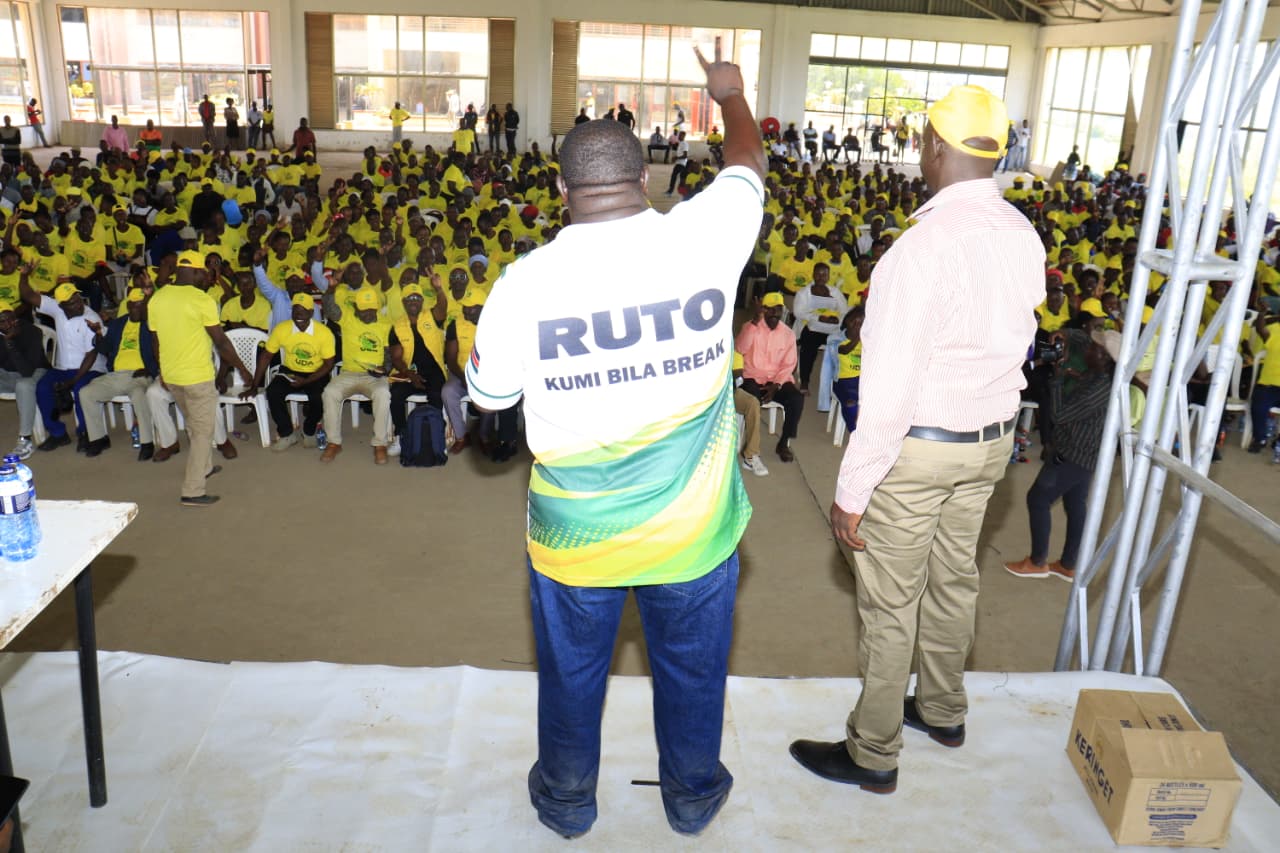
The ruling United Democratic Alliance (UDA) has kicked off its grassroots elections in the Nyanza region in a largely peaceful and orderly exercise, a development that is being viewed as both a test of its internal democratic systems and a signal of shifting political dynamics in one of Kenya’s traditional opposition strongholds.
The party began the process in the counties of Migori County, Kisumu County and Siaya County, with officials describing the turnout and conduct as consistent with similar exercises conducted in other parts of the country.
UDA insiders say the exercise is designed to institutionalise internal democracy by allowing open contests for leadership positions, rather than relying on negotiated outcomes.
“This is about building a party that is structured, credible and nationally present. We are not ring-fencing any positions. Everyone has an equal opportunity to participate,” said a senior party official involved in the coordination of the elections.
Observers note that the move into Nyanza, a region long associated with Orange Democratic Movement (ODM), carries both symbolic and strategic weight for UDA, the party affiliated with President William Ruto.
Political analyst Mark Bichachi says the elections reflect a broader evolution in Kenya’s political landscape.
“What we are seeing is an attempt by UDA to normalise its presence in regions that were previously considered politically closed. Whether that translates into electoral gains is another question, but it does widen the democratic space,” he said.
However, the grassroots exercise has also reignited debate over the ongoing political détente between UDA and ODM, particularly around claims of informal zoning arrangements aimed at reducing political friction in certain regions.
Some ODM leaders have previously hinted at the need for “mutual respect of political zones” following the rapprochement between President Ruto and ODM party leader Oburu Odinga earlier this year.
“We are in a new phase of engagement. It does not mean we abandon our bases, but there must be understanding to avoid unnecessary confrontation,” an ODM official said during a recent public forum in Kisumu.
UDA, on its part, has publicly rejected the notion of zoning. Party Secretary General Hssan Omar has in past statements insisted that the party will field candidates across the country without restrictions.
“UDA is a national party. We cannot talk about zoning in a democracy. Every Kenyan has the right to associate and to seek leadership anywhere in the country,” he said.
That position appears to be reflected in the ongoing grassroots polls, where contests have been open and competitive, with no evidence of pre-arranged leadership structures.
Still, some local leaders in Nyanza remain sceptical. A ward-level ODM official in Siaya, who spoke to Business Today, noted that while the elections have been peaceful, their long-term impact is uncertain.
“People are participating, yes, but loyalty here is deep-rooted. It will take more than internal elections to shift that,” he said.
The unfolding process underscores a broader trend in Kenyan politics, where parties are increasingly compelled to organise beyond their traditional bases and demonstrate internal democratic credibility.
Whether UDA’s grassroots push in Nyanza will translate into meaningful political realignment remains to be seen. For now, the peaceful conduct of the elections, and the contestation around zoning, highlights a political environment that is becoming more competitive, fluid and, potentially, more inclusive.













Leave a comment