

Kenyans could be spared from sharp fuel price increases in the coming months after the government unveiled a Ksh 21.5 billion plan aimed at keeping pump prices stable amid growing uncertainty in the global oil market.
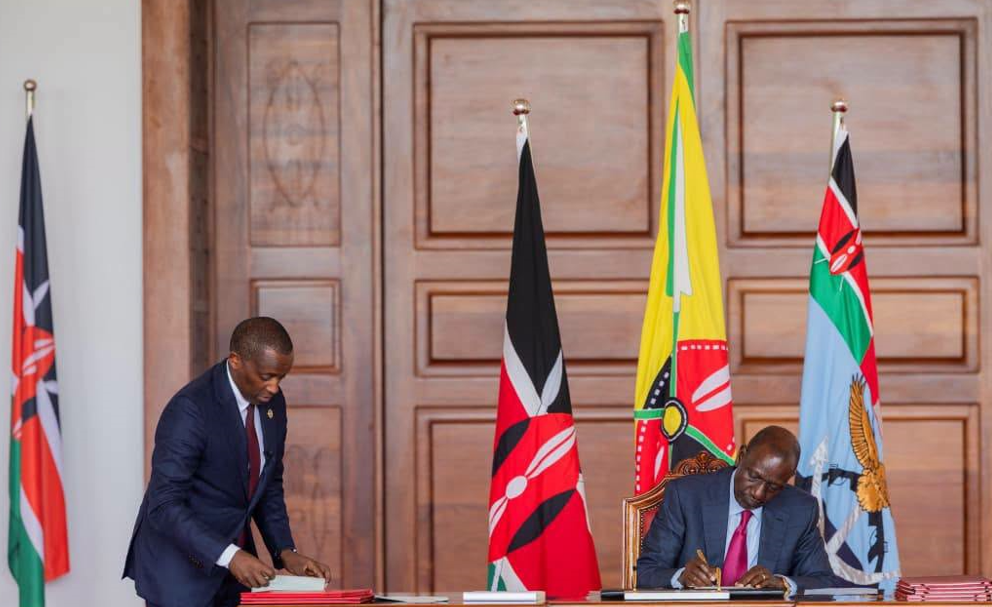
President William Ruto announced the intervention on Tuesday while assenting to the Finance Bill 2026, saying the funds have been set aside to protect consumers and businesses from international events that often trigger sudden spikes in fuel costs.
The move comes against the backdrop of renewed tensions in the Middle East, a region that plays a crucial role in global oil production and supply. Any disruption in the area has the potential to push crude oil prices higher, with countries that rely heavily on imports, such as Kenya, often feeling the effects through increased fuel prices and a higher cost of living.
Fuel remains one of the most sensitive commodities in the economy. A rise in pump prices quickly filters through to transport, food distribution, manufacturing and electricity production, ultimately affecting household spending. By setting aside billions of shillings for stabilisation, the government hopes to absorb part of the pressure before it reaches consumers.
Ruto said the funding is intended to cushion Kenyans from external shocks and ensure that global market turbulence does not immediately translate into higher costs at the pump.
“To cushion Kenyans from volatility in the global fuel market, including disruptions arising from conflict in the Middle East, including in Iran, we have set aside KSh21.5 billion for fuel stabilisation,” the President said.
The fuel stabilisation programme forms part of a broader energy strategy that the government believes will reduce Kenya’s vulnerability to international market fluctuations in the future.
One of the key projects highlighted by the President is the proposed East African Refinery, which is expected to boost local and regional fuel processing capacity. Kenya, like many countries in the region, imports most of its refined petroleum products, making it heavily dependent on global supply chains and international pricing trends.
Government officials believe a regional refinery could strengthen energy security, create jobs, lower logistics costs and reduce dependence on imported fuel products over the long term.
The fuel intervention was announced alongside major investments in the country’s energy sector. The government has allocated KSh34.1 billion to support electricity access and power development projects across the country.
A significant share of the funding, Ksh 26.1 billion, will be used to expand the national grid and connect more rural communities to electricity. The programme is expected to improve access to power for homes, schools, health centres and businesses in underserved areas.
Another Ksh 3.7 billion has been earmarked for power generation projects, while KSh3.2 billion will support alternative energy technologies. The funding is expected to accelerate investment in renewable energy sources as Kenya seeks to maintain its position as one of Africa’s leaders in clean energy production.









Leave a comment