

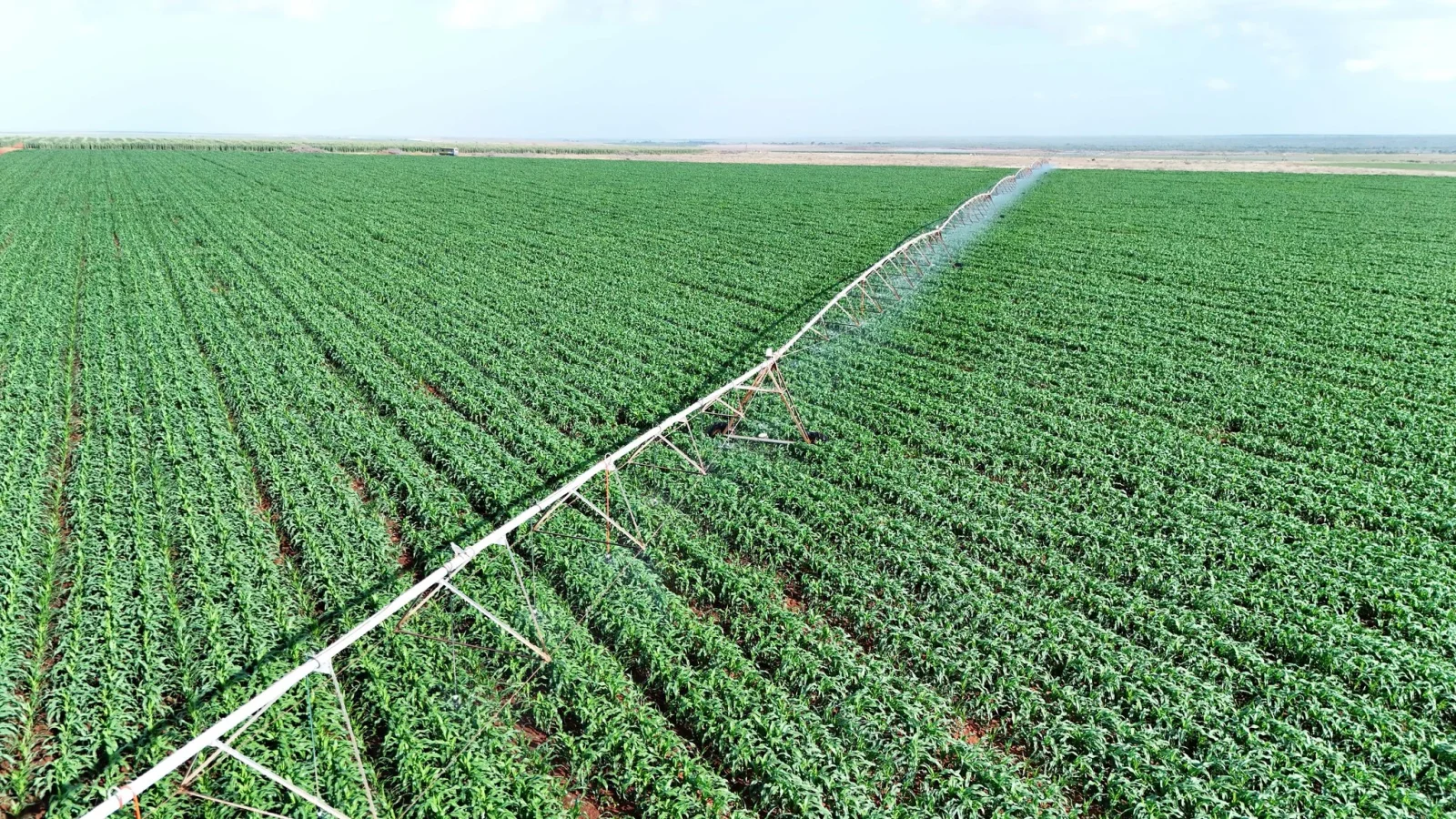
Four years into President William Ruto’s administration, the government’s fertiliser subsidy programme has significantly reduced the cost of farm inputs and coincided with a recovery in agricultural production, particularly maize, although data shows that weather and the amount of land under cultivation remain major factors.
Ruto introduced the intervention within days of taking office in September 2022, promising to shift government support from what he described as consumption subsidies towards measures aimed at lowering production costs, increasing food output and ultimately reducing the cost of living.
Agriculture was placed at the centre of that strategy.
At his inauguration on September 13, 2022, Ruto announced that 1.4 million 50-kilogramme bags of fertiliser would be made available to farmers at Sh3,500, down from about Sh6,500.
“The cost of living challenges are related to production. Our strategy to bring down the cost of living is predicated on empowering producers,” Ruto said at the time.
He said Kenya’s maize harvest was projected at below 30 million bags in 2022, against normal production of about 40 million bags, partly because of the high cost of farm inputs.
“Our priority intervention therefore, is to make fertiliser, good-quality seeds and other agricultural inputs affordable and available,” he said.
The subsidy has since expanded, with the price of a 50-kilogramme bag falling to Sh2,500 and the number of farmers accessing subsidised inputs increasing.
But the central question is whether the lower cost of fertiliser has translated into higher agricultural production.
Available figures suggest that it has contributed to a significant recovery, especially in maize, although the data does not support attributing the increase to fertiliser alone.
Fertiliser prices fall
Ruto’s fertiliser reforms began soon after he assumed office, although subsidising farm inputs was not entirely new.
The previous administration had also subsidised fertiliser and, by April 2022, had allocated about Sh5.73 billion to reduce the price of inputs, including DAP, to about Sh2,800 per 50-kilogramme bag.
Ruto’s first major intervention came on September 13, 2022, when he announced a price of Sh3,500 per 50-kilogramme bag, down from approximately Sh6,500.
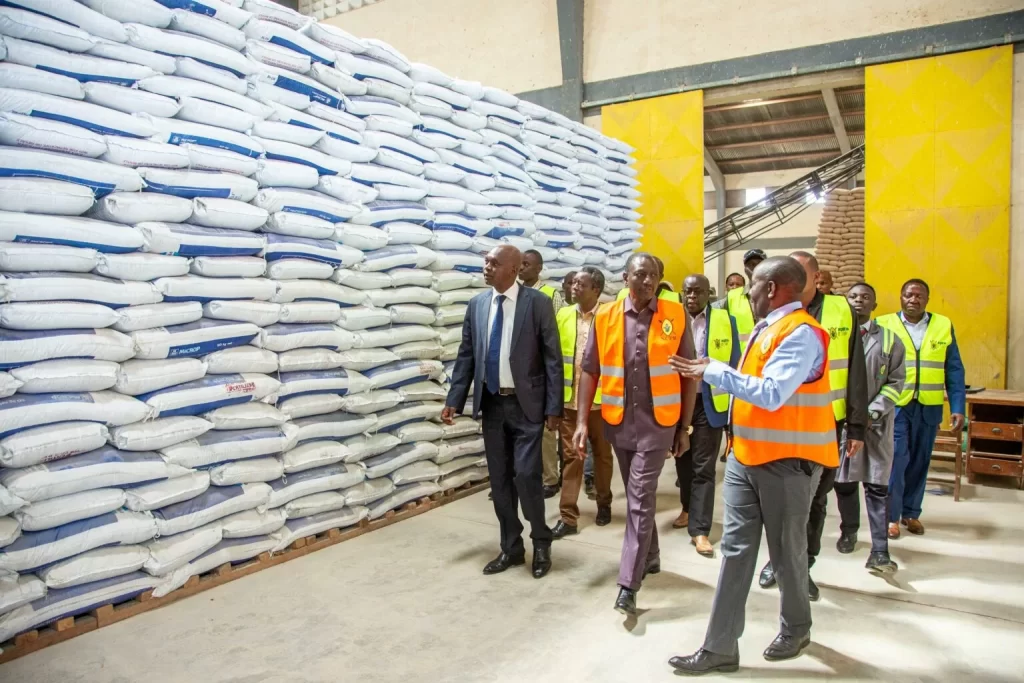
The first consignment was distributed through National Cereals and Produce Board depots from September 19, with about Sh3.55 billion allocated for 1.42 million bags.
The programme was expanded further in August 2023 when the President announced another reduction, taking the price to Sh2,500 per 50-kilogramme bag.
By 2024, the government said it had distributed 8.6 million bags, compared with 1.4 million in 2022.
In August 2026, Ruto announced that the price would be reduced again, this time from Sh2,500 to Sh2,000. He also announced a 50 per cent subsidy on maize seed.
“I am making an announcement to all our farmers that from next month (September), in the next two weeks, we are going to subsidise maize seeds by 50% and reduce the cost of fertiliser by another 500 shillings,” Ruto said.
“So that the bag that was selling at 2,500 is going to be sold at 2,000 from the next two weeks.”
The scale of the intervention has consequently changed substantially since 2022.
The government has also introduced farmer registration and digital targeting. By 2024, more than six million farmers had reportedly been registered, enabling authorities to identify beneficiaries and distribute inputs through a more targeted system.
The approach has therefore been defined by the scale of the subsidy, successive reductions in the retail price and the expansion of farmer registration.
More land under maize
The recovery in agricultural production has also coincided with an expansion in the amount of land planted with maize.
Kenya National Bureau of Statistics (KNBS) data shows that maize was cultivated on approximately 2.11 million hectares in 2022.
The area increased to about 2.43 million hectares in 2023, representing growth of roughly 15 per cent.
It then declined marginally to 2.41 million hectares in 2024, but remained significantly higher than the 2022 level.
The increase is important when assessing the effect of cheaper fertiliser because it means the growth in production cannot be explained solely by farmers obtaining higher yields from the same land. More land was also brought under maize cultivation.
KNBS figures show that maize production stood at 34.25 million 90-kilogramme bags in 2022.
Production then climbed to 47.61 million bags in 2023 before falling to 44.76 million bags in 2024.
The figures show a clear expansion in both acreage and production following the introduction and expansion of the subsidy programme.
Yields also improve, then fall
The increase in maize production was not simply a result of more land being planted.
Average yields also improved between 2022 and 2023.
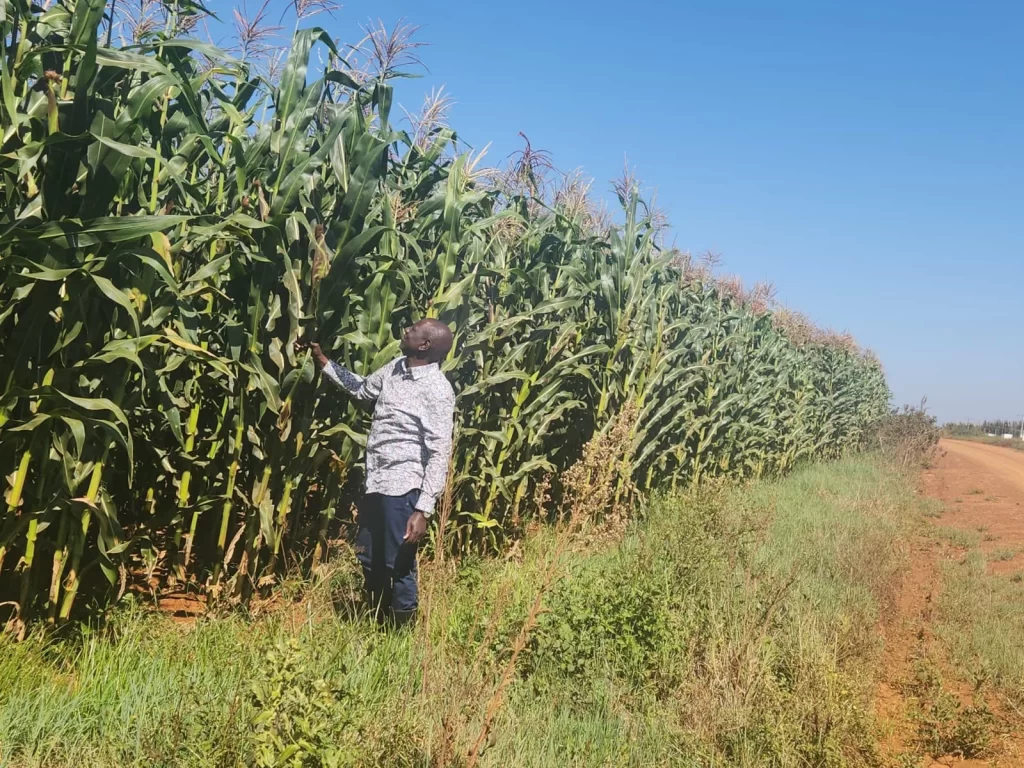
Based on KNBS production and acreage figures, average maize output increased from approximately 1.46 tonnes per hectare in 2022 to about 1.76 tonnes per hectare in 2023.
That represented a substantial improvement.
However, yields subsequently fell to approximately 1.67 tonnes per hectare in 2024.
The figures demonstrate both the potential and limitations of the fertiliser intervention.
While the increase in 2023 coincided with the expanded subsidy, it also followed the severe drought that affected the country in 2022.
Improved rainfall in 2023 therefore played an important role in the recovery.
KNBS attributed the broader agricultural recovery in 2023 to government interventions, including the fertiliser subsidy programme, as well as favourable weather conditions.
This means agricultural output cannot be attributed to cheaper fertiliser alone.
The decline in maize production and yields in 2024, despite the continued availability of subsidised fertiliser, further underlines the importance of weather.
Agriculture records broad recovery
Kenya’s agricultural sector contracted by 2.3 per cent in 2022 after recording a marginal 0.3 per cent decline in 2021.
The situation changed in 2023, when the sector grew by seven per cent, followed by another 4.6 per cent expansion in 2024.
Maize production rose by 38.8 per cent between 2022 and 2023, while rice production increased by 19.1 per cent. Tea production also grew, although performance across different agricultural subsectors was mixed.
The National Agriculture Production Report for 2025 shows that maize remained Kenya’s leading crop in 2024.
It covered approximately 2.41 million hectares and produced about 4.03 million tonnes.
Beans occupied approximately 1.23 million hectares and produced about 759,000 tonnes.
Irish potatoes generated about 2.15 million tonnes from 226,000 hectares, while cassava produced approximately 1.21 million tonnes from just 82,000 hectares.
Other value chains also recorded growth.
Coffee production increased by 1.8 per cent in 2024 to 49,500 tonnes, while land under coffee increased from about 111,900 hectares to 113,500 hectares.
Tea production grew by 4.9 per cent to 598.5 million kilogrammes.
Sugar recorded one of the sharpest recoveries, with production increasing by 72.5 per cent from 472,800 tonnes in 2023 to 815,500 tonnes in 2024.
Milk production also rose, with the government reporting an increase from 4.6 billion litres in 2022 to approximately 5.2 billion litres in 2024. During the same period, the New KCC guaranteed milk price increased from Sh37 to Sh50 per litre.
However, the recovery has not been uniform.
Horticulture recorded mixed results in 2024, with the total value of horticultural exports falling by 12.9 per cent to Sh136.6 billion.
Vegetable production and exports were particularly affected by market and regulatory challenges.
The figures therefore point to an agricultural sector that has recovered and expanded in several areas, rather than one undergoing a uniform transformation across every value chain.
Maize imports decline
The recovery in domestic food production has also been accompanied by a reduction in some food imports, particularly maize.
Kenya imported approximately 793,752 tonnes of maize in 2022 following the drought-related decline in domestic production.
As local production recovered, imports fell.
KNBS reported that maize imports declined by 39.1 per cent in 2024 to approximately 309,300 tonnes, mainly attributing the reduction to increased domestic production and favourable weather.
The government has also reported a decline in maize imports, saying imports equivalent to about 32 million 50-kilogramme bags in 2022 fell to roughly 21 million bags in 2023.
Ruto has repeatedly linked the reduction in imports to his production-focused agricultural approach.
In his 2025 State of the Nation Address, he said the government was seeking to reduce Kenya’s reliance on imported maize, sugar, edible oil, rice and wheat.
He also identified reliance on rain-fed agriculture as one of the major obstacles to food security.
“We can no longer allow the clouds to determine whether our people eat or not. If we are to produce enough for domestic consumption and exports, expanded modern irrigation is now necessary and the only path forward,” he said.
Irrigation becomes next frontier
The government has consequently shifted part of its focus towards irrigation as it seeks to make agricultural production less dependent on rainfall.
Ruto announced plans for at least 50 mega dams, 200 medium and small dams and thousands of micro dams.
The target is to place at least 2.5 million acres under irrigation within five to seven years.
The strategy represents a shift beyond lowering input costs towards ensuring that more agricultural land can produce food reliably throughout the year.
However, Kenya continues to rely heavily on imports of wheat, rice, edible oils and other food commodities.
The decline in maize imports has therefore not eliminated the country’s structural dependence on imported food.
In the edible oils sector, the government has promoted sunflower and other oil crops as part of efforts to replace imports.
Sunflower acreage increased from about 60,000 acres in 2022 to nearly 65,000 acres in 2024.
Despite that growth, Kenya continues to import substantial quantities of vegetable and animal fats and oils, highlighting the scale of the challenge.
Has the fertiliser reform worked?
The available evidence suggests that cheaper fertiliser has contributed to increased production, but it has not been the only factor.
Since Ruto took office, the price of subsidised fertiliser has fallen substantially, access to the input has expanded, maize acreage has increased, average maize yields improved in 2023, overall production rose sharply and maize imports subsequently declined.
Those changes represent significant gains.
However, the 2023 increase in production came after a severe drought in 2022 and coincided with better rainfall.
Maize yields fell again in 2024 despite continued access to subsidised fertiliser.
The data therefore points to the importance of combining affordable farm inputs with other interventions, particularly measures that reduce agriculture’s exposure to weather.
The government’s focus has consequently expanded to irrigation.
The 2026/27 Budget presented by Treasury Cabinet Secretary John Mbadi also indicates that fertiliser subsidies remain a major part of the agricultural strategy.
Treasury proposed Sh64 billion for agriculture, including Sh18 billion for the fertiliser subsidy, Sh2 billion for seed subsidies and funding for agricultural value chains and food-system resilience programmes.
The continued allocation suggests the government does not regard the fertiliser reform as complete.
Four years after the intervention began, fertiliser is significantly cheaper than it was when Ruto took office, while more farmers have access to subsidised inputs.
Maize acreage and production have risen from the drought-hit 2022 levels, and maize imports have fallen.
However, yields remain relatively low, food imports remain significant and agricultural production continues to be highly exposed to rainfall.
The next test of the agricultural reforms will therefore be whether lower input costs can translate into consistently higher yields and production even when weather conditions are unfavourable.
The administration began its agricultural intervention with a promise to make production cheaper.
Four years later, the figures suggest the policy has contributed to increased output, but sustaining those gains—and reducing Kenya’s dependence on food imports—will require more than cheaper fertiliser alone.
Read: Govt Cuts Fertilizer Price to Ksh2,000, Halves Maize Seed Cost
>>> Farmers Credit Affordable Fertilizer and Better Infrastructure for Higher Yields











Leave a comment