

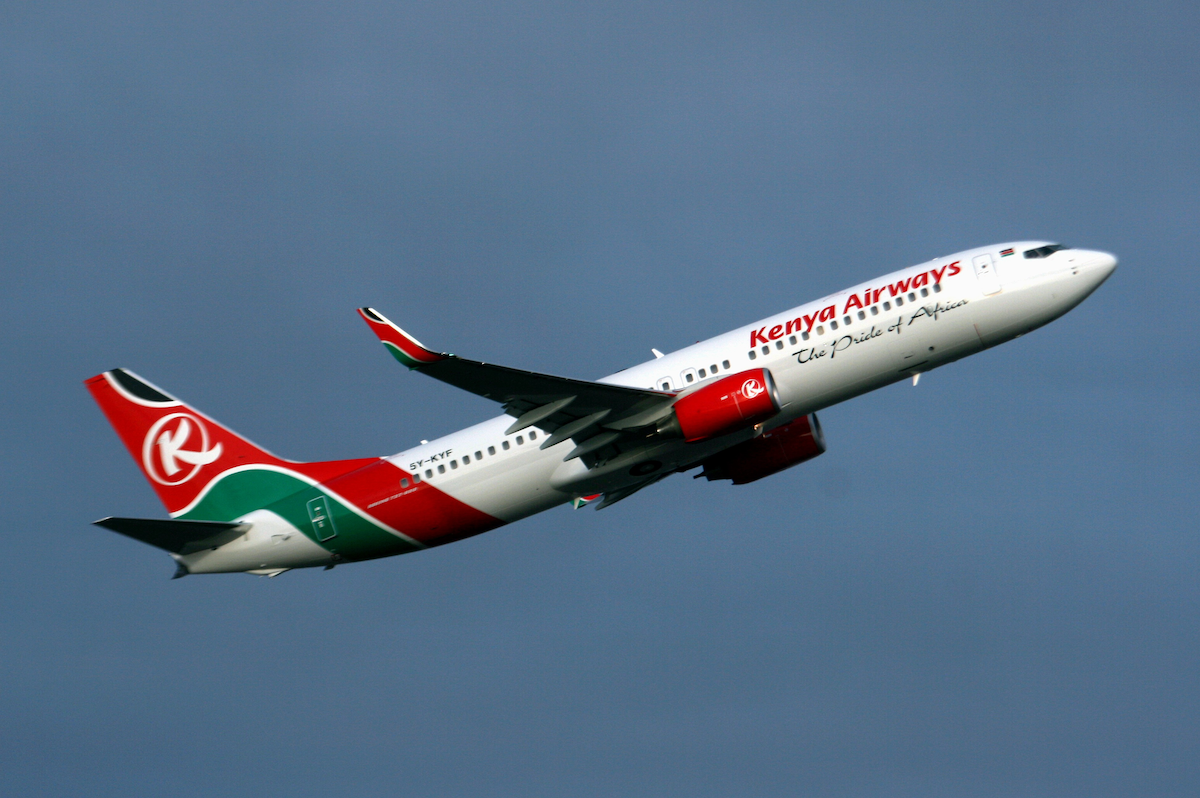
Kenya Airways(KQ)is back in the headlights with the latest state bailout announcement opening up the airline to discussions on possibilities around its restructuring. The developments have also opened up speculative trading opportunities for investors at the Nairobi Securities Exchange(NSE).
According to Dedan Maina, an analyst at Ketu Capital, the Kenyan government’s latest intervention in KQ introduces a potentially significant catalyst for speculative traders.
Cabinet has approved a proposed KSh45.3 billion shareholder financing package and endorsed, in principle, the conversion of approximately KSh122 billion in existing government loans, plus accrued interest, into an equity-qualifying tradable instrument.
The fresh financing is intended to support aircraft maintenance, return grounded aircraft to service and meet urgent financial obligations that KQ has.
Meanwhile, the proposed debt restructuring could ease repayment pressure and strengthen the airline’s balance sheet.
These developments could improve KQ’s operational capacity and financial position. However, government financing should not be confused with a fundamental turnaround.
The airline’s persistent liquidity constraints, management challenges and history of financial dependence on the state remain important risks.
The implementation of the financing and restructuring, their final terms, and the necessary corporate and regulatory approvals also matter.
KQ Interest to Investors at the NSE
For investors, the immediate significance lies in the potential catalysts these developments create, rather than an assumption that KQ’s underlying business problems have been resolved.
The market is still waiting for the possibility of a strategic investor acquiring an interest in KQ, following the government’s indication that it is seeking a strategic investor.
A credible investor could potentially introduce fresh capital, stronger governance, operational expertise and more sustainable management practices. Such an outcome could address some of the structural weaknesses that have kept KQ financially vulnerable.
However, a strategic investment remains a possibility, not a confirmed transaction.
“The latest developments introduce several potential catalysts that speculative traders should monitor,” said CFA Maina.
If the financing enables KQ to return grounded aircraft to service, the airline could increase its operational capacity and potentially generate additional revenue.
The actual benefit will depend on the number of aircraft restored, the time required, operating costs, passenger demand and the profitability of the additional capacity.
Converting existing government loans into an equity-qualifying instrument could reduce the pressure associated with servicing those obligations, depending on the final structure and accounting treatment.
Investors are being advised to not hold KQ indefinitely while waiting for every management, operational and liquidity problem to be resolved. Rather, the counter can be a speculative one, driven by catalysts, market sentiment and momentum.
In this strategy, the market may begin repricing expectations before the underlying business has fully recovered.
Anticipation of a strategic investor, operational improvements or a restructuring breakthrough can attract demand and generate short-term trading opportunities. However, expectations can move faster than actual business performance.
KQ share prices can rise sharply on limited information and fall just as quickly when anticipated developments fail to materialise.














Leave a comment