

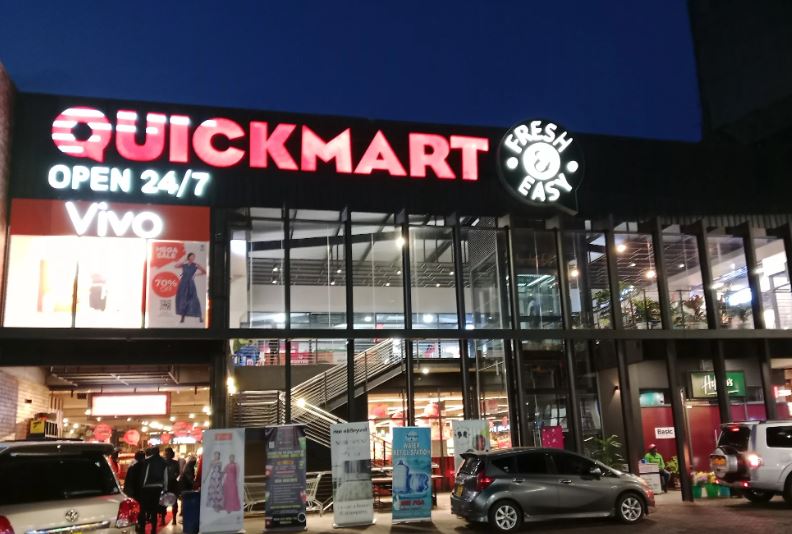
Quickmart’s planned entry into the Nairobi Securities Exchange has drawn scrutiny from Parliament, with lawmakers questioning why Kenyans are being invited to buy shares in a supermarket that will not receive the money raised from the public offer.
The National Assembly Public Investments Committee on Commercial Affairs and Energy has challenged the Capital Markets Authority (CMA) to strengthen its oversight of public share offers, warning that ordinary investors could lose their savings if they commit money without understanding the financial position of the companies they are buying into.
At the centre of the concerns is the structure of Quickmart’s Ksh 15 billion share offer. The transaction involves the sale of two billion existing shares by Sokoni Retail Kenya Limited, an existing shareholder, at Sh7.50 per share. The proceeds will go to Sokoni, not Quickmart.
This is an offer for sale, rather than a fresh issue of shares. In a primary share issue, a company sells newly created shares and receives the money to support its operations or expansion. In a secondary sale, existing shareholders sell part of their stake and receive the proceeds.
Nairobi Woman Representative Esther Passaris questioned whether investors understood that their money would not be injected directly into the retailer. The transaction has been described as a partial exit by private equity investor Adenia and the supermarket’s founders.
The offer attracted applications worth Sh18.41 billion against the Ksh 15 billion target, representing an oversubscription of 22.7 per cent. Quickmart received 18,492 applications for about 2.45 billion shares, although only two billion were available. The demand did not resolve the committee’s concerns about investor information.
Committee chairperson and Pokot South MP David Pkosing challenged the CMA to take its investor-protection role seriously when approving supermarket share offers. He said the regulator had a responsibility to protect Kenyans from losing their savings and close gaps that could expose investors to losses.
“As the market regulator, you have an obligation to protect Kenyans from potential loss of funds,” Pkosing told CMA officials. He said supermarket share offers required immediate attention because of the risks in the sector.
MPs questioned whether the regulator had adequately examined Quickmart’s financial position, operating cash flows and supplier obligations before approving the offer. They cited the collapse of Uchumi and Nakumatt, whose financial difficulties exposed suppliers, workers and other stakeholders to losses.
Financial stability concerns
A supermarket’s size and visibility do not guarantee financial stability. Retailers must manage stock purchases, supplier payments, rent, wages and other operating costs while keeping enough cash to run their stores. Weak cash flow can put pressure on operations.
CMA Chief Executive Officer Wyckliffe Shamiah defended the regulator’s review, saying the offer had undergone scrutiny and met the required thresholds. He told MPs Quickmart was not heavily dependent on borrowing because much of its funding came from cash generated internally.
“The SME (Quick Mart) is not heavily reliant on debt, as the bulk of its funding is internally generated. The proposed share sale has also met the other requisite thresholds,” Shamiah said.
The committee also examined audit queries in CMA’s financial statements for 2018/2019 to 2024/2025. The issues included temporary staff engagements and procurement of medical insurance brokerage services.
Shamiah said temporary workers had been engaged because of staff shortages, but the authority had since recruited employees permanently with National Treasury approval. CMA officials maintained that the insurance brokerage procurement complied with the law.
The hearing highlights the difference between investor demand and the information available to the public. Oversubscription means applications exceeded the shares on offer; it does not establish whether the shares are appropriately valued or suitable for every investor. Buyers need to consider the company’s performance, obligations, risks and growth prospects before investing, ahead of its scheduled NSE listing.












Leave a comment