

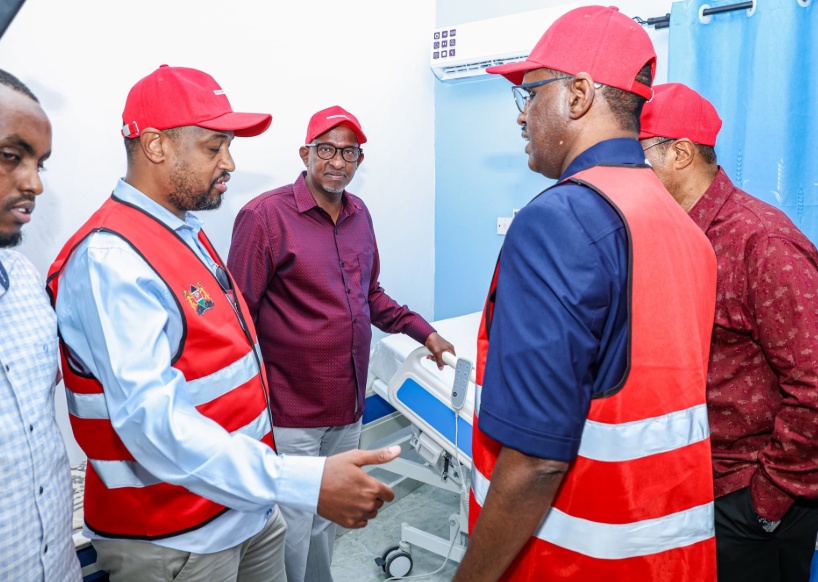
Health Cabinet Secretary Aden Duale has announced that all seven patients who tested positive for Ebola in Kenya have recovered and been discharged from hospital, marking a major milestone in the country’s efforts to contain the outbreak.
Duale announced on Wednesday, November 11, confirming that the last patient had been released from the hospital and all individuals who came into contact with infected persons had completed their medical monitoring.
“Today, with the discharge of the last patient, we can confirm and tell the world that seven patients have recovered and all contacts have completed their follow-up monitoring,” Duale said.
The announcement brings Kenya closer to ending the outbreak, which was first detected on October 3. However, the country must complete a 42-day period without recording another confirmed infection before the outbreak can officially be declared over.
The countdown follows the discharge of the last patient and is intended to establish whether there are any remaining chains of transmission. The 42 days represent twice the maximum 21-day incubation period of the Ebola virus.
How Kenya recorded its first recoveries
The Ministry of Health recorded its first breakthrough on November 3, when five patients were discharged after recovering from the infection.
Another patient was released on November 6, leaving one person under treatment until Wednesday, when Duale confirmed the final discharge.
Kenya confirmed nine Ebola infections during the outbreak, with two deaths reported. The seven survivors were treated in isolation facilities as health authorities worked to prevent further transmission.
The government also conducted extensive contact tracing to identify people who had interacted with infected individuals and could potentially develop the disease.
According to the Ministry of Health, 135 people identified as contacts of the imported case completed the mandatory 21-day monitoring period.
The first group of 20 contacts completed monitoring and left quarantine on October 26, while another 46 were scheduled for release on November 3. The remaining contacts subsequently completed their follow-up without developing the disease.
Kenya maintains surveillance at entry points
Despite the recovery of all seven patients, the government has maintained heightened surveillance to prevent fresh infections, particularly because of the risk of imported cases.
Duale said health authorities would continue screening travellers at all 26 points of entry into the country. More than 760,000 people have already undergone screening as part of the response.
Emergency operations centres and rapid response teams will also remain on standby across the country to investigate suspected infections and coordinate emergency interventions.
The surveillance measures are intended to ensure that any suspected case is identified, tested and isolated quickly before the virus can spread to other people.
Ebola is a severe and often fatal disease transmitted through direct contact with the blood, secretions and other bodily fluids of an infected person, as well as contaminated objects.
Symptoms include fever, weakness, muscle pain, headaches, vomiting, diarrhoea and, in severe cases, unexplained bleeding.
Government rules out travel restrictions
The Ministry of Health maintained that Kenya remains open to international travel, trade and public gatherings despite the outbreak.
No restrictions have been imposed on movement within the country, with the government relying on screening, contact tracing and rapid response measures to contain possible infections.
The next major milestone will be the completion of the 42-day observation period without a new confirmed case.
Until then, health authorities are expected to maintain surveillance and emergency preparedness to ensure that the recovery of the final patient translates into the complete interruption of Ebola transmission in Kenya.








Leave a comment