

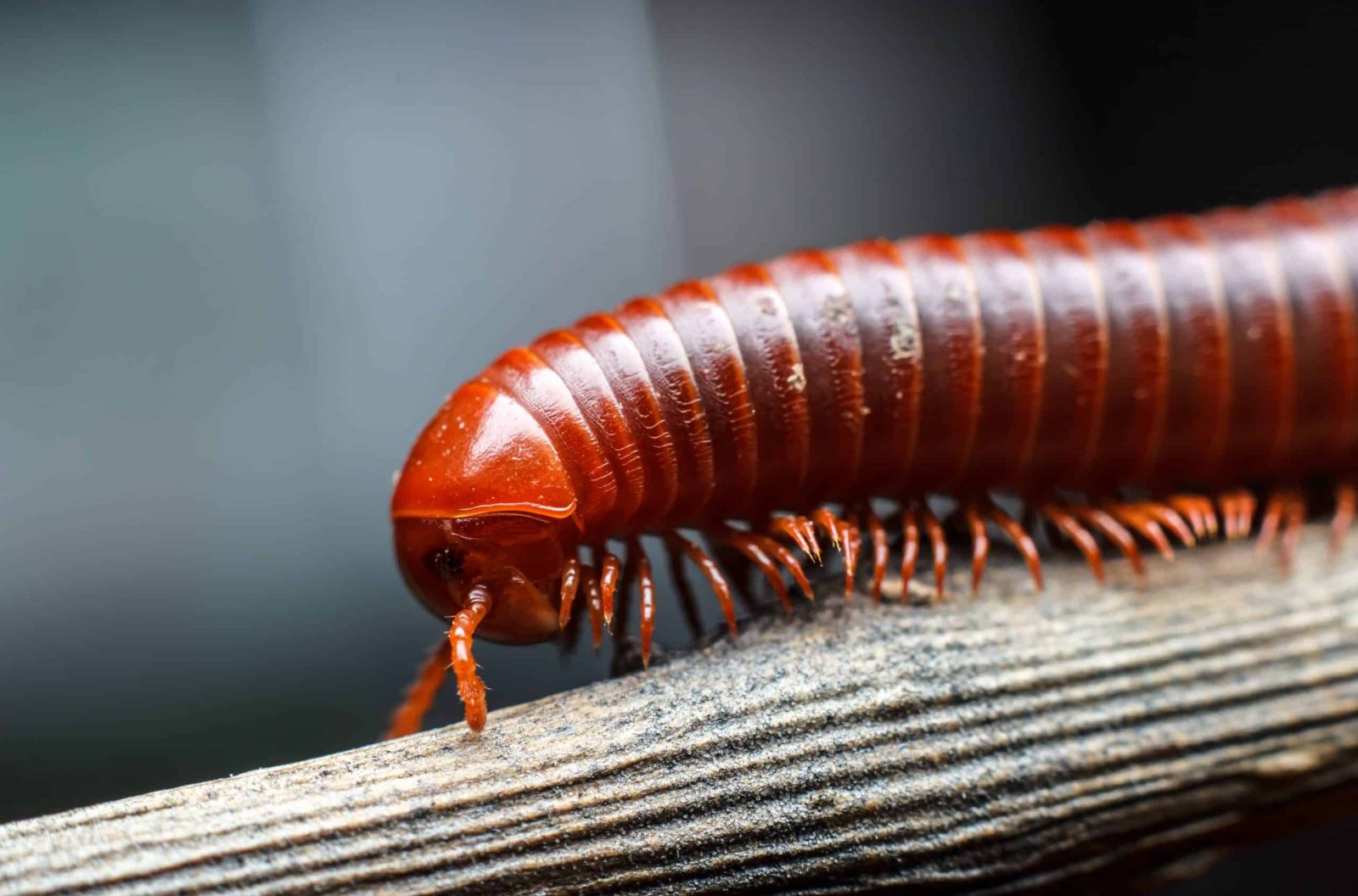
A new study has resolved one of the final mysteries in the evolutionary saga of millipedes, offering fresh insight into the humble decomposers that helped prepare the planet for more complex terrestrial life as discovered.
That long before dinosaurs roamed the Earth and long before the first backboned animals existed, millipedes were already thriving on Earth’s surface.
The research, published in the journal Current Biology, presents the first comprehensive family tree of all living millipede orders. By integrating DNA sequences from modern specimens with fossil evidence, an international team led by Virginia Tech scientists pushed the origins of these arthropods back to roughly 460 million years ago—about 35 million years earlier than their oldest known fossils and well before many previous estimates.
“Millipedes beat vertebrates onto land by more than 80 million years,” said Paul Marek, the study’s lead investigator and associate professor in the College of Agriculture and Life Sciences’ Department of Entomology. “They really set the stage for later life on land, including humans and vertebrates.”
For more than a hundred years, two rare millipede groups, Siphoniulida and Siphonocryptida, had eluded placement on the evolutionary tree.
“These last two were kind of like our white whales,” Marek said.
Fresh specimens suitable for genetic analysis were almost nonexistent. One group consists of tiny, subterranean creatures less than a centimeter long; the other is known from just a handful of isolated locations.
To solve the puzzle, researchers mounted expeditions to Los Tuxtlas in Mexico and Spain’s Canary Islands. There, they collected the elusive Siphoniulus neotropicus and Hirudicryptus canariensis. The fieldwork was painstaking: team members spent days searching for specimens so small they initially resembled nematodes.
“It took 10 people over a week just to find this one tiny 10-millimeter adult,” said Luisa “Fernanda” Vasquez-Valverde M.S. ’21, Ph.D. ’24, the paper’s first author and an assistant in Marek’s lab. “Finding them in the field was hard because we were just seeing this little white nematode. We didn’t know for sure it was a millipede until we looked under the microscope.”
Once secured, the team sequenced DNA from these species and analyzed hundreds of genes across 82 millipede species, while also incorporating data from 29 fossils. One group, Siphonocryptida, was found to nest within an existing lineage rather than representing a wholly separate order, while Siphoniulida was placed with its closest relatives.
The analysis, which generated terabytes of genetic data processed on Virginia Tech’s high-performance computing systems, also provided important new clarity into the deep timeline of millipede evolution.
The results suggest some millipede lineages are far older than previously thought. At the time of their emergence, Earth was a starkly different place: no forests, no seed-bearing plants, and no land vertebrates. Millipedes thrived by consuming decaying mosses, microbial mats and early organic debris.













Leave a comment