

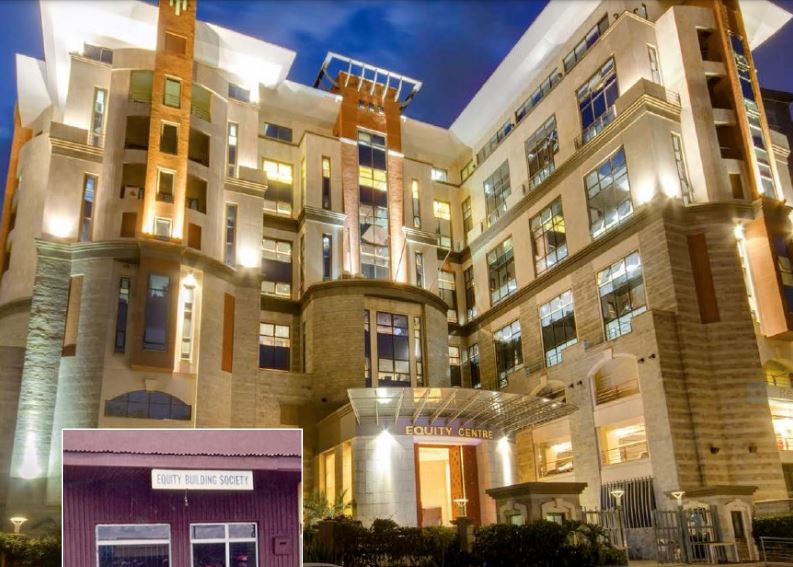
Equity Group Holdings Plc, Kenya’s leading regional lender with subsidiaries in Democratic Republic of Congo, Tanzania, Uganda, Rwanda and South Sudan, saw its net profit rise 32% to KSh 45.5 billion for the six months’ period ended 30th June 2026 as total income surged 25% to KSh 124.9 billion.
Equity Group’s regional subsidiaries are now larger than its Kenyan bank by assets, holding KSh 1.248 Trillion, or 52% of banking assets, versus Kenya’s KSh 1.132 Trillion. Regional deposits jumped 34% to KSh 940.9 billion, loans 30% to KSh 533.7 billion and half-year profit up 42% to KSh 26.2 billion.
Kenya remained the biggest profit contributor, with pre-tax profit for the six months’ period up 35% to KSh 29.4 billion.
Equity Group’s balance sheet expanded 20% to KSh 2.156 Trillion in H1 2026, driven by customer loans rising 19% to KSh 981.0 billion and deposits rising 21% to KSh 1.589 Trillion.
Investments in securities grew to KSh 643.2 billion, or 30% of assets. Regional subsidiaries now account for 54% of the loan book, led by Democratic Republic of Congo(DRC) at 37%, versus Kenya’s 46%.
Equity Group’s asset quality improved in H1 2026, with the Non- performing loans(NPLs) ratio falling to 9.5% from 13.7% a year earlier and 10.6% in Q1. Kenya’s ratio dropped to 15.1% from 20.0%, while DRC improved to 4.9%.
Corporate Non Performing Loans(NPLs) nearly halved to 12.8% from 24.5%. IFRS coverage stood at 70%, rising to 113% including guarantees.
Equity Bank Insurance Business
Equity’s insurance business maintained rapid growth in H1 2026, with gross written premiums up 24% to KSh 6.43 billion and total income rising 43% to KSh 3.57 billion. The underwriting business posted a pre-tax profit increase of 34% to KSh 1.25 billion, while the subsidiary’s assets expanded 27% to KSh 39.84 billion. Insurance contract liabilities rose 24% to KSh 29.76 billion.
Equity Bank Balance Sheet Size
Equity Group’s balance sheet expanded 20% to KSh 2.156 Trillion in H1 2026. Net loans rose 19% to KSh 981.0 billion, deposits 21% to KSh 1.589 trillion, and government securities 19% to KSh 643.2 billion. Shareholders’ funds grew 27% to KSh 350.3 billion while borrowed funds fell 23% to KSh 88.0 billion. Non-interest income climbed 36% to KSh 55.6 billion, while net interest income grew 17% to KSh 69.3 billion as interest expenses fell 12%.
While releasing the half-year results Dr James Mwangi, Equity Group Managing Director and CEO said, “The Group’s performance is unfolding against a backdrop of resilient regional economic growth. Kenya is projected to expand by 4.5%-5%, the Democratic Republic of Congo by 5.6%, Tanzania by 5.9%, Uganda by 6.4%, Rwanda by 6.8%, and South Sudan by 20%.
These growth rates are supported by firm commodity prices and policy reforms and are expected to sustain, making the region where we operate one of the fastest growing regions in the world. Equity’s half-year 2026 performance is the outcome of a multiyear transformation agenda focused on resilience, diversification, and technology enablement. The Group has repositioned its operating model, strengthened its regional presence, and invested heavily in digital and AI‑enabled capabilities to build an institution equipped for the future.”
Operational efficiency continued to improve, with the cost‑to‑income ratio improving to 48.6% from 51.7%, driven by productivity gains, shared services, and a decisive customer shift toward digital channels. Return on Assets stood at 4.5%, while Return on Equity reached 26.5%, demonstrating strong asset productivity and disciplined capital allocation.
“Our H1 2026 performance reflects the success of our deliberate transformation into a diversified, regional, technology‑enabled financial services Group. We are building a future ready institution; scalable, secure, and impact led, anchored in digital capabilities, staff upskilling, and a culture of disciplined execution. As we progress towards our Africa Recovery and Resilience Plan (ARRP) 2030 ambitions, we are evolving beyond traditional banking into an integrated tech enabled financial institution that mobilizes capital, connects ecosystems, and accelerates inclusive, sustainable prosperity across Africa.”
Equity’s technology-enabled transformation is now firmly embedded across the Group. Customer behaviour continues to shift decisively toward digital channels, with 98.3% of all transactions occurring outside branches and 89.7% processed through digital platforms, demonstrating that customers are actively choosing the convenience and reliability of Equity’s digital ecosystem,” said Dr Mwangi.
On 31st December, 2014, Equity Building Society, as it had previously been known as, became Equity Group Holdings Limited, a non-operating holding company, after undergoing a process of restructuring, so as to further meet its objectives.
In 1984, Equity Building Society -now the bank arm of the group- was founded, and has recorded various key milestones through the years.
In 2004, it converted into a fully-fledged commercial bank, Equity Bank Limited (EBL). It was listed in the Nairobi Securities Exchange in 2006, becoming the largest bank by market capitalization, and attracting Helios, a strategic investor, who invested US$ 185 million in 2007.
Support such as this has seen the scaling and transformation of the Group into a rapidly growing Pan-African banking group.
ALSO READ: Equity Group to Venture into Insurance Business in the DRC












Leave a comment