

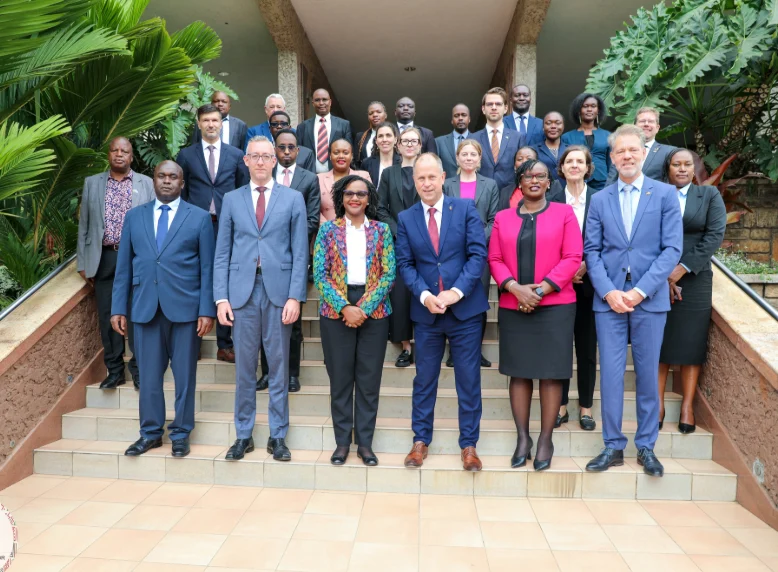
The talks took place in Nairobi and marked an important step in strengthening cooperation on skills, employment, and legal migration channels.
Officials from both countries described the meeting as a success, highlighting the growing trust between Nairobi and Berlin.
The focus was on creating more opportunities for Kenyans to access jobs, training, and education in Germany through safe and structured processes.
Special emphasis was placed on preparing young people to qualify under Germany’s Skilled Immigration Act, which makes it easier for foreign workers to take up jobs in sectors facing shortages.
Kenya’s delegation at the talks was led by Roseline Njogu, Principal Secretary for Diaspora Affairs, and Shadrack Mwadime, Principal Secretary for Labour and Skills Development.
Germany was represented by its Ambassador to Kenya, Sebastian Groth, and Joachim Stamp, the Special Commissioner for Migration Agreements.
Language training
Language training and professional preparation were identified as key priorities. By helping Kenyan applicants improve their German and receive targeted technical training, the two countries hope to increase the number of successful candidates.
This approach is also expected to ease integration once they arrive in Germany.
One of the highlights of the agreement is the confirmation that Nairobi will host the second Kenya-German job fair in October 2025. The event will bring together German employers, particularly small and medium-sized companies, with skilled Kenyan professionals.
Sectors such as healthcare, hospitality, logistics, IT, and engineering are expected to feature prominently. With about 40 exhibitors confirmed, the fair will give job seekers a direct link to recruiters.
Both countries also agreed to strengthen cooperation between German companies and Kenyan workers beyond the job fair. The idea is to create closer networks, improve job matching, and raise the quality of partnerships to ensure long-term benefits.
The Nairobi meeting will be followed by a second session in Germany next year. That gathering will review the progress made so far and set out new priorities for the partnership.
Germany’s interest in Kenya’s workforce comes at a time when the European country is facing severe shortages of skilled labour.
Its new immigration law, which came into force in 2023, makes it easier for foreign professionals to move, work, and settle in Germany. For Kenya, the partnership is part of a wider strategy to place more citizens in global job markets, increase remittances, and tackle unemployment at home.
Earlier this year, the Kenyan government announced its intention to send up to one million workers abroad within a year, with Germany among the top destinations. Officials believe that this form of labour migration can benefit both countries, but experts caution that it must be managed carefully to avoid permanent brain drain.
Instead, they call for policies that encourage returning migrants to use their new skills and experiences to boost Kenya’s development.
By working together, Kenya and Germany hope to build a migration framework that creates opportunities for young people, meets labour market needs, and strengthens the economic partnership between the two nations.




![David Ndii chairs the President's Council of Economic Advisers (CEA), and noted that he had shared his thoughts with President William Ruto. [Photo/ Standard]](https://businesstoday.co.ke/wp-content/uploads/2023/04/T0D3fkyPd7kqJ0Sm3Nad0fZo108FFNNu4k9tuWlr.jpg)






Leave a comment