

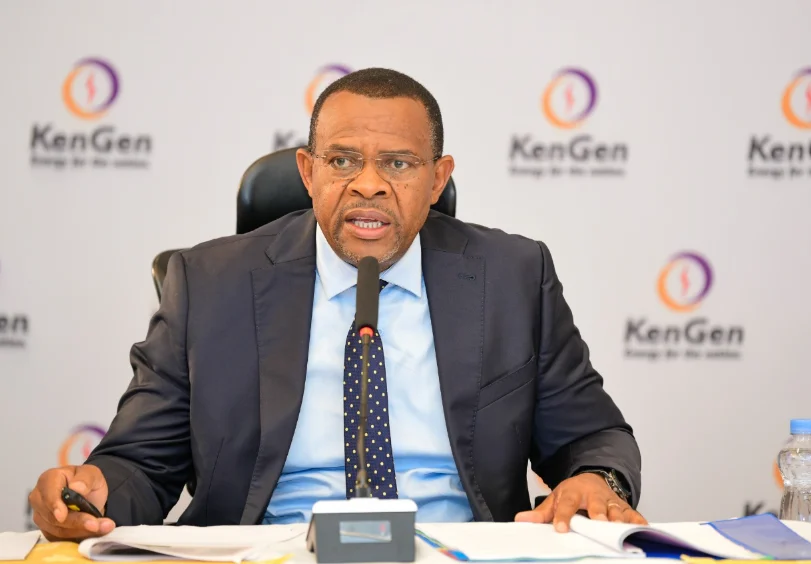
KenGen Plc (Kenya Electricity Generation Company) released its 2025/26 financial results showing a 20% decline in net profits to KSh 4.22 billion.
KenGen’s share price then came under pressure. At first glance, this reaction appeared justified: net profit had declined while no interim dividend was declared.
Many retail investors interpreted this as a deterioration in KenGen’s financial performance and rushed for the exits, their positions focusing almost exclusively on the decline in net profit. The absence of an interim dividend further dampened sentiment.
While many investors had anticipated a payout, KenGen has historically declared an interim dividend only once, with the company generally rewarding shareholders through a final dividend after year-end.
Nevertheless, the market priced in the lack of an interim dividend as another negative.
Following the initial retail-driven sell-off, the share price remained subdued despite resilient operating fundamentals and attractive valuations. This created an opportunity for sophisticated investors to gradually build positions while retail participation remained weak.
KenGen’s core business remained strong with revenue increasing 9.4% to KSh 30.09 billion, supported by higher electricity demand and improved plant availability. Electricity dispatch rose 4% to 4,461 GWh, while Kenya recorded a new peak electricity demand of 2,439 MW. Operating profit also increased 6.4% to KSh 7.07 billion. These are not the characteristics of a weakening business—they point to a utility benefiting from growing electricity consumption and improving operational efficiency.
KenGen Net Profit dampened by accounting factors and not decline in fundamentals
The decline in profit was not because KenGen sold less electricity or became less efficient. Instead, it was largely driven by accounting and timing factors.
- Reimbursable Costs
KenGen incurs certain costs on behalf of the electricity sector that it is allowed to recover later through electricity tariffs approved by the regulator. Accounting standards require these costs to be recognised immediately as expenses, even though much of the money will eventually be recovered. This temporarily reduces reported profits despite there being no permanent economic loss.
- Higher Tax Charge
Another major contributor to the decline in earnings was a higher tax expense. Part of this increase relates to the reversal of deferred tax balances. Deferred tax arises because accounting rules and tax laws often recognise certain income and expenses at different times. In the previous year, KenGen deferred part of its tax obligations, meaning some taxes that would ordinarily have been paid earlier became payable during this reporting period. Think of it as postponing a payment rather than avoiding it. As those temporary differences reversed, the tax expense increased, compressing profit after tax even though the company’s underlying operations continued to improve.
- Capital Investment:
Perhaps the most encouraging aspect of the results was KenGen’s renewed investment programme. Operating cash flow surged 76% to KSh 14.0 billion, demonstrating the strength of the company’s core operations. Rather than distributing most of this cash, KenGen invested approximately KSh 11.8 billion into expanding and maintaining its generation assets. Some investors viewed this as a negative because it reduced short-term free cash flow.
For several years, the freeze on new Power Purchase Agreements (PPAs) significantly slowed investment across Kenya’s electricity generation sector, delaying both new and previously planned projects. That freeze effectively constrained KenGen’s growth and expansion opportunities. Following the lifting of the PPA freeze in late 2025, KenGen is once again progressing new developments while reviving projects that had been put on hold. Viewed in that context, the increase in capital expenditure is not a warning sign—it is evidence that KenGen has re-entered an investment cycle. Today’s investment lays the foundation for tomorrow’s generating capacity, higher electricity dispatch, and stronger long-term earnings.
In KenGen’s case, the 20% decline in net profit initially didn’t align with the strength of the underlying business. That’s why I looked beyond the income statement and focused on cash flow from operations—arguably one of the most important indicators of a company’s financial health.
While net profit fell, operating cash flow surged 76% to KSh 14.0 billion, confirming that KenGen was actually generating significantly more cash from its core business. That provided the context the headline earnings figure could not. Earnings tell part of the story. Cash flow often tells the whole story.
ALSO READ :KenGen Seeks Nod from EPRA to Supply Power to its Green Energy Park












Leave a comment