


Morocco’s digital economy is increasingly experienced through a phone rather than a desktop. Consumers use mobile devices to communicate, pay bills, shop, stream video and follow sport, often moving between services in the same session. For entertainment companies, that behaviour changes the basic question from “Does the website work on mobile?” to “Does the whole journey feel natural on a small screen?”
International platforms entering the market are therefore judged on far more than their content catalogue. A visitor who encounters 1win Morroco, for example, is likely to notice loading speed, language options, payment clarity and account controls before exploring individual features. Those details determine whether a service feels adapted to local habits or merely translated from another market.
A market shaped by everyday mobile habits
The strongest digital products fit around daily routines. A customer may open an app while commuting, during a football break or after receiving a mobile-money notification. Sessions can be short, connections may vary in quality, and attention is divided. A platform that assumes uninterrupted broadband and long registration forms risks losing users before its value becomes clear.
This is why efficient mobile design has a commercial effect. Lightweight pages reduce data use. Clear buttons prevent mistakes. Simple menus make it easier to return to a favourite section. None of these improvements is spectacular on its own, but together they create the sense that a service respects the user’s time.
For product teams, four elements deserve particular attention:
- Fast initial loading, even on an inconsistent connection
- A clear visual hierarchy that works on smaller screens
- Short, understandable registration and verification steps
- Easy access to help, limits and account settings
Payments are part of the product experience
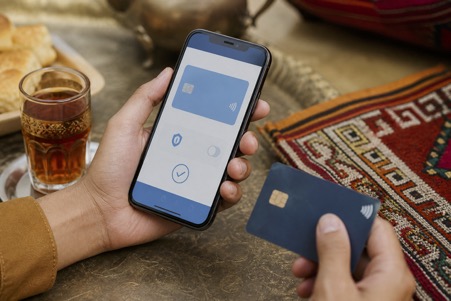
A payment screen is not a back-office detail. It is one of the moments when trust is either strengthened or weakened. Users want to know which methods are available, what information is required, whether a fee applies and how long a transaction may take. When these points are hidden behind vague labels, even a technically successful payment can leave a poor impression.
Morocco’s mix of bank cards, cash-linked services and emerging digital-payment habits means platforms should avoid assuming that one method suits everyone. The better approach is to present relevant choices without creating a wall of logos. Each option should have a short explanation, a predictable sequence and a visible confirmation.
Security also needs to be understandable. Long legal warnings rarely reassure people. Practical signals work better: a clear verification step, a notification after account changes, the ability to review recent activity and an obvious route to customer support. Trust grows when users can see what is happening and retain control.
Localisation goes beyond translation
Language is important in Morocco, but localisation is not simply a choice between Arabic and French. It also includes tone, familiar terminology, readable dates, understandable payment instructions and support that can answer a real question rather than repeat a script. A translated interface can still feel foreign if its examples, timing and help content do not match local expectations.
Good localisation begins with observation. Product teams should study where users abandon a process, which help topics appear most often and whether important instructions are understood the first time. The objective is not to add more text. It is to remove ambiguity.
Sports content raises the bar for performance
Football and other live events create sharp peaks in demand. Many people may open the same service moments before a match, refresh information repeatedly and expect updates without delay. A platform that performs well on a quiet afternoon can struggle during these compressed periods.
Preparing for a live-event peak requires more than server capacity. Teams should also test how the interface behaves when data arrives late, a stream pauses or a payment confirmation is delayed. The user needs a stable screen and a plain explanation, not a frozen button that invites repeated taps.
A practical readiness sequence is:
- Test the busiest user journey under realistic mobile-network conditions.
- Remove unnecessary scripts, images and steps from the first screen.
- Define what the user sees when live data or a transaction is delayed.
- Place support and account controls where they remain accessible during peak traffic.
Responsible design is a business requirement
Digital entertainment competes for time and attention, so responsible-use tools should not be hidden at the bottom of a policy page. Spending limits, session reminders, transaction history and straightforward ways to pause activity help users make deliberate choices. They also reduce disputes and support a healthier long-term relationship with the service.
The most useful controls share three qualities: they are easy to find, written in plain language and effective without a complicated support request. A reminder that appears after a meaningful period is more useful than a constant pop-up, while a limit should show exactly when and how it can be changed.
Metrics that reveal whether localisation works
A localised product should be judged by behaviour rather than by the number of translated screens. Teams can compare registration completion, payment errors, support contacts and return visits across devices and language settings. A sudden drop at one step usually points to a practical obstacle: an unfamiliar term, a slow verification request or a button that is difficult to use on a smaller phone.
Qualitative feedback matters as well. Short interviews and carefully designed support tags can show why people hesitate even when analytics reveal only where they stop. Product managers should review these signals together and make small, measurable changes. The aim is not to copy every local preference. It is to identify friction that prevents users from understanding the service, managing their accounts and making informed choices.
What successful platforms will do next
The next stage of Morocco’s digital-entertainment market will be shaped less by flashy feature lists and more by operational discipline. Services will need to load quickly, explain payments, handle multilingual communication and remain dependable during the moments when demand is highest.
Companies that treat mobile design, trust and responsible controls as one connected experience will be better placed to earn repeat use. The real competitive advantage is not simply being available in Morocco. It is building a service that feels as though it was designed for the way people in Morocco already use the digital world.














Leave a comment