


In today’s digital economy, the rise of online services, decentralised finance, and instant transactions has radically changed the way businesses interact with customers. But the downside of being able to move money or data with the click of a button is that modern platforms are facing challenges never seen before in terms of fraud prevention, compliance, and identity verification.
In high-volume or emerging tech spaces, no company can afford not to have a strong risk management foundation. It’s critical to protect assets and maintain customer trust.
The Reality of Today’s Fraud Landscape
Digital fraud is much more than stolen credit cards or hacked passwords. We see regular attacks on platforms from automated bot networks, synthetic identity rings, account takeover attempts, and sophisticated multi-accounting schemes. Fraudsters are more creative than ever in hiding their location, taking advantage of system delays and avoiding normal login screens.
When transactions settle instantly, especially on blockchain-backed or decentralized rails, there is virtually no undo button. Once the funds move, they are gone. That is why tech analysis resources like Webopedia often emphasize a central challenge for modern platforms: finding the sweet spot between a smooth, hassle-free onboarding process and airtight back-end security.
How Modern Anti-Fraud Verification Works
Rather than relying on a single checkpoint at signup, modern anti-fraud systems work like a multi-layered filter running quietly in the background:
- Signal Collection: As soon as a user visits a platform, the system notes subtle technical markers, hardware specs, browser details, typing cadence, and network routing.
- Pattern Analysis: Incoming details are cross-referenced against global watchlists, past fraud records, and user databases to spot inconsistencies.
- Adaptive Action: The platform assigns a dynamic risk score to the action. Safe interactions fly through, while suspicious behavior triggers secondary security steps or an immediate freeze.

Device Fingerprinting and Behavioral Signals
Long before someone uploads an ID document, their behavior speaks volumes. Verification systems look at how a user interacts with the screen, their device configuration, and their connection type. If someone logs in using a residential proxy network paired with a virtual machine setup typical of automated fraud farms, the system instantly raises a red flag.
Intelligent Data Matching and Search Logic
System engines must promptly cross-reference names submitted by users with databases of politically exposed persons (PEPs), global sanctions lists, and previous internal records. However, human data is rarely tidy; errors occur, addresses vary somewhat, and international names are formatted differently.
This is the point at which intelligent database indexing becomes essential. Even when the supplied string does not exactly match existing records, verification technologies can detect duplicate accounts, subtle name changes, and recycled identity details by incorporating a well-calibrated Partial Match method. Platforms can prevent bad actors from merely changing a few letters to go around system checks by identifying these tight structural patterns.
Continuous Behavior Monitoring
Security checks shouldn’t end after onboarding. Effective risk models keep watching for unexpected shifts, like a sudden leap in transaction frequency, unusual transfer amounts, or drastic location hops. If something feels wrong, machine learning will trigger step-up measures. That might be a quick scan of your biometrics, or a prompt for an authenticator before the transaction is allowed to go through.
Striking the Balance Between Security and User Experience
Too aggressive security measures end up catching legitimate users in the crossfire. High false positive rates frustrate legitimate customers, causing them to drop signups or wait for eternity for manual support teams to check their accounts.
| Security Measure | Primary Target | User Friction Risk | Balanced Approach |
| Document Scanning | Identity Theft & Fake Accounts | Slow upload times, scan failures | Automated OCR reading with real-time liveness checks |
| Fuzzy Data Matching | Synthetic Identities & Duplicate Profiles | Flagging similar or common names | Fine-tuned similarity scoring thresholds |
| Behavior Monitoring | Account Takeover & Automated Bots | Accidental lockouts during travel | Dynamic risk scoring tied to step-up authentication |
To keep things running smoothly, most risk teams set up tiered compliance tracks based on transactional context:
- Basic Access: Minimal checks for casual browsing or minor platform activity.
- Standard Verification: Standard Know Your Customer (KYC) identity checks triggered once transfer limits hit a certain dollar amount.
- Enhanced Review: Deep-dive verification reserved for high-value operations, unusual withdrawal velocity, or connections flagged from high-risk regions.
Looking Ahead
Identity verification will continue to evolve as smart contract technology and decentralized platforms mature alongside digital currencies. Machine learning algorithms are getting much better at predicting fraudulent behavior before it happens, and zero-knowledge proofs (ZKPs) and decentralized credentials are starting to give users a way to prove their identity without oversharing sensitive personal data.
At the end of the day, investing in a modern, flexible anti-fraud architecture isn’t just about defense. Nailing verification builds the trust and reliability that keeps legitimate users coming back, which is essential for businesses scaling up in today’s digital environment.
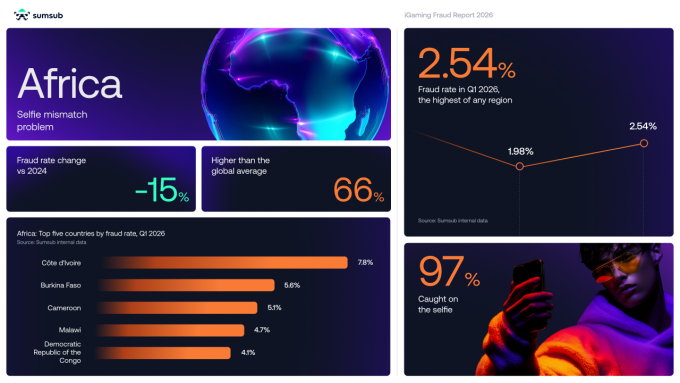
Read: Africa Becomes a Global iGaming Fraud Hotspot
>>> Motor Insurance Bleeds Ksh8.2B as Claims and Fraud Hit Kenyan Insurers
















Leave a comment